The key facts
- The EU is preparing a 'Pan-Arctic Cable': Greenland — Europe, then via Canada to Japan and South Korea; the strategy will be presented on 20 October.
- €107 million has already been allocated to connectivity projects with Greenland; the roughly $1.15 billion Far North Fibre project received only about €11 million.
- The strategy provides for an Arctic Cable Hub for EU countries, Norway and Iceland, and joint procurement of icebreakers, including nuclear-powered ones.
The cable as a security issue
The European Union plans to lay a protected subsea cable directly linking Greenland with Europe, with the ambition of later extending the network via Canada to Japan and South Korea. Euronews reports this, citing a draft EU Arctic strategy that is to be presented on 20 October. The document states: 'The EU is working on the concept of a Pan-Arctic Cable that will connect Europe with Japan and South Korea via Greenland and Canada. In the coming years, the EU will connect Greenland with the European Union through a sovereign and secure subsea cable.'
Context: rising tensions in the Arctic
The initiative reflects Brussels' concern that subsea telecommunications cables have become a matter of strategic security rather than merely commercial infrastructure. According to Euronews, the situation in the Arctic is deteriorating: Russia is building up its military presence, and European governments are worried about hybrid threats — from interference with satellite navigation to sabotage against subsea infrastructure. Additional geopolitical tension is created by growing US interest in Greenland. There are about 17 subsea telecommunications cables in the North Atlantic, with American tech giants playing the dominant role in the wider infrastructure network. Subsea cables carry the bulk of international data traffic, and their vulnerability to accidental damage or deliberate sabotage has become a serious concern for European governments.
The significance of Greenland
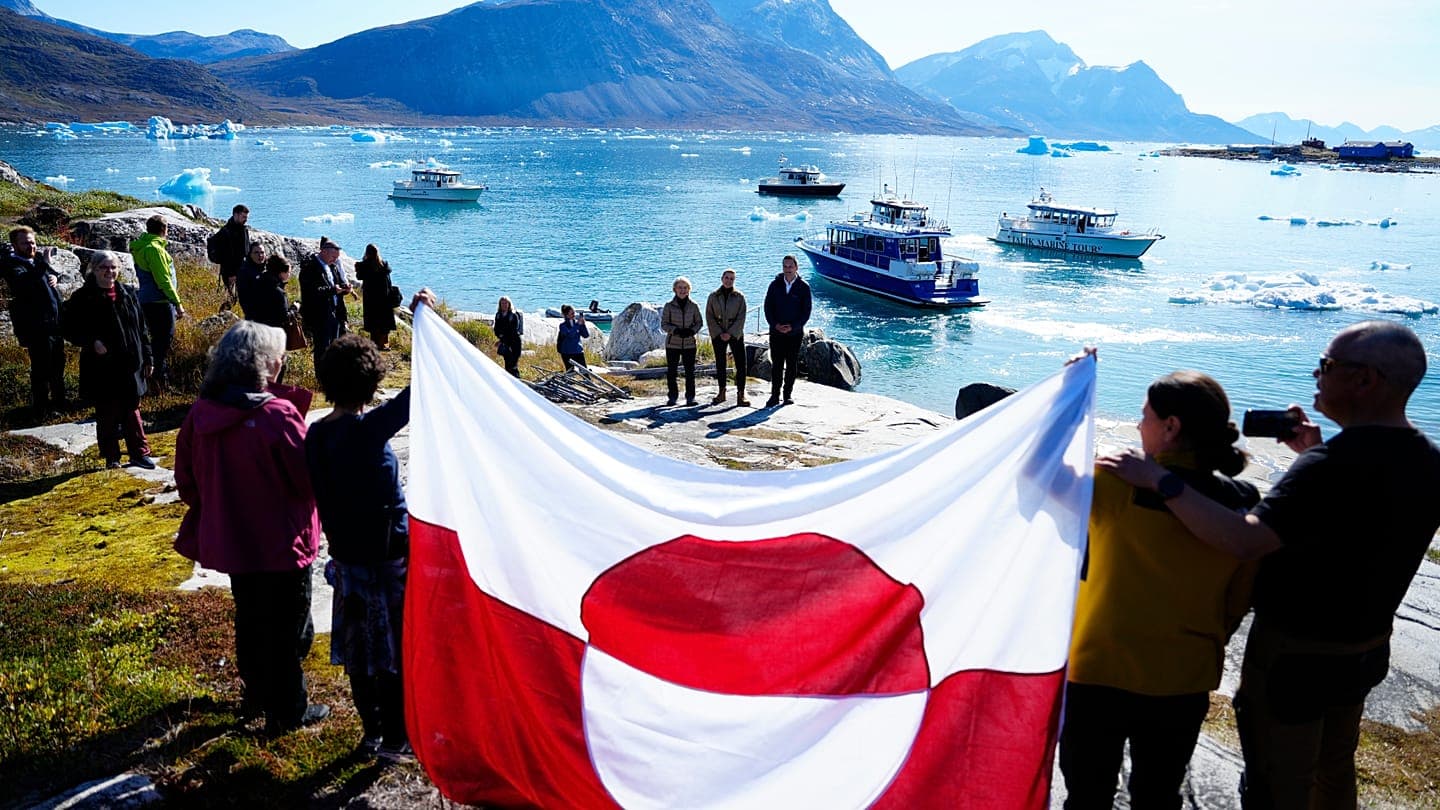
Greenland, an autonomous Danish territory located between Europe and North America, occupies a particularly sensitive position amid intensifying competition for Arctic resources, shipping routes and military access. A more direct digital connection with Europe could strengthen its ties with the EU and give Brussels a larger share in the region's infrastructure. The document notes: 'New subsea cable routes will expand access for Arctic communities and also increase the resilience and redundancy of Europe's digital connectivity. Such a connection is a prerequisite for further investments that are important for competitiveness, inclusion, preparedness and defence.'
Funding and open questions
The EU has already allocated €107 million to connectivity projects with Greenland, so the cable would be a continuation of existing commitments. The European Commission previously offered member states co-financing for the Far North Fibre project — the planning of a subsea cable in the Arctic, estimated at about $1.15 billion — but it received only about €11 million. The strategy does not define the final route, budget or construction timeline, nor does it resolve questions about who will pay for construction, own and operate the cables, how they will be protected, and whether the route will be commercially viable. Extending it to Japan and South Korea will require agreement with partners outside the EU.
Arctic Cable Hub and icebreakers
The strategy mentions the creation of an Arctic Cable Hub for EU countries, Norway and Iceland — a centre for monitoring, protecting and supporting the repair of subsea cables in the North Atlantic–Arctic region; the hub will likely require a reinforced fleet of icebreakers. At the Arctic Summit in September, the EU's special envoy for the region, former Finnish Prime Minister Jyrki Katainen, warned of a critical shortage of European icebreaker capacity. German Chancellor Friedrich Merz said at the summit's press conference: 'This is not only a matter for Finland, Norway, Sweden. It concerns the entire European Union, the entire European continent. That is why we are talking about it. And you have my support in doing this together.'
Joint procurement and nuclear icebreakers
The strategy provides for the creation of an EU alliance on industrial maritime production chains, which is to determine icebreaker needs, available production capacity in Europe and the necessary technical specifications. The document states: 'The EU, together with member states and like-minded partners, will develop options for joint procurement, pooling and sharing of icebreaking and other capabilities relevant to the Arctic.' The aim is to pool funding and technology with the Scandinavian countries and to explore how to ensure the operational viability of national assets while maintaining national command structures. The strategy explicitly mentions 'assets with a particular focus on icebreakers for extreme Far North conditions, using advanced highly autonomous power systems, including nuclear ones.'