The key facts
- Iran may not support the OIC resolution on Yemen if the text does not reflect 'justice and balance,' Araghchi said.
- The draft resolution has not yet been finalized; a significant bloc of OIC members, according to Araghchi, holds positions close to Saudi Arabia.
- Araghchi: the '7-day plan' for relations with the US is on the table — if the conditions are met, the Strait of Hormuz will open on the sixth day, and negotiations will begin on the seventh.
Iran's Position on the Resolution
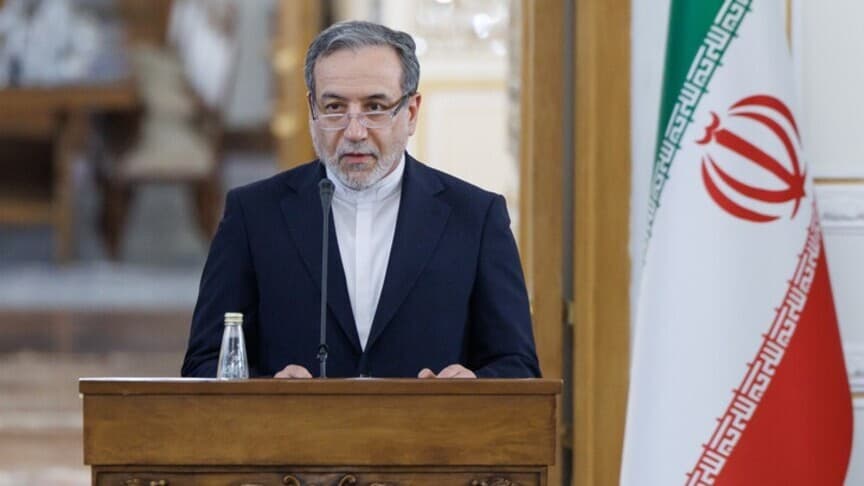
Iran said on Sunday, October 18, that it may not support the resolution on Yemen being discussed at the meeting of the Organisation of Islamic Cooperation (OIC) in Baghdad if the text does not reflect, in Tehran's wording, 'justice and balance.' Speaking on the sidelines of the OIC Council of Foreign Ministers meeting, Iranian Foreign Minister Abbas Araghchi said that 'serious discussions' had taken place on Yemen. 'Saudi Arabia had its own position, and we and other countries also expressed our views,' he said, adding that the draft resolution has not yet been finalized. 'We hope that justice and balance will be observed in this resolution and the final statement. Naturally, if this does not happen, the Islamic Republic of Iran cannot join this resolution,' Araghchi stated.
The Balance of Forces Within the Organisation
According to Araghchi, a significant bloc of OIC members holds positions close to Saudi Arabia's. Tehran, he claimed, has held extensive consultations with other member states, and his speech at the meeting was devoted to finding a solution to the Yemeni issue. Context of the conflict: Yemen has been engulfed in war since 2014, when Iran-backed Houthis seized Sanaa and a number of provinces, which in 2015 prompted the Saudi Arabia-led coalition to intervene in support of the internationally recognized government. The conflict has recently spilled over into Saudi territory: Houthi attacks, including strikes on the kingdom's oil infrastructure, followed the group's announcement in July of a naval blockade.
Relations with the US and the '7-Day Plan'
Touching on relations with the US, Araghchi said that Iran's conditions had been conveyed to Washington as part of the so-called '7-day plan,' the US had set out its position, and Tehran is still preparing its response. 'From our point of view, the 7-day plan is on the table,' the minister said. 'If there is sincerity on the American side — which there is not — the path is clear. If they fulfill these conditions, the strait will open on the sixth day, and on the seventh day negotiations will begin,' he added, referring to the Strait of Hormuz.
The Summit in Baghdad
The statements were made during the 52nd session of the OIC Council of Foreign Ministers in Baghdad, where Iraq took over the rotating chairmanship of the Council from Turkey. The meeting brings together foreign ministers and representatives of the 57 member states of the organisation to discuss regional and international issues, including the situations in Yemen and Palestine. Araghchi also noted that Iran attaches particular importance to neighboring Iraq and expressed hope that the Baghdad chairmanship, together with the appointment of a new OIC secretary general, will give the organisation 'a new impetus.' According to him, Tehran expects the OIC to play a constructive role in resolving disputes between Muslim countries.