The key facts
- Glucksmann won the first round of the Socialist Party primary on October 11 with 66% of the vote
- After his victory he was showered with flour; he called on Mélenchon to condemn attacks by his supporters, although the attacker's affiliation has not been established
- Toluna Harris Interactive poll: Glucksmann at 10–11%, Mélenchon at 18%; among under-25s Mélenchon stands at 41% (Ipsos)
First-round victory and the Belleville incident
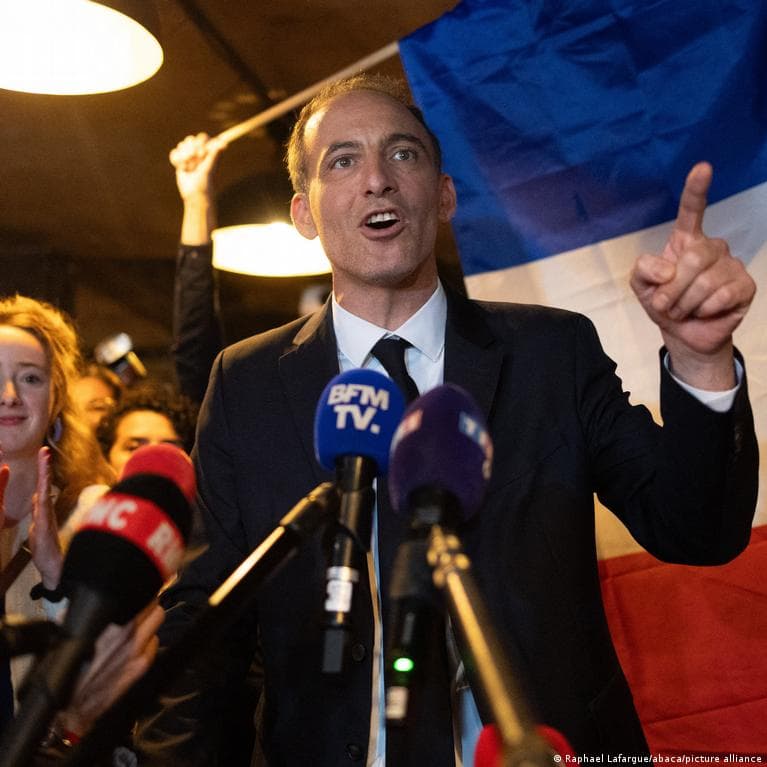
On October 11, 46-year-old MEP Raphaël Glucksmann won the first round of the French Socialist Party's primary with 66% of the vote, although two rounds had been expected. He is the son of philosopher André Glucksmann and will be the party's candidate in the 2027 presidential election. The celebration took place in Paris's Belleville district; as he left the Cantine de Belleville restaurant, an unknown person showered him with flour. The next day, Glucksmann called on Jean-Luc Mélenchon to condemn attacks by his supporters, but it has not been established whether the attacker was a supporter of La France Insoumise (LFI). The incident underscored the main problem of his campaign: how to attract Mélenchon's voters while refusing to cooperate with him.
Break with the left and criticism of his experience
The main question of the primary was the attitude toward Mélenchon. Party leader Olivier Faure advocated keeping open the possibility of cooperation with LFI, but Glucksmann demanded a clear break with the radical left — his victory is interpreted as support for a split. Rivals questioned his experience: Ségolène Royal compared his bid to that of an 'intern' wanting to run a company, noting his lack of experience in government or local government. Glucksmann is not a member of the Socialist Party — he belongs to the small centre-left party Place Publique.
A difficult starting position
A Toluna Harris Interactive poll published the day after his victory projects 10–11% of the vote for Glucksmann, compared with 18% for Mélenchon, giving him a better chance of reaching the second round. The poll was conducted before the primary and does not take into account the possible effect of the nomination. Nevertheless, 10% would be better than the Socialists' result in 2022, when Anne Hidalgo received 1.75%.
Young people and the left-wing electorate
According to an Ipsos poll in September (with Glucksmann as the social-democratic candidate and Édouard Philippe as the only candidate of the centre), Mélenchon was polling 41% among voters under 25, while Marine Le Pen stood at 20%. The 75-year-old Mélenchon appears alongside protesting students: near Clermont-Ferrand he expressed solidarity with the movement and once again called for lowering the voting age to 16 and abolishing the national university admissions system Parcoursup. Political scientist Antoine Bristiel (Fondation Jean-Jaurès) highlights the core of loyal LFI voters — often young, educated city dwellers under financial pressure: four out of ten households in this group live on less than 2,000 euros a month. Almost a third of the left-wing electorate values a left-wing victory above party affiliation; almost half of them are younger than 35 and are ready to vote for the Socialists, the Greens or LFI, preferring politicians willing to compromise. The German pattern (young women vote for the left more often, men for the right) is not confirmed in France: according to a study by Angy Durovich, Nonna Mayer and Noémi Piolat, in the 2024 elections young French women did not vote for the left significantly more often than men.
Programmatic differences
Glucksmann proposes lowering the CSG tax on labour income and raising taxes on inheritances above 2 million euros, and positions himself as a supporter of European integration, whereas Mélenchon calls the EU a neoliberal institution. On Ukraine, Glucksmann advocates resolute support for Kyiv. LFI MEP Manon Aubry stated that her party allows military assistance only under conditions: the assistance must first go through democratic discussion, must not allow strikes deep into Russian territory, and must not weaken France's defence capability. In 2024, LFI deputies voted against the Franco-Ukrainian security agreement. After the flour incident, LFI deputy Sébastien Delogu published support on X for the taxi driver who would have to wash the car. For Glucksmann to have a chance of victory, he will have to attract many voters from Mélenchon's camp — a task probably more difficult than distancing himself from him.