The key facts
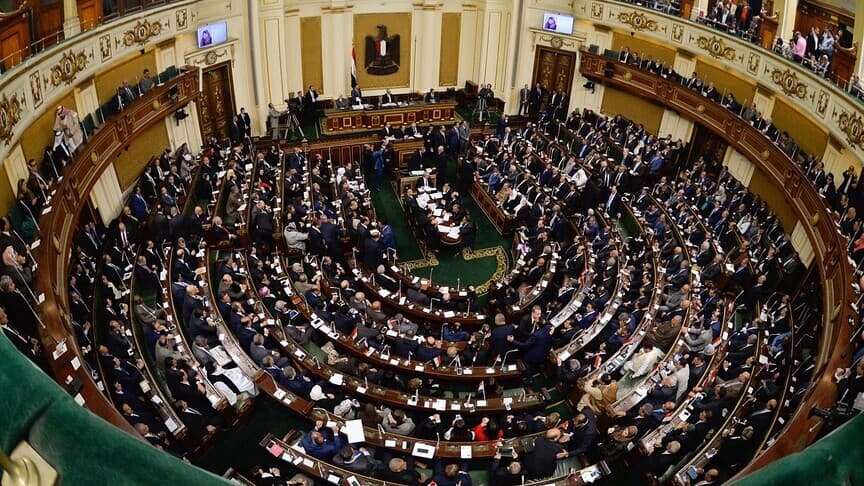
- Egypt's parliament held an emergency session on the possible deployment of troops to Saudi Arabia at President al-Sisi's request.
- Egypt's National Defense Council declared 'full solidarity' with Riyadh and readiness to provide 'all necessary and possible forms of support'.
- Under Article 152 of the constitution, deploying troops requires consultations with the National Defense Council and approval by two-thirds of parliament.
Emergency parliamentary session
Egypt's parliament on Sunday began an emergency session to consider possible measures to defend Saudi Arabia, including the potential deployment of Egyptian troops, amid an escalation of attacks by Yemen's Houthis on the kingdom. The meeting took place in the New Administrative Capital, chaired by parliament speaker Hanafi Gebali — correction: the speaker named in the report is Hisham Badawi — at the request of President Abdel Fattah al-Sisi, the state-owned newspaper Al-Ahram reported.
Al-Sisi's statement
The day before, on Saturday, al-Sisi said that Egypt was ready to take any measures Saudi Arabia might request to protect its security and sovereignty. 'I call on parliament to hold an emergency session to authorize this step if we are asked to do so,' the president said.
Constitutional procedure
Under Article 152 of Egypt's constitution, the president, as supreme commander of the armed forces, cannot declare war or send troops on combat missions outside the country without consultations with the National Defense Council and approval by two-thirds of parliament. Parliament's internal bylaws also require that such authorization be considered at an urgent closed session convened at the president's request after consultations with the National Defense Council.
National Defense Council decisions
Earlier on Sunday, Egypt's National Defense Council, chaired by al-Sisi, declared 'full solidarity' with Saudi Arabia and decided to provide 'all necessary and possible forms of support' to protect the security and stability of the kingdom, its resources and territorial integrity, as well as the Islamic holy sites. The council stressed that Saudi national security is linked to Egyptian and Arab security. It also decided to intensify political and diplomatic efforts in coordination with regional and international parties to reduce tensions and achieve peaceful settlement of regional crises.
Conflict context
The developments come amid an escalation of hostilities between Saudi Arabia and Yemen's Houthi movement, which has been carrying out missile and drone strikes on the kingdom. The Saudi-led coalition supporting the internationally recognized government of Yemen has intensified military operations against the Houthis in recent days, carrying out airstrikes on areas they hold, including the capital Sanaa. The Houthis, for their part, have threatened new attacks on Saudi territory, including pipelines and oil facilities, as the conflict escalates further.