The key facts
- Trump suspended by executive order sanctions on Russia's energy revenues; a deal with Putin had earlier been announced to export diesel in exchange for sanctions relief
- Zelensky believes the concessions 'reward' Putin and will continue
- On the day of the order, Russia attacked 15 power generation facilities; at least two people were killed
Trump's order and Zelensky's reaction
US President Donald Trump on Friday signed an executive order suspending sweeping American sanctions targeting Russia's energy revenues. Earlier, Trump announced he had reached a deal with Vladimir Putin allowing the export of Russian diesel in exchange for sanctions relief. Ukrainian President Volodymyr Zelensky told journalists on Saturday that he fears further concessions: 'Unfortunately, the lifting of sanctions will continue. I believe the 'diesel deal' is only the first step.' In his words, such actions merely 'reward' the Russian leader. Zelensky added that he still 'personally' hopes Trump will do 'everything in his power' to make Putin end the war, but stressed that this cannot be achieved 'by limiting Ukraine's responses to the killing of our people — and certainly not by lifting sanctions.'
Strikes on the power grid on the day of the order
The US decision coincided, according to Zelensky, with one of the largest strikes on Ukraine's power grid: on Friday Russia attacked 15 critical power generation facilities. According to Ukrainian authorities, at least two people were killed on Saturday as a result of Russian air strikes: one in the southern city of Kherson, where 22 others, including two children, were wounded, and one in the north-eastern city of Sumy. Zelensky said Russia seeks to cause a 'blackout' in Ukraine before winter and 'is trying to leave millions of our people without electricity and heating,' urging allies to pressure Moscow in order to 'stop this.' Last winter, hundreds of thousands of Ukrainians regularly went without heat and electricity in freezing temperatures.
The 'Graham Act' and the parties' positions
The document suspended by the order — the 'Graham Act,' named after the late American senator who introduced the bill — was aimed at Russia's energy and defence sectors, at Putin personally, and at the so-called 'shadow fleet' of tankers used by Moscow to circumvent Western sanctions. Zelensky wrote on social media that the law 'was supposed to exert truly effective pressure on Russia to bring the end of this war closer,' that it 'could have helped a lot — and still can!,' and warned: 'A blackout of American sanctions, weakening pressure on the aggressor, financially rewarding Putin — all of this only encourages him to continue the attacks.' He also called on 'everyone in America to see what is really happening.' The Kremlin and Putin have not yet reacted to Trump's decision, but a number of Russian officials celebrated it as a victory. Putin's envoy Kirill Dmitriev called the suspension of the law 'an important and truly historic moment' and said the law would have caused 'serious damage primarily to the US economy and global markets.'
Context of the war and negotiations
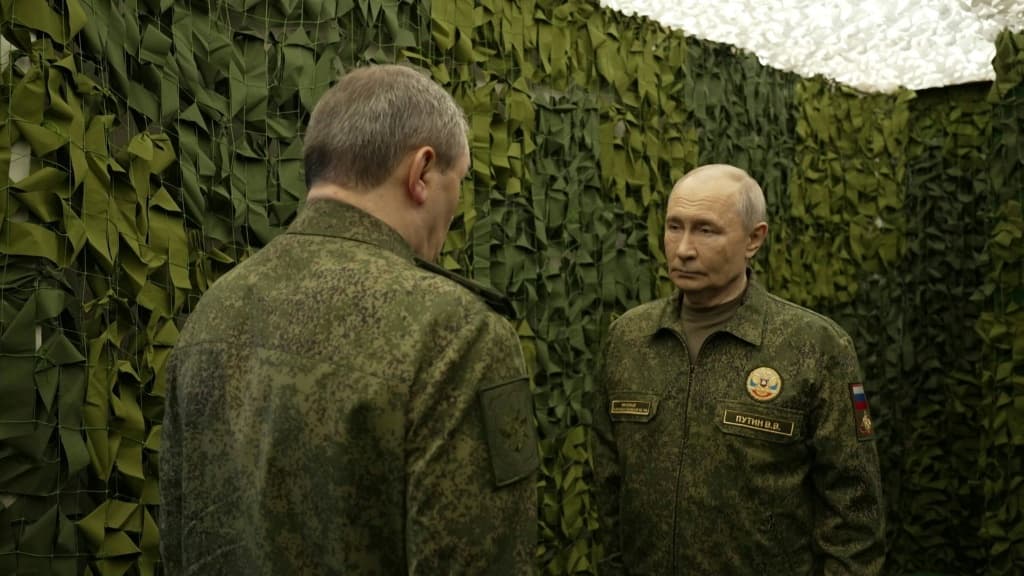
The order was signed shortly after Putin appeared in military uniform, telling army leadership: 'Overall, I see a positive trend in the operations of the troop groupings,' adding that 'one of the main goals remains the liberation of the Donetsk People's Republic' — the Kremlin's name for the eastern Donetsk region. Russia controls significant territories in eastern and southern Ukraine, and Putin has repeatedly stated his intention to seize the rest of the country's east by force. US-led talks to end the war have so far produced no breakthrough; earlier, both Putin and Zelensky drew Trump's displeasure. On Friday, Zelensky attended an EU summit in Brussels, where he urged allies to continue funding Ukraine's fight and insisted he was defending his country amid the conflict with Trump. Ukraine, meanwhile, is struggling to intercept Russian missiles and is hastily strengthening its defences ahead of winter. The war, now in its fifth year, has by estimates claimed the lives of hundreds of thousands of people and forced millions from their homes.


