The key facts
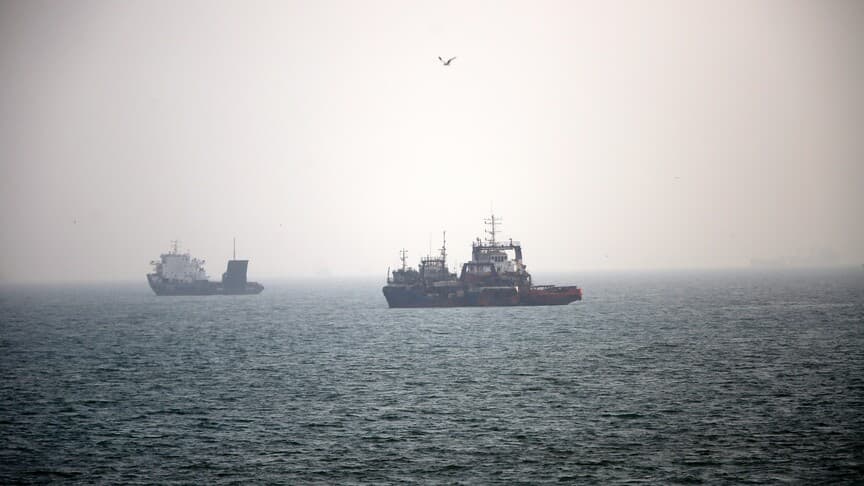
- Over the week: 125 outbound and 129 inbound transits through the strait — 70% below the pre-war level (UKMTO).
- 12 attacks on vessels over the week, 10 of them in the strait; a container ship struck by a projectile on October 13 off Ras Sheikh Masud caught fire and sank, the crew was evacuated.
- Since the conflict began in late February, UKMTO has recorded 84 incidents in the strait; the actual number of attacks, according to the agency, is higher, as many vessels do not report them.
Shipping remains significantly below pre-war levels
According to the British agency UK Maritime Trade Operations (UKMTO), traffic through the Strait of Hormuz over the week amounted to 125 outbound and 129 inbound transits — roughly 70% below the pre-war level. The figure declined compared with the previous week, when 129 outbound and 146 inbound transits were recorded.
Attacks on vessels and the sinking of a container ship
Over the reporting week, UKMTO registered 12 attacks on vessels: 10 in the Strait of Hormuz, one in the Persian Gulf and one in the Gulf of Oman. According to the agency, six vessels continued their voyage or reached port, one was lost, two were disabled or not under command, and the fate of three more remains unconfirmed. On October 13, off Ras Sheikh Masud, a container ship was struck by a projectile of unidentified origin; the vessel caught fire and sank the next day. The entire crew was evacuated.
Incomplete statistics and conflict context
UKMTO warned that it is difficult for it to establish the actual number of attacks, since most attacked vessels refuse to report incidents. Since the conflict began in late February, the agency has recorded 84 incidents in the strait. The attacks are taking place amid continued tension between Iran and the United States over shipping through the strait — a key route for global energy and goods supplies that remains an important topic of negotiations between Washington and Tehran. The conflict began with US and Israeli attacks on Iran on February 28, and a ceasefire was concluded in April. Later, clashes resumed amid a stalemate in the negotiations, although in June the sides signed a framework agreement.