The key facts
- Some Gaza residents have been displaced up to eight times; tents and temporary shelters are damaged with each move
- IOM calls for a shift from temporary to transitional shelters, but durable materials are blocked by Israeli 'dual-use' restrictions
- Earlier in October, IOM reported that available supplies cover only 17% of Gaza's winter needs
Shelters deteriorate after three years of war
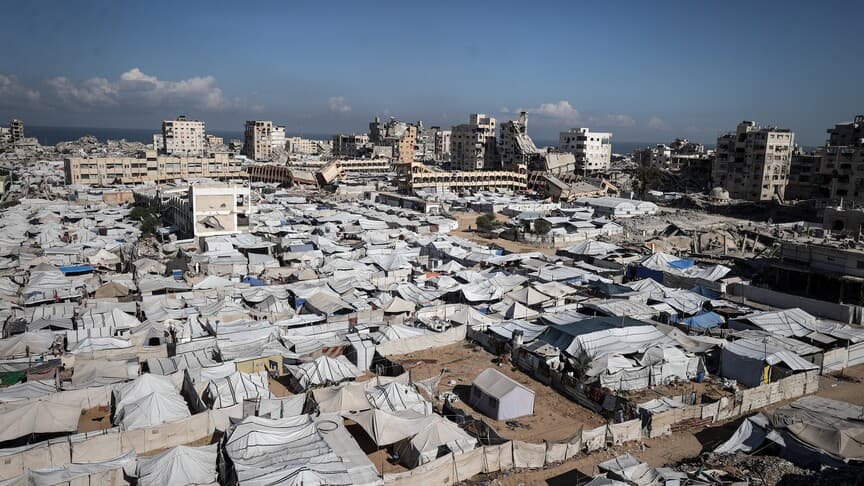
Carl Baker, the International Organization for Migration's (IOM) regional crisis coordinator for Gaza, said in an interview with UN News on Friday evening that repeated population displacements over three years of war have led to the deterioration of shelters across the enclave. According to him, some Palestinians have been forced to move up to eight times, and with each displacement tents and other temporary shelters are damaged or destroyed: 'When they move, everything they own is either destroyed or they have to find new shelter.'
Restrictions on materials and funding shortages
Baker noted that even basic materials such as tarpaulins need to be replaced roughly every six months, but humanitarian agencies cannot bring in replacements in the necessary quantities. He called for a shift from temporary solutions to more durable transitional shelters with reinforced roofs, concrete floors and solid walls, but such materials fall under Israeli restrictions on the import of 'dual-use' items for security reasons. IOM maintains constant contact with the Israeli authorities, but some durable materials are still not allowed through. Baker also cited funding shortages and disruptions in international maritime shipping as obstacles: IOM depends on suppliers in China, India and Pakistan. Funding has begun to arrive, but it is insufficient for the 1.8–1.9 million people in need of shelter assistance.
Only a third of the territory is accessible, winter is the main threat
According to Baker, only about 30% of Gaza is currently accessible to most of the population, which is why displaced Palestinians are crowding into increasingly cramped and often flood-prone areas. 'These 30% where they live are, in effect, one huge camp for displaced people,' he said. With the onset of winter rains, humanitarian organizations are working on the problem of flood-prone areas and deploying water pumps, but Baker warned that getting displaced residents through the winter will be the main challenge. Earlier in October, IOM reported that available and expected shelter supplies cover only 17% of Gaza's winter needs, and more than half of the tents and makeshift shelters are in poor condition. According to the Anadolu agency, the ceasefire regime has been in effect since October 10, 2025, but Israeli strikes and restrictions on the import of humanitarian goods continue.


