The key facts
- On October 12, BfV chief Sinan Selen stated that Russia is waging a 'long-term hybrid attack' against Germany, which will continue after the war in Ukraine.
- According to NATO, there is no immediate military threat, but experts and the German Defense Ministry expect that by 2029 Russia will be able to wage a conventional war against NATO.
- Society and the Bundeswehr, in Stefan Meister's assessment, are not prepared for a military threat; plans to reinstate conscription are sparking protests.
A long-term hybrid attack
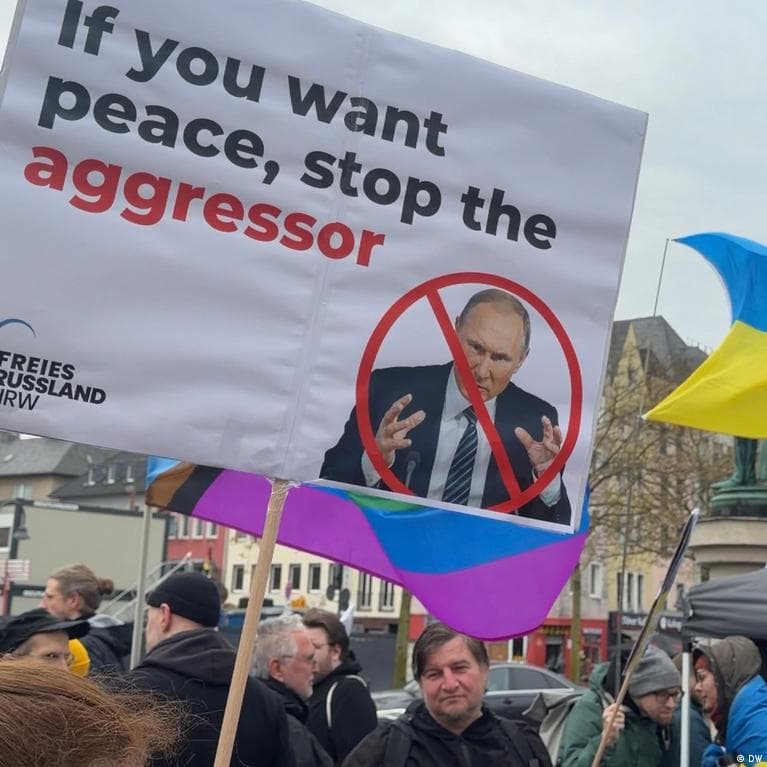
On October 12, the president of the Office for the Protection of the Constitution (BfV), Sinan Selen, stated that Russia's covert attacks and destabilizing actions against Germany and other European countries are 'not a temporary phenomenon, but a long-term hybrid attack.' According to him, even if the war in Ukraine ends, the threat will not disappear: 'For Russia, this is about a complete redrawing of the map of Europe and a redefinition of its own role in Europe and world politics.' He added that Russia's aggression will be felt not only in Ukraine, but also in the Baltic states, Poland, and Germany.
Political pressure or preparation for war
Interior Minister Alexander Dobrindt characterized the situation this way: the country 'is not in a state of war, but is a target of hybrid warfare every day.' In his view, Russia's goal is not the military defeat of Germany, but 'its subjugation in political and social terms.' However, a number of experts are more skeptical: political scientist Carlo Masala said back last year on the Maischberger program that 'Russia is preparing for a major war,' meaning not only cyber warfare. Bundeswehr Inspector General Carsten Breuer agrees with him.
The window until 2029
NATO Secretary General Mark Rutte asserts that there is no immediate military threat to NATO territory. Russia is currently tied up in the war in Ukraine. But, according to military experts, European intelligence agencies, and the German Defense Ministry, by 2029 Russia will have the personnel and equipment for a conventional war against NATO. The Russian defense industry is operating at full capacity, and Moscow plans to expand its army to 1.5 million servicemen. DGAP expert Stefan Meister believes that a direct military conflict with NATO is not needed by Russia right now: it wants to test NATO and demonstrate its capabilities.
The Leipzig incident and the risk of escalation
An example of hybrid warfare may be the failed drone attack with explosives on a Ukrainian transport aircraft at Leipzig/Halle airport in August. Shortly afterwards, the German government stated it was confident of Russia's involvement. Expert Nico Lange told DW at the time that Germany got lucky: the explosives did not go off — 'that was pure chance, not the result of German defense measures.' According to him, Germany is a priority target of Russian influence, as Moscow considers it the key to European decisions, and Germany leads in support for Ukraine. Moscow angrily rejected the accusations: Foreign Minister Sergei Lavrov called them 'the beginning of a real war,' but no further escalation followed. Meister notes the risk of accidental escalation after a provocation, but believes Russia is currently seeking provocations, polarization, and sowing uncertainty, not direct war.
Internal disputes over support for Ukraine
Not everyone shares the assessment of the threat. Politicians from the Alternative for Germany (AfD) and the populist left BSW advocate improving relations with Russia, resuming energy supplies, and ending support for Ukraine. AfD co-chairman Tino Chrupalla said in early September that people are 'fed up with the escalation against Russia and the billions being squandered there.' The party showed a strong result in all three state elections in September; in Saxony-Anhalt it became the strongest party and may soon lead the government — for the first time since the end of World War II, a far-right party would be in power in Germany. CDU expert Roderich Kiesewetter disputed the AfD and BSW thesis: spending on education and infrastructure is possible only 'in freedom, democracy, peace, and security,' and anyone who believes that abandoning support for Ukraine will bring money for social programs 'is either deeply mistaken or is making themselves an instrument of Russian propaganda.'
Germany's readiness in question
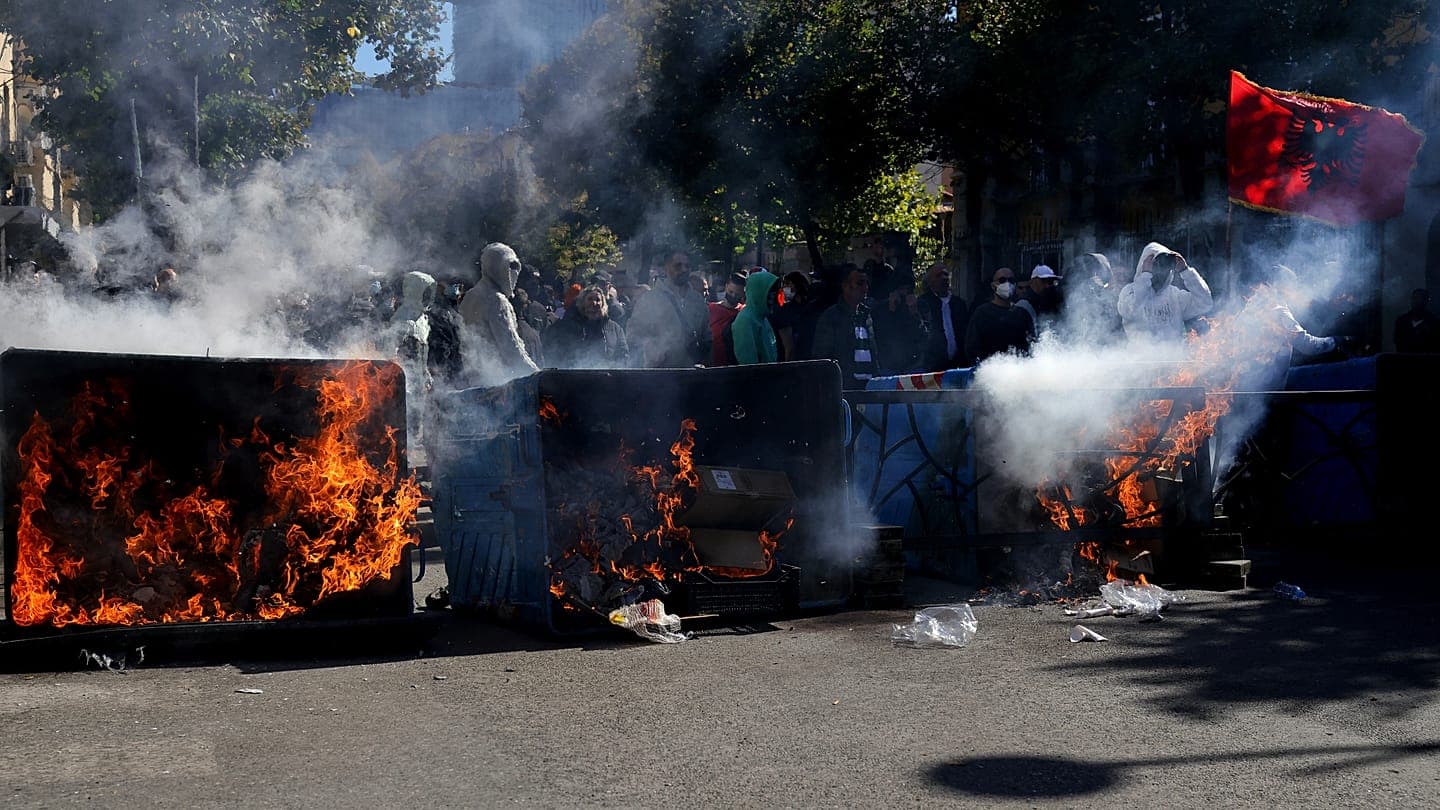
The Bundeswehr is accelerating modernization through major investments, but faces a shortage of recruits. Young people are taking to the streets in protest against plans to reinstate conscription; Defense Minister Boris Pistorius was criticized within his own SPD for saying that Germany must become 'capable of waging war.' Meister believes: 'Germany is not at all ready — neither the military nor the civilian sphere, nor the population in mental terms.' Chancellor Friedrich Merz is under growing pressure, especially from the right, to reduce support for Ukraine, but emphasizes that under him Ukraine will continue to receive aid, calling it a matter of Germany's security; he recently visited Kyiv again and, together with Volodymyr Zelensky, viewed the destruction. According to Meister's forecast, in the coming months Germany will face a 'massive increase' in attacks like the Leipzig one, drone provocations, strikes on infrastructure and, possibly, on specific individuals in the military-industrial complex.