The key facts
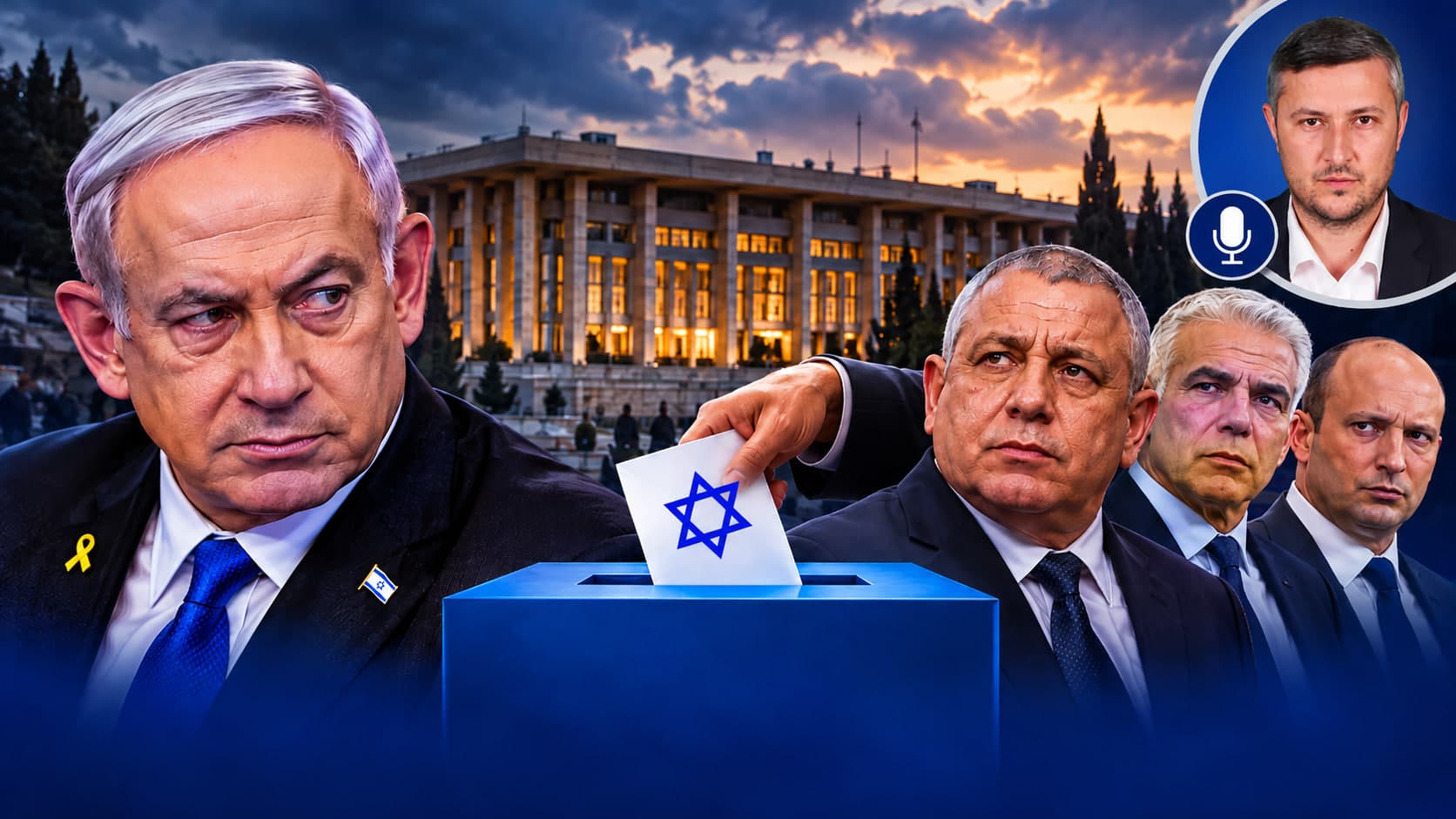
- Polls: Netanyahu's party is ahead by a small margin, but Eisenkot leads on the question of who should be prime minister
- The opposition demands the government be held accountable for missing the October 7 Hamas attack
- In Israel's system, victory is possible only through a coalition
Polls and the main rival
According to polls, Benjamin Netanyahu's party has a slight advantage in Israel's upcoming elections. However, in a poll on the question 'Who deserves to become prime minister?' his main rival — the leader of the Yeshar party, former chief of staff Gadi Eisenkot — significantly outpaces the incumbent head of government. In campaign videos, Netanyahu focuses mainly on criticizing Eisenkot, which points to his status as the main competitor. The outlet Kun.uz notes that this does not guarantee the election outcome: in Israel, no party usually wins by a clear margin, and without a coalition, control of parliament is impossible.
Criticism of the government over October 7
The opposition's main accusation against Netanyahu's government is connected to the October 7 Hamas attack. In the critics' view, instead of preventing the attack, acting correctly in the first minutes, and punishing those responsible, Netanyahu politicized the attack and used it for his own benefit. The opposition believes the current government must bear responsibility for failing to prevent the Hamas attack.
Eisenkot's positions
Eisenkot previously supported the creation of two states for two peoples in the region, but after the October 7 Hamas attack he stated that this topic is no longer up for discussion — the attack changed his position on the creation of a Palestinian state. If he wins the election, he promises to end Hamas's rule in Gaza and restore Israel's international reputation. Eisenkot also believes that Israel's Arabs, who make up 20% of the country's population, cannot be ignored, and he believes that building Jewish homes in the Palestinian territories only worsens the situation. He traditionally advocates long-term peace.
Netanyahu's positions
Compared to Eisenkot, Netanyahu looks more radical: he and his supporters consider Arabs — openly or not — radicals prone to terrorism. Netanyahu has continued building Jewish settlements in the Palestinian territories for decades. He speaks exclusively about war and wants to turn Israel into a fully militarized country with an army ready to fight all its neighbors — Iran, Lebanon, Syria.


