The key facts
- Polymarket has been banned in Brazil since April, but users have placed about $185 million in bets on the election outcome
- Before the first round, polls showed Lula in the lead, yet he trailed Flavio Bolsonaro by roughly two points
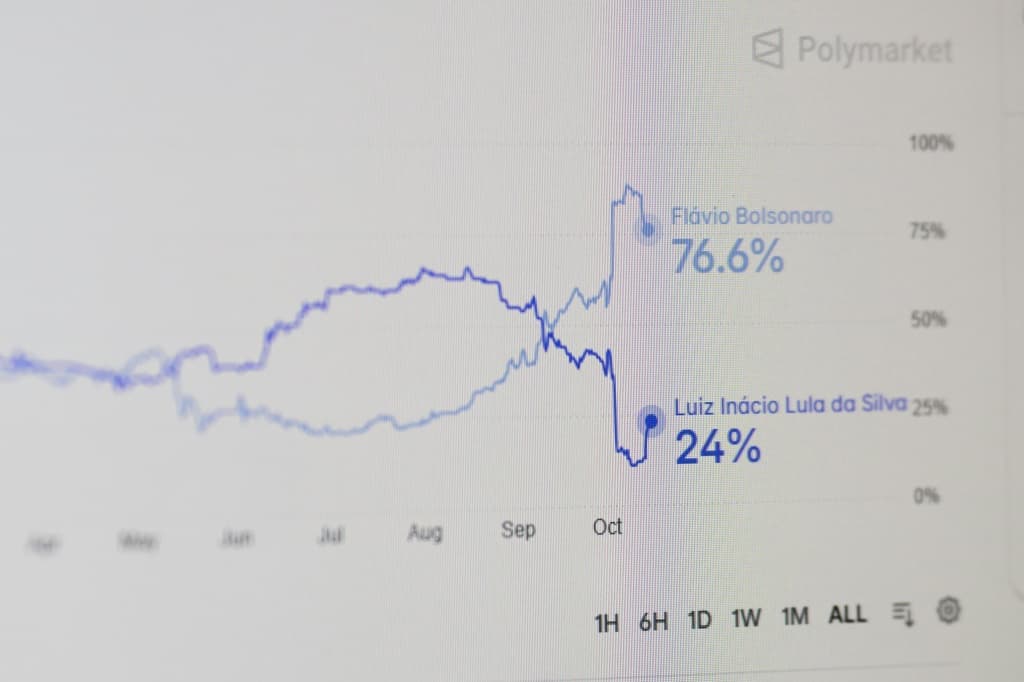
- On Polymarket, Bolsonaro's chances are estimated at 77%, while recent polls give him a lead within the margin of error
Betting as an 'Alternative to Polls'
Polymarket, the world's largest prediction market, which operates on the principle of buying and selling shares tied to the probability of real events, is banned in Brazil. Nevertheless, right-wing figures in the country actively use its election odds as an indicator of voter intentions amid distrust of public opinion polls, AFP reports.
Election Context
The outcome of the presidential election, whose runoff is scheduled for October 25, has become the most popular betting object in Brazil in recent weeks. It pits right-wing senator Flavio Bolsonaro — son of former president Jair Bolsonaro — against incumbent president Luiz Inacio Lula da Silva. Before the first round, polls showed Lula in the lead, but in the results he ended up roughly two points behind his rival, reigniting the debate over whether pollsters underestimate Brazil's right.
Viral Posts and Quotes
Right-wing influencer Paulo Figueiredo wrote on X even before the first round: 'We will rid ourselves of Lula forever,' accompanying the post with a Polymarket chart that gave Bolsonaro a 63% aggregate probability of victory. In recent days, posts with charts and captions like 'Flavio Bolsonaro has soared on Polymarket' and 'Lula has lost' have gone viral on social media. According to Polymarket, Bolsonaro's chances of winning now stand at 77%. Recent polls also put him ahead of Lula by about two points — within the statistical margin of error.
The Platform's Position and Experts' Warnings
Polymarket told AFP that betting on events through the platform is 'neither polls, nor official forecasts, nor an expression of support for any candidate.' Nevertheless, since social media users call Polymarket 'the best poll,' experts warn: using the prediction market as a barometer of electoral support is misleading. Political scientist Carolina Botelho explained to AFP that, unlike polls, which capture voting intentions at the moment of the survey, prediction platforms merely record financial transactions. Moreover, they measure expectations, and one participant can place the same bet repeatedly, whereas polls strive for a snapshot of the entire population.
The Ban and Its Circumvention
The US-based platform is also banned in dozens of other countries, including France, Germany and Japan. Lula's administration banned Polymarket and other prediction platforms in April, warning that they could increase household debt in Brazil, although the ban can be circumvented using a VPN. According to AFP, users have placed about $185 million in contracts on the outcome of the Brazilian election. Brazil's Ministry of Finance said it is monitoring the effectiveness of the Polymarket ban and may take additional measures to strengthen it.