The key facts
- Zelensky estimates Ukraine's 2027 funding gap at $78 billion; the EU, according to a diplomat, must provide 'tens of billions'
- Merz rejected the US proposal to hand over €210 billion of frozen Russian assets to Washington's control; Belgium remains the main opponent
- EU leaders failed to agree on the seven-year budget; Costa is preparing a new proposal, a special summit is scheduled for November 26
Zelensky seeks support in Brussels amid US cooling
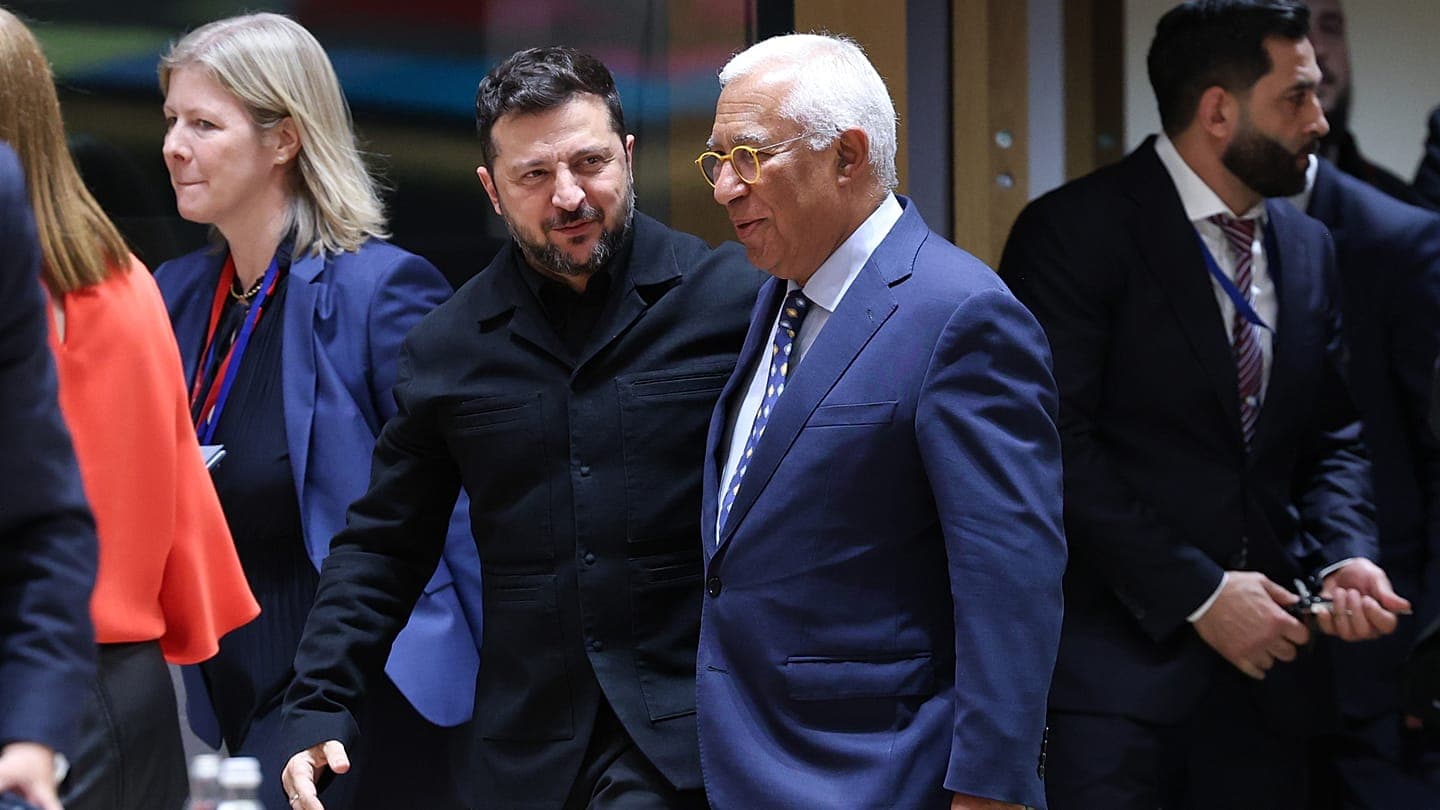
President of Ukraine Volodymyr Zelensky arrived in Brussels for the European Council summit after a week of heightened tensions with US President Donald Trump. His goals are to strengthen military aid, bolster air defense and protect energy infrastructure. Zelensky's participation, as Euronews reports, is expected to be brief: he will leave Brussels around midday. Before that, he has scheduled his first formal bilateral meeting with Hungarian Prime Minister Péter Magyar — Kyiv and Budapest are trying to restart relations after years of diplomatic disputes that complicated Ukraine's EU accession.
Replacing American systems
Deputy head of Zelensky's office Ihor Zhovkva, in an interview with Euronews, called for developing European alternatives to American missile defense systems and Starlink satellite communications, since uncertainty about the continuation of US support undermines trust in these systems.
Funding and frozen assets
EU leaders will discuss Ukraine's 2027 funding gap, which Kyiv estimates at $78 billion. According to an EU diplomat, 'tens of billions' of that amount fall on the European Union, but strict budget policy and declining support among voters make closing the gap difficult. Against this backdrop, the idea of issuing Ukraine a loan backed by €210 billion of immobilized Russian state assets in the EU is being revived — several diplomats believe the option should return to the table. According to reports, American negotiators last week pressured their European counterparts, demanding that the assets be channeled into a mechanism under Washington's control to unlock peace talks. German Chancellor Friedrich Merz firmly rejected the proposal: 'This is our business, and we will decide it ourselves.' Belgium, where the bulk of the assets are held, remains the main opponent, citing legal and financial risks. Prime Minister Bart De Wever, after meeting Zelensky, did not reveal his position, saying only that he has a 'clear idea' of how to cover Kyiv's needs.
Budget deadlock
EU leaders failed to overcome disagreements over the bloc's next seven-year budget, casting doubt on the possibility of a deal by the end of the year. 'We will not reach an agreement this month. Not next month. I don't even know if it is possible to agree by the end of the year. I think we are not in a hurry,' said Sweden's caretaker Prime Minister Ulf Kristersson. European Council President António Costa, who had sought to conclude negotiations before the spring elections in major EU countries (in France, where Marine Le Pen leads the polls and threatens to sharply cut the country's contribution), is now, as expected, to present a new proposal in a few weeks. A special summit is scheduled for November 26. Ireland's Minister for EU Affairs Thomas Byrne defended the Irish 'negobox' project: 'Our task was to find a basis for negotiations. I think we did that.'
Energy and other agenda items
The plan of the four Visegrad Group countries — Slovakia, Hungary, the Czech Republic and Poland, supported by Italy and Greece — to postpone the next emissions trading system (ETS2) until 2030 failed after hours of negotiations. According to diplomats, Costa was unable to find a compromise due to the complexity of the issue (as well as technical problems with printers). In the end, the six countries managed to include an impact assessment in the summit conclusions with a call for the European Commission to work more actively against rising electricity prices. On the final day of the summit, leaders will discuss Ukraine (Zelensky will report on the situation at the front), European security and defense with a focus on hybrid threats, and over lunch — migration.
Berlin pressures Zagreb over Montenegro
Germany has urged Croatia to constructively resolve bilateral disputes that threaten Montenegro's accession — the most advanced EU candidate country, four sources told Euronews. Earlier this week, Zagreb sent a list of eight grievances that it demands be settled before Podgorica completes accession. Berlin offered mediation, but the proposal has not been implemented; Merz's government positions itself as an honest broker, fearing that unresolved problems will derail enlargement. 'There are issues that we have been flagging to our Montenegrin neighbors for years,' Croatian Prime Minister Andrej Plenković said before the summit.