The key facts
- All four Moscow airports were out of operation for up to 7 hours, more than 160 flights canceled (over 200 per the Russian-language version of Euronews)
- Sobyanin said 94 drones were shot down, Drozdenko reported four over Leningrad Oblast
- In the first 14 days of October, Moscow airports were closed for 101 hours versus 46 hours for the whole of September
A night of closed airports
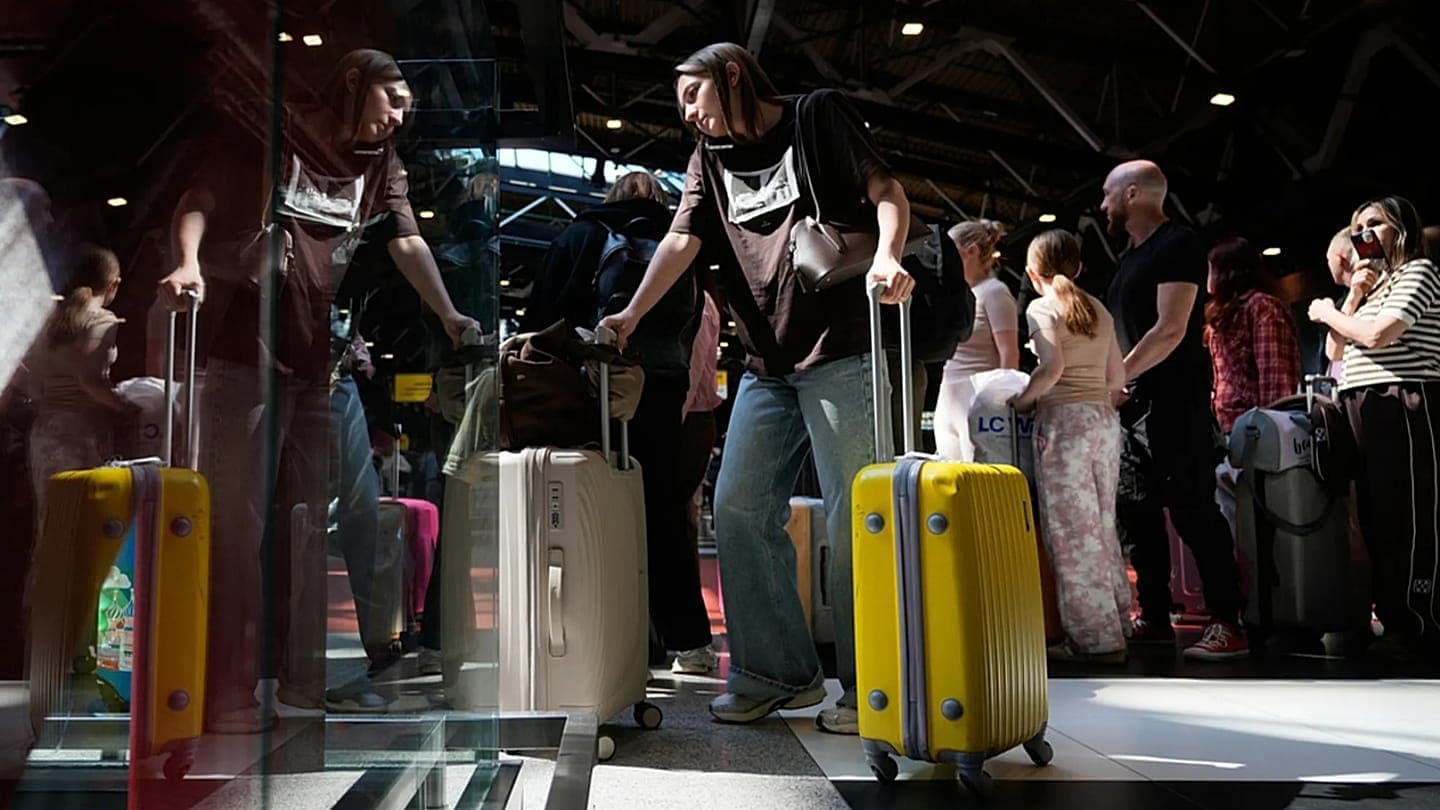
On the night of October 16, 2026, all four major Moscow airports — Vnukovo, Domodedovo, Zhukovsky and Sheremetyevo — ceased operations due to a large-scale attack by Ukrainian drones. The restrictions lasted a total of up to seven hours. The Russian-language version of Euronews reported more than 200 flights canceled, the English-language version more than 160. According to Flightradar24, the sky over the western part of Russia was practically empty at night. Moscow Mayor Sergei Sobyanin said that 94 drones heading toward the capital had been shot down. Euronews was unable to independently verify these figures.
St. Petersburg and other regions
Pulkovo Airport in St. Petersburg suspended operations twice during the night. The Russian-language version of Euronews reported more than 4,009 flights canceled or delayed there. Governor of Leningrad Oblast Alexander Drozdenko said four drones were shot down over the region. According to Rosaviatsia, temporary restrictions were also imposed at the airports of Penza, Saratov, Saransk, Ufa, Gelendzhik, Kaluga, Nizhny Novgorod, Tambov, Perm, Pskov, Kaliningrad, Cherepovets, Kazan, Yaroslavl, Ulyanovsk, Cheboksary, Kirov, Samara, Yekaterinburg, Tyumen, Nizhnekamsk and Izhevsk.
'Operation M&Ms' only beginning?
The Atlantic journalist Simon Shuster wrote that the Ukrainian campaign to block the operation of Russian airports 'is only beginning'. According to him, President Volodymyr Zelensky has not yet allowed the military to move to the original, more aggressive plan of the operation. In previous publications, the campaign was referred to under the name 'Operation M&Ms'; Kyiv has not officially confirmed either this name or the existence of a separate campaign. In September, Zelensky said that Russian airspace 'is becoming unsafe', since 'drones will appear in the sky over Russia, and this will have to be reckoned with', and called on international airlines to stop flying to Russian airports.
Increasing closures and the incident with Putin's plane
According to calculations by the outlet 'Agentstvo', in the first 14 days of October the four Moscow airports were closed for a total of 101 hours, whereas for the whole of September — 46 hours. DW reports that on October 9, 785 flights were delayed or canceled in Moscow, and on October 14 — almost 550. On October 13, Ukraine carried out one of the largest attacks on Moscow, using almost 500 drones. On October 9, according to several media outlets, the plane of Vladimir Putin, returning from the SCO summit in Turkmenistan, was unable to land in Moscow due to the drone attack and was diverted to St. Petersburg; the drones were not directly targeting aircraft No. 1. Russian officials have neither confirmed nor denied these reports.
Kyiv's tactics and Trump's position
According to Euronews, Kyiv views the paralysis of airports — but not strikes on civilian aircraft — as a bloodless way to convey to Russians the reality of the war and the harm from the aggression unleashed by Putin. It is possible that the Ukrainian authorities will shift part of the pressure on airports amid Donald Trump's criticism of strikes on Russian oil refineries. In an interview with Newsmax, the American president called the strikes on refineries 'a disgrace' and said: 'There are many targets that can be hit. But when you shell oil refineries where, you know, diesel fuel is produced, and it is needed by us and the whole world, then he (Zelensky) is not doing the world a good service.' The English-language version of Euronews links this to Trump's recent announcement of a deal to purchase diesel fuel from the Kremlin.


