The key facts
- The 52nd OIC CFM session opened in Baghdad on Saturday, October 17; Iraq is taking over the chairmanship from Turkey.
- The theme of the meeting is 'Dialogue and Solidarity: Two Pillars of Peace and Sustainable Development'; the 'Baghdad Declaration' is expected.
- According to the Turkish Foreign Ministry, Fidan will address Gaza, Syria, Lebanon, Cyprus, the rights of Muslim minorities, and maritime security.
Opening of the session in Baghdad
The 52nd session of the Council of Foreign Ministers of the Organisation of Islamic Cooperation (OIC) began in Baghdad on Saturday. According to the spokesperson of the Iraqi Foreign Ministry, Ambassador Hassanein Kamil, the meeting started after the arrival of all participating delegations. The day before, the Iraqi Foreign Ministry announced the completion of preparations for the two-day forum. During the meeting, Iraq, as expected, will take over the rotating chairmanship of the organization from Turkey, which has led the OIC since June 2025.
Theme and agenda of the meeting
The session is being held under the motto 'Dialogue and Solidarity: Two Pillars for Advancing Peace and Sustainable Development.' According to the Turkish Foreign Ministry, participants will discuss, in particular, Israel's policy in Gaza, the occupation and annexation of Palestinian territories, conflicts in other regions of the Islamic world, the fight against terrorism, UN reform, Islamophobia, and the situation of Muslim communities in countries outside the OIC. The meeting is expected to conclude with the adoption of the 'Baghdad Declaration.'
Fidan's expected talking points
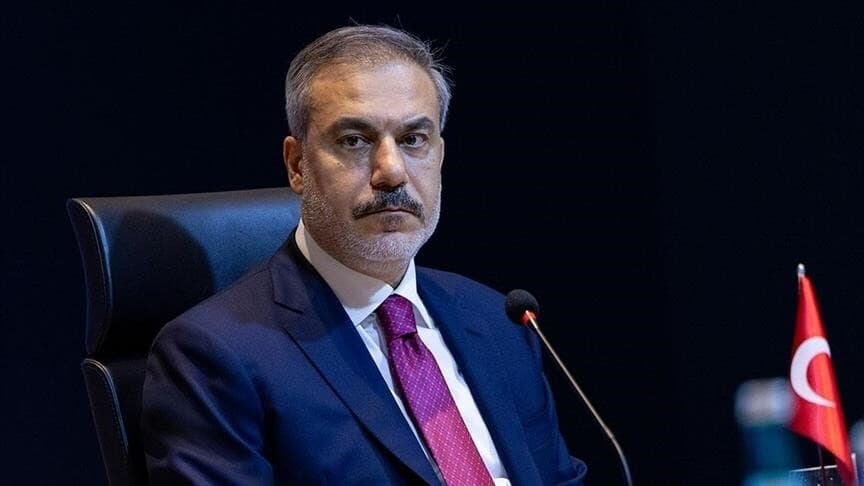
Fidan will speak at the session and hold bilateral meetings with counterparts. According to the Turkish foreign ministry, he intends to emphasize that Israel's aggression and expansionist policies remain the main threat to security in the Middle East, call on OIC members to adopt a unified position and coordinate with responsible international actors, and also advocate decisive measures against the relocation of embassies to Jerusalem. He is expected to call the two-state solution the only path to a just and lasting peace, and the uninterrupted delivery of humanitarian aid to Gaza vital.
Regional topics
Fidan also plans to declare solidarity with Turkish Cypriots and support for efforts to end their isolation, as well as the OIC's efforts to protect the rights of the Muslim Turkish minority in Western Thrace and the Dodecanese islands. On Syria, he will call for joint efforts to preserve territorial integrity and rebuild the economy; on Lebanon, he will emphasize the need for Israel's complete withdrawal from the country's south. Tensions in the Persian Gulf and the Strait of Hormuz are expected to be described by him as having negative consequences, and attacks on countries of the region as unacceptable. The condemnation of Houthi attacks on civilian objects and infrastructure is also expected, along with confirmation of Turkey's solidarity with Saudi Arabia; freedom of navigation in the Strait of Hormuz and the Bab el-Mandeb Strait will be described as important for regional stability and global trade.
Background on the OIC and Turkey's role
The OIC (formerly the Organisation of the Islamic Conference) was established on September 25, 1969, at a summit in Rabat following the arson attack on the Al-Aqsa Mosque in occupied East Jerusalem. The organization comprises 57 states — it is the second-largest intergovernmental organization after the UN. The TRNC, Russia, Bosnia and Herzegovina, Thailand, and the Central African Republic hold observer status. In August, at the 23rd extraordinary CFM session, Ismail Ould Cheikh Ahmed of Mauritania was elected the new secretary general. Turkey is one of the 25 founding countries; it received the chairmanship at the 51st CFM session in Istanbul on June 21–22, 2025, and had previously hosted CFM meetings three times (1976, 1991, 2004). A number of OIC structures are based in the country, including SESRIC, IRCICA, and COMCEC.