The key facts
- Fifth march for university funding since 2023; clashes outside Congress in Buenos Aires
- Casualty and detention figures differ: DW — 8 police officers injured and 25 detained; La Nacion (citing Anadolu) — 10 injured, 31 detained, 8 security personnel injured
- Milei vetoed the university funding law; Congress overrode the veto, courts ordered funds released, but the government refuses
March outside Congress and clashes
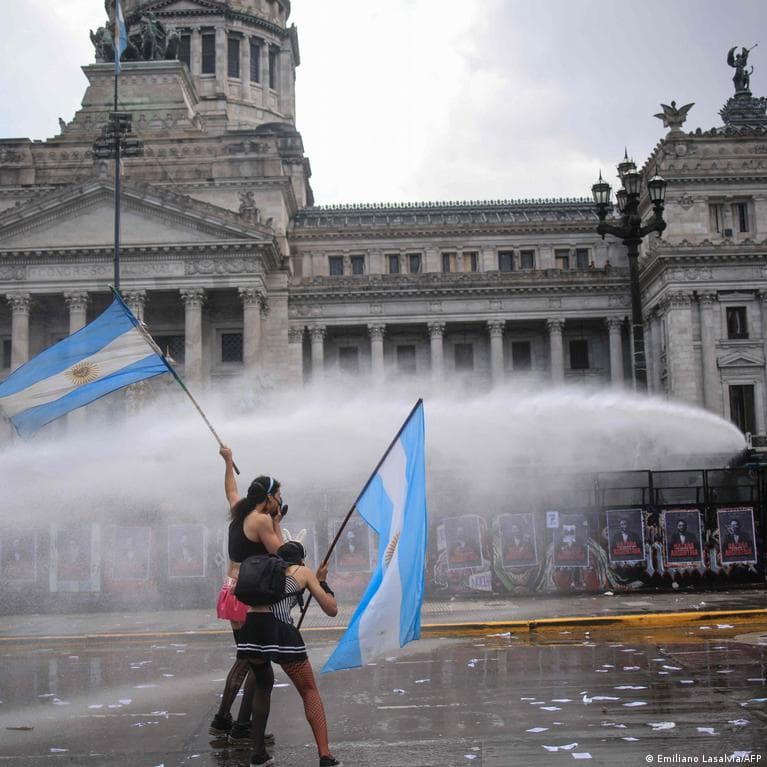
Thousands of students, university staff, union members and opposition supporters gathered on Thursday outside the Congress building in Buenos Aires for the fifth Federal University March since Javier Milei came to power in 2023. Demonstrators demanded compliance with the law on funding public universities. The event was organized by university unions, the National Inter-University Council (CIN) and the Argentine University Federation (FUA).
Injured and detained: conflicting figures
According to Deutsche Welle, citing the Ministry of National Security, at least eight police officers were injured in the clashes and about 25 people were detained. La Nacion, cited by Anadolu, reports at least 10 injured and 31 detained, including two minors, as well as eight injured security personnel. According to media reports, some protesters tried to stop those throwing stones at the police. Police used water cannons and tear gas. The central rally ended earlier than planned, at around 16:40 local time, due to heavy rain and clashes in the surrounding area. Authorities estimated damage to public infrastructure near Congress at 90 million Argentine pesos (about 59,376 dollars), according to La Nacion.
Reaction of authorities and organizers
Security Minister Patricia Bullrich — no, the minister named is Alejandra Monteoliva — stated on X that protesters wanted to 'sow chaos' and that the right to protest is not a 'right to violence.' She added that those who attacked security personnel and damaged public property will be held accountable. Organizers condemned the police actions and repeated their demand to enforce the funding law.
Dispute over the funding law
Milei vetoed the law passed by Congress in 2025, which requires increased investment in public universities: salary indexation for staff in line with inflation since December 2023, restoration of student scholarships, and additional funding for university operations. Congress overrode the veto, and a series of court rulings ordered the government to release the funds, but it has so far refused to do so. The government's press secretary said the law is 'suspended' due to the government's legal challenge against it. Milei himself, elected in 2023 on promises of sweeping cuts in public spending, justified the veto by saying there is 'no money' for spending increases tied to inflation.
Context: cuts to education spending
According to the Center for National Economic Studies of the University of Buenos Aires, in the first half of 2026 real spending on universities fell by 41%. A similar rally took place in May, attended, according to organizers, by about 1.5 million people. University representatives warn that budget constraints are reducing staff purchasing power and undermining student support. Argentina's education system is considered one of the best in South America; tuition at public universities is free and attracts students from across the region.