The key facts
- Singapore will send notices to seven companies on Sumatra, demanding they stop the fires and submit action plans
- Four people died fighting fires on Java, with two more suffering serious burns
- Air quality index in Singapore was around 230 ('very unhealthy'), in Palangka Raya above 300 ('hazardous')
Notices to seven companies
Singapore said on Friday it would issue warnings to seven Indonesian companies identified as responsible for fires whose smoke has spread across Southeast Asia. Minister for Sustainability and the Environment Grace Fu said an investigation points to part of the haze affecting Singapore originating from lands of seven companies on Sumatra. The named companies are mostly pulp and timber suppliers, including Bumi Andalas Permai, Bumi Mekar Hijau and SBA Wood Industries. The notices require them to send firefighting teams, stop the burning and not start new fires, and to submit action plans to the National Environment Agency. Asked about enforcement measures, Fu said 'fines or prosecutions' are 'all within our consideration.'
Victims and consequences in Indonesia
Indonesian authorities said on Friday that four people died while fighting fires on Java island, and two more suffered serious burns and remain under treatment, according to the fire department. The fires have led to school closures and a surge in respiratory illnesses, with growing frustration over the inability to cope with the situation.
Air quality
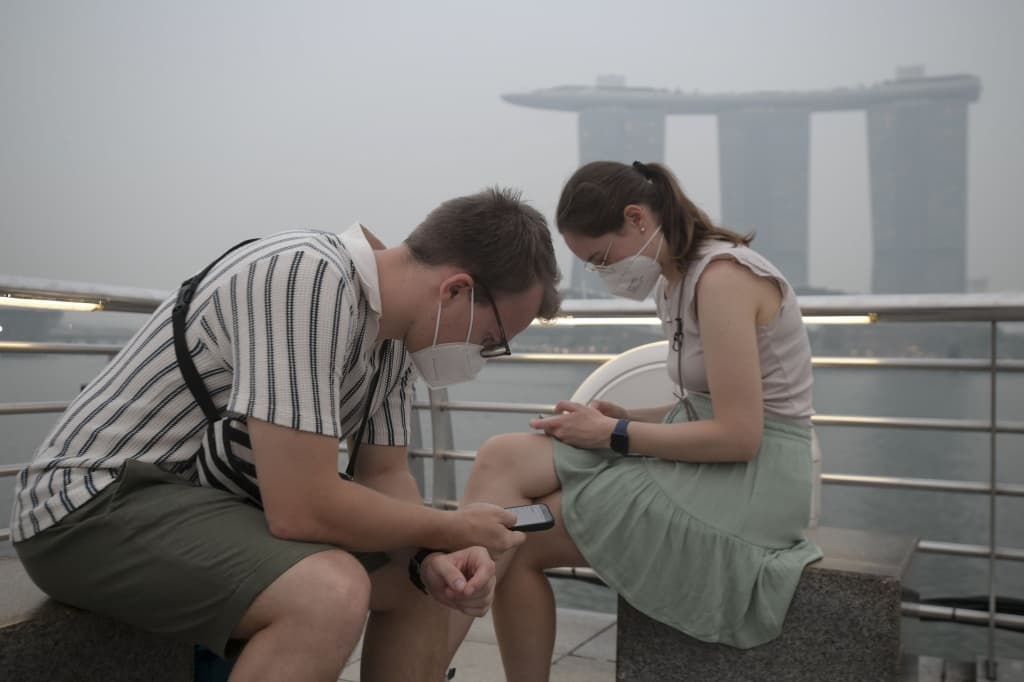
By Friday afternoon, Singapore topped IQAir's live ranking of the world's most polluted major cities, with Kuala Lumpur second and Jakarta tenth. Singapore's air quality index stood at around 230 — a 'very unhealthy' level (on the IQAir scale, 151–200 is unhealthy, 201–300 is very unhealthy, and above 300 is hazardous). In Palangka Raya in Central Kalimantan, readings remained in the hazardous zone above 300. Tourists in Singapore complained of thick haze: Canadian Ron Chambers told AFP the smoke was 'quite dense' and interfered with sightseeing, so they were limiting themselves to ground-level activities. Palangka Raya resident Siehan, 43, said the haze 'takes your breath away' and that trade is suffering — people have stopped travelling to the market for groceries.
Forecasts and legal complexities
Grace Fu warned that 'we should be prepared for the haze to persist for some time,' the situation is 'unstable,' and depending on the weather, air quality may fluctuate, 'including the possibility of reaching hazardous levels.' Singapore's leader Lawrence Wong noted: 'We cannot control the weather or the winds, nor directly control what happens beyond our borders.' Lawyers warn that prosecuting haze-linked companies is difficult: investigations depend on the cooperation of foreign authorities. Singapore has no plantations or forests of its own, but several companies with concessions in Indonesia are reportedly based in the city-state. Investigations into four Indonesian companies over the 2015 haze case remain open — that episode then strained relations with Jakarta.
Causes of the fires
Indonesia regularly faces fires in the dry season, but this year they are especially severe due to a strong El Nino phenomenon that has brought drought. Experts note that, in addition to the drought, deforestation and the draining of peatlands have damaged landscapes that were previously resistant to fire.