The key facts
- Inside the bee's stinger, two flexible valves operate like a two-piston pump, continuously supplying venom.
- A stinger left in the skin along with the venom gland continues to inject venom autonomously.
- Scientists created an enlarged working copy of the mechanism on a 3D printer and see applications in medical micropumps.
How a bee's stinger works
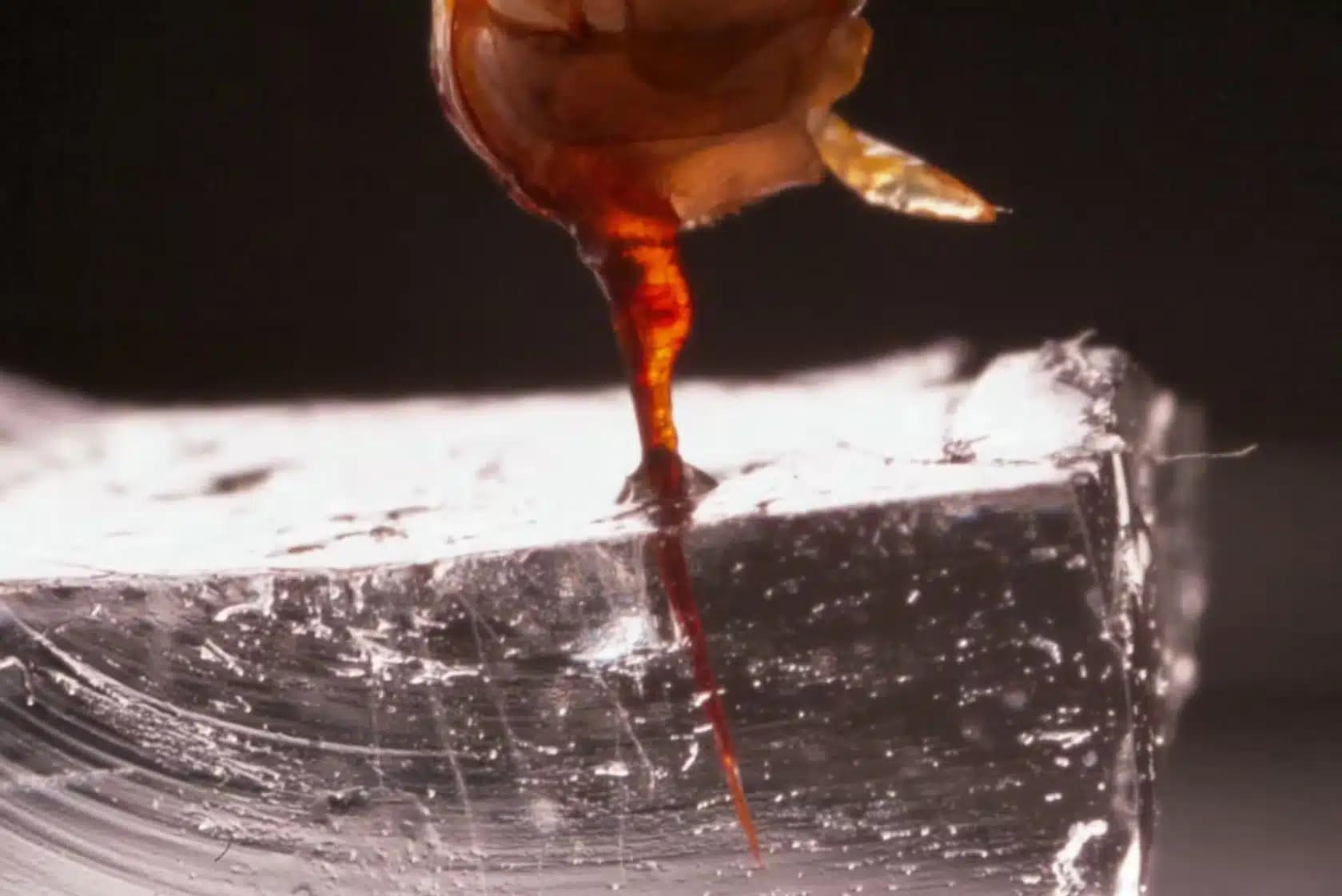
To look inside the mechanism, scientists prompted honeybees to sting a transparent gel imitating human skin. Using high-speed micro-photography, the researchers observed the movement of the tiniest parts inside the stinger. The details of the study are described in The Conversation.
Two valves like a two-piston pump
Video and three-dimensional scanning showed that two tiny flexible valves move alternately inside the stinger. When one valve shifts downward, it opens like a parachute and pushes the venom forward. When moving upward, it folds like an umbrella, passes the second valve, and opens the way for a new portion of venom. Thus, the mechanism works like a two-piston pump: the coordinated movements of the valves ensure a uniform supply of venom.
The stinger works even after detaching from the bee
When the stinger remains in the skin, the venom gland and driving structures may detach from the bee's body along with it. This inflicts a fatal injury on the bee, yet the stinger mechanism continues to operate autonomously for some time — including continuing to inject venom.
A 3D-printed model and possible applications
To test the mechanism, the researchers 3D-printed an enlarged working copy of it, using rigid and flexible polymer materials. The authors note that such a device could in the future help in the development of compact medical micropumps and devices for precise delivery of drugs into tissues.


