The key facts
- Dan: Black Sea security is possible only after the war in Ukraine ends; Romania 'was not ready' for the increased drone incursions
- Drones damaged ships off the coasts of Bulgaria and Romania for three days in a row before the summit; at least one ship sank, two sailors died
- Bulgaria requested combat aircraft and counter-drone systems from NATO; Rutte pledged to strengthen the eastern flank
Call for increased NATO presence
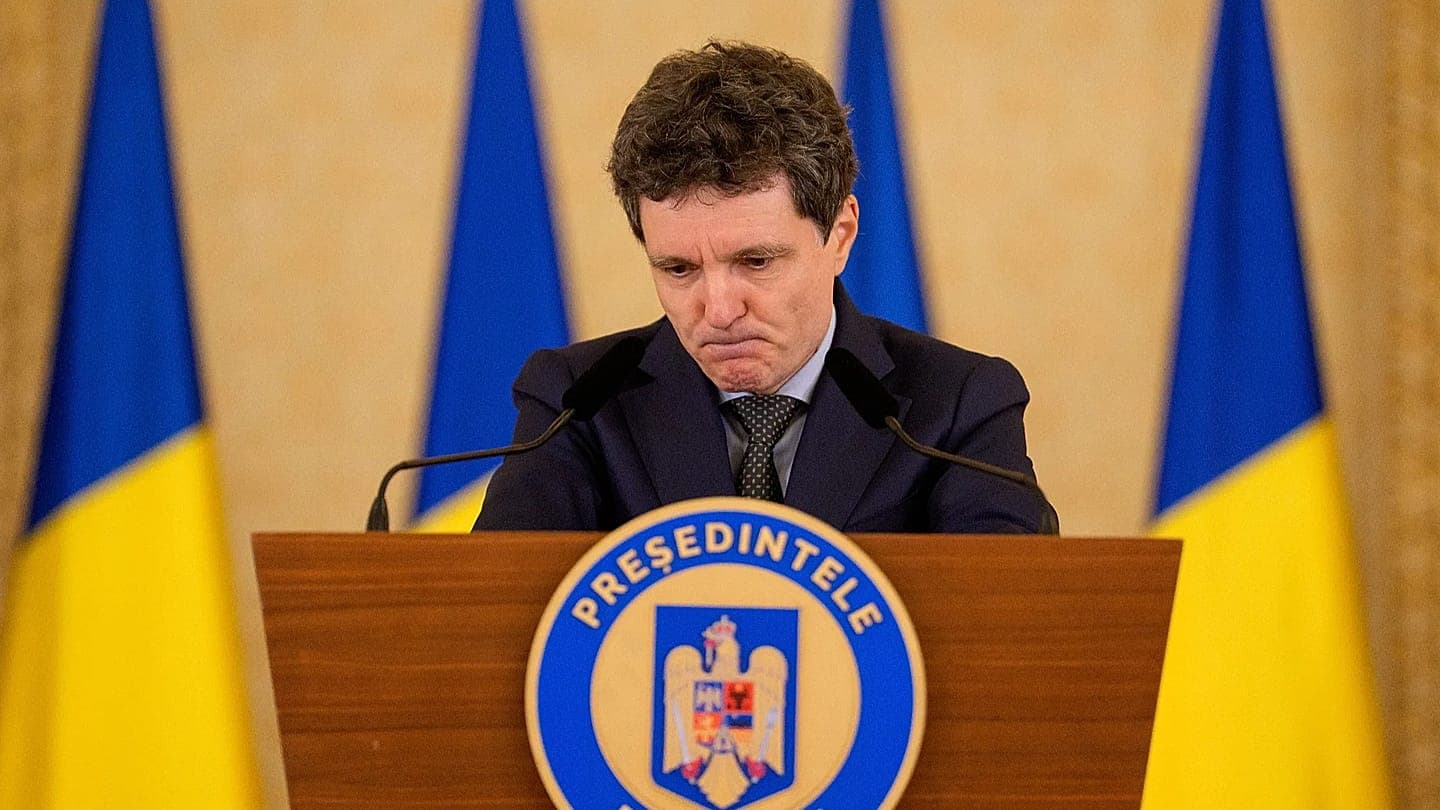
Romanian President Nicușor Dan, in an interview with Euronews on the sidelines of the EU summit in Brussels on Friday, said that the Black Sea will only become safe after Russia's war in Ukraine ends, and called for greater NATO surveillance in the region following drone attacks on commercial ships. 'I am very optimistic that we will have support and capabilities for better protection, because this is an important economic issue for Ukraine and the entire region,' he said.
Romania's unpreparedness
Dan said that frequent drone incursions into Romanian airspace began about a year and a half ago, and Bucharest 'was not ready' at the time. According to him, a similar situation of unpreparedness existed in the Black Sea as well: 'We must protect the waters beneath our territory.'
Counting on US support
The president expressed confidence in continued support from Donald Trump — both on Black Sea security matters and on Romania's position in NATO. 'In defense, I think it is mutual benefit, because we have an excellent position for projecting power into other parts of the world,' Dan said. This confidence comes against the backdrop of Trump's belligerent statements about the security of Ukraine and Europe, including troop reductions and a review of the force posture.
EU summit and talks with NATO
Dan took part in the quarterly summit of EU heads of state, devoted to support for Ukraine, the bloc's long-term budget, and the growing trade deficit with China. The deteriorating situation in the Black Sea prompted him and Bulgarian Prime Minister Rumen Radev to raise the issue of threats higher on the agenda. After the summit, Dan said that France had promised 'the necessary equipment' and a willingness to 'better understand our specific needs in the Black Sea.' The leaders of the two countries also met with NATO Secretary General Mark Rutte: Bulgaria requested combat aircraft and counter-drone systems. Rutte said that NATO will continue to strengthen its positions on the eastern flank, expanding counter-drone capabilities, and will 'adjust deterrence and defence as necessary.'
Ship attacks and the question of responsibility
Russia has repeatedly attacked Ukrainian ports on the Black Sea and the Danube, forcing Ukraine to seek alternative grain export routes to Africa and the Middle East, which has made European shipping lanes vulnerable. Drones damaged commercial ships off the coasts of Bulgaria and Romania for three days in a row before the meeting in Brussels, as well as in the previous week; at least one ship sank, and two sailors died. Neither Sofia nor Bucharest has definitively attributed responsibility to Russia. Radev said that 'logic' suggests the Kremlin benefits from the attacks, but 'the problem is that we cannot prove it.' Investigations into all incidents are ongoing.
Zelensky's statements
Ukrainian President Volodymyr Zelensky, at a press conference on Thursday after meeting with European leaders, said that 'an invasion does not require a ground war,' and that Russia is testing Europe's reaction to attacks — both in the Black Sea and in the case of the drone with explosives found at Leipzig airport. 'Violating the airspace of another country is already an invasion,' he noted, mentioning drones in Romania, Poland, Germany, Moldova and Bulgaria. Zelensky and other Ukrainian officials have publicly attributed responsibility to Russia for a number of incidents, including the deadly attack on a ship carrying Ukrainian grain off the Bulgarian coast.


