The key facts
- CNT/MDA: Bolsonaro 46.8% vs 45.9% for Lula; on valid votes 50.5% vs 49.5%, margin of error ±2.2 p.p.
- Datafolha: Bolsonaro's lead narrowed from four to two points (51% vs 49% of valid votes)
- Congress approved the abolition of the '6x1' schedule: the workweek is reduced to five days, maximum hours from 44 to 40 without pay cuts
The race tightens ahead of the runoff
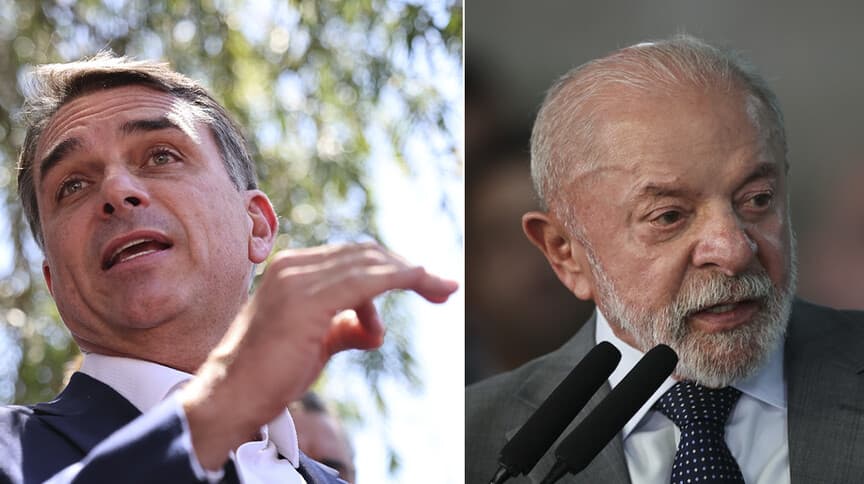
Nine days before the second round of Brazil's presidential election, scheduled for October 25, a CNT/MDA poll shows a statistical tie between conservative Senator Flavio Bolsonaro and incumbent President Luiz Inacio Lula da Silva. Bolsonaro holds 46.8% of voters' overall preferences against 45.9% for Lula. Counting valid votes only — excluding blank, spoiled ballots and undecided respondents — Bolsonaro leads with 50.5% against 49.5%.
Poll data
This is the first CNT/MDA poll after the first round on October 4, in which the senator, the eldest son of former president Jair Bolsonaro, contrary to pre-election forecasts took first place with 47.03% against 45.16% for Lula. In the previous CNT/MDA poll, published a week before it, Bolsonaro led with 52% of valid votes against 48% for Lula. The MDA poll was conducted from October 13 to 15 among 2,014 voters, with a margin of error of plus or minus 2.2 percentage points. The Datafolha poll published on Thursday also reflects the narrowing gap: Bolsonaro's lead shrank from four points to two — 51% of valid votes against 49% for Lula — which falls within the poll's two-percentage-point margin of error.
Campaign strategies
On the home stretch, Bolsonaro is working to consolidate his father's conservative base and broaden the appeal of his candidacy. Lula, fighting for a fourth non-consecutive term, is counting on the more than 33 million registered voters who did not vote in the first round.
Labor reform as an election move
On Wednesday, the ruling Workers' Party scored a major legislative victory: Congress approved a constitutional amendment abolishing the six-day workweek — one of Lula's key campaign promises. The reform replaces the traditional '6x1' schedule (six working days and one day off) with a five-day workweek, gradually reducing the maximum weekly workload from 44 to 40 hours without pay cuts. The Senate passed the proposal by an overwhelming majority — 75 votes to one. Bolsonaro, acknowledging the measure's broad popularity, abandoned his initial opposition and ultimately voted for the amendment.
Package of economic initiatives
The labor reform became part of a series of late-campaign economic initiatives by the Lula administration, including a debt-forgiveness program for micro-entrepreneurs, a college scholarship fund, the abolition of fuel taxes, and a proposal for a free public transit pass.