The key facts
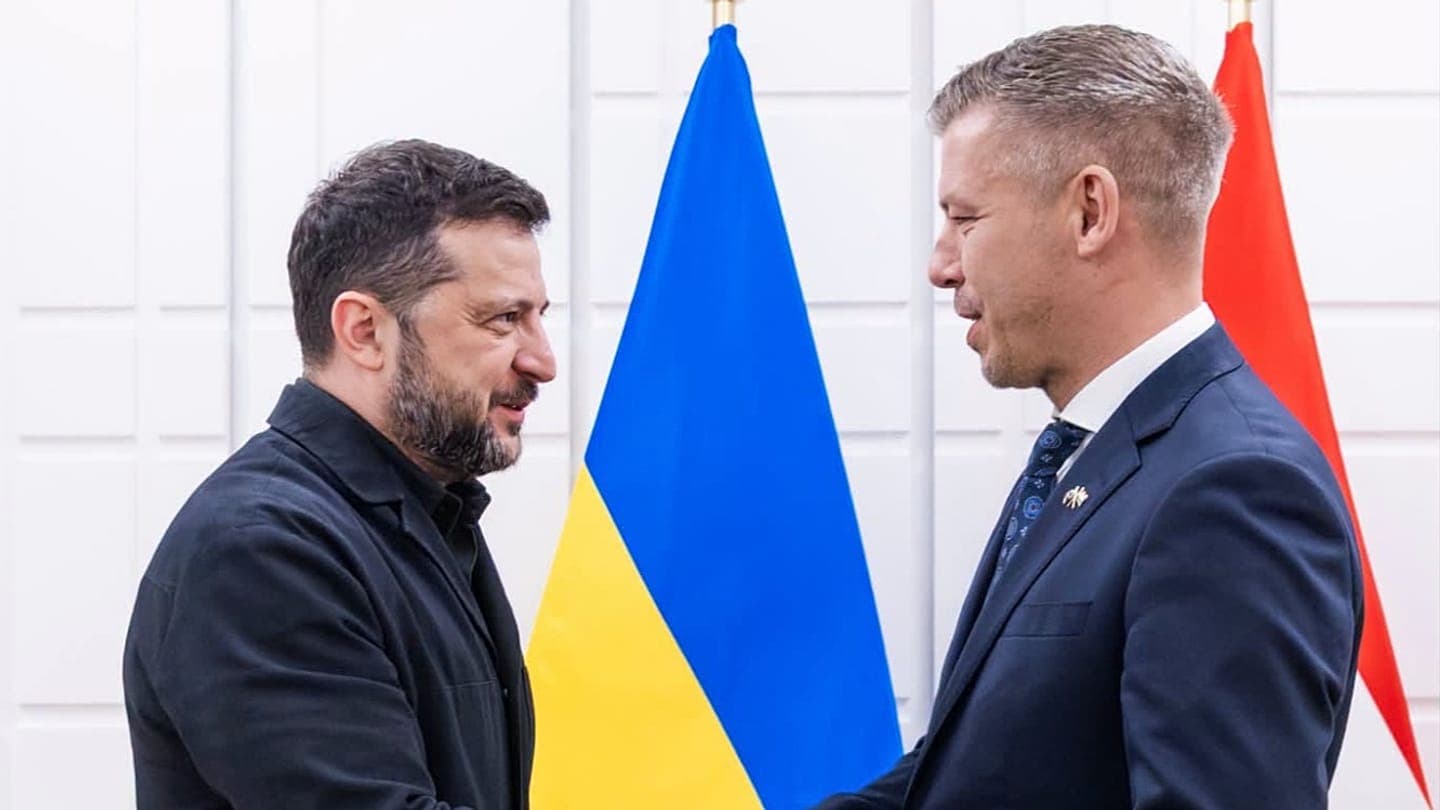
- The first bilateral meeting between Magyar and Zelensky took place on the sidelines of the EU summit in Brussels; the sides declared a 'new basis' for political and economic relations.
- After Ukraine adopted a law on the education of national minorities, Hungary withdrew its objections, and the EU opened two new accession negotiation clusters — four of six in total.
- Ministerial consultations are planned, a possible meeting in Berehove, and a visit by Zelensky to Budapest on October 23 for the 70th anniversary of the 1956 revolution.
First meeting between Magyar and Zelensky
Hungarian Prime Minister Peter Magyar held his first bilateral meeting with Ukrainian President Volodymyr Zelensky on the sidelines of the European Council meeting in Brussels. The meeting took place after months of negotiations over the timing and venue and is regarded by both sides as a step toward normalizing relations after years of tension. Under the former prime minister Viktor Orban, Ukraine was portrayed in Hungary as a security threat, and Budapest opposed its EU accession.
Minorities law and EU accession talks
After the victory of the Tisza party in the elections, Magyar promised a more pragmatic course, but his government continued to insist that Kyiv fulfill its commitments on the rights of national minorities. On Monday, Ukraine's parliament adopted a new law on the education of national minorities, which Zelensky signed. The next day, the EU opened negotiations on two additional clusters after Hungary withdrew its objections — four of six are now open. Magyar called the adoption and implementation of the law 'a first step toward restoring mutual trust' and thanked the Ukrainian parliament for its September resolution recognizing the crimes committed against Hungarians in Transcarpathia — forced labor and mass deportations of 1944–1946.
Statements by the sides
Magyar wrote on social media that he assured Zelensky of 'full solidarity in the face of the inhumane Russian aggression,' which has been going on for almost five years, and stated that Hungary is ready to use all diplomatic means to achieve a ceasefire and a lasting peace as soon as possible. According to him, Budapest and Kyiv agreed to build a 'new basis' for political and economic relations and to continue talks at the ministerial level, including on the situation of minorities in both countries. Zelensky thanked Magyar for the 'principled steps' and the opening of two clusters, noting that the sides are working to open the remaining two by the end of the year. He also said that trade and agricultural products were discussed, adding: 'We agreed to resume joint work at various levels and exchange visits. Our teams will coordinate the dates.' The foreign ministers of the two countries also held talks in Brussels; Andrii Sybiha announced a 'full restart' of relations and a 'new chapter'.
Further meetings
According to Magyar, the next meeting may take place in autumn in Berehove in western Ukraine — the center of the Hungarian minority numbering about 100,000 people. Zelensky may also visit Budapest next week: on October 23 an event marking the 70th anniversary of the 1956 Hungarian Revolution will be held there. Deputy Head of the Office of the President of Ukraine Ihor Zhovkva, in an exclusive interview with Euronews, confirmed that the invitation has been received and the visit is being considered: 'The President of Ukraine has received an invitation to take part in it. We will see.' On October 23, 1956, Hungarian students took to the streets in protest against Soviet occupation; the uprising was suppressed by the Red Army. Zelensky's visit could draw parallels with Ukraine's defense against the Russian invasion.