The key facts
- On October 15, clashes between protesters and police in Tirana for the third day in a row; actions also in Shkodër and Korçë
- October 14: 89 injured in hospitals (61 police officers), 65 detained, and 10 more the day before
- Protesters demand the resignation of Prime Minister Edi Rama; he accuses the opposition of violence
Clashes in Tirana and other cities
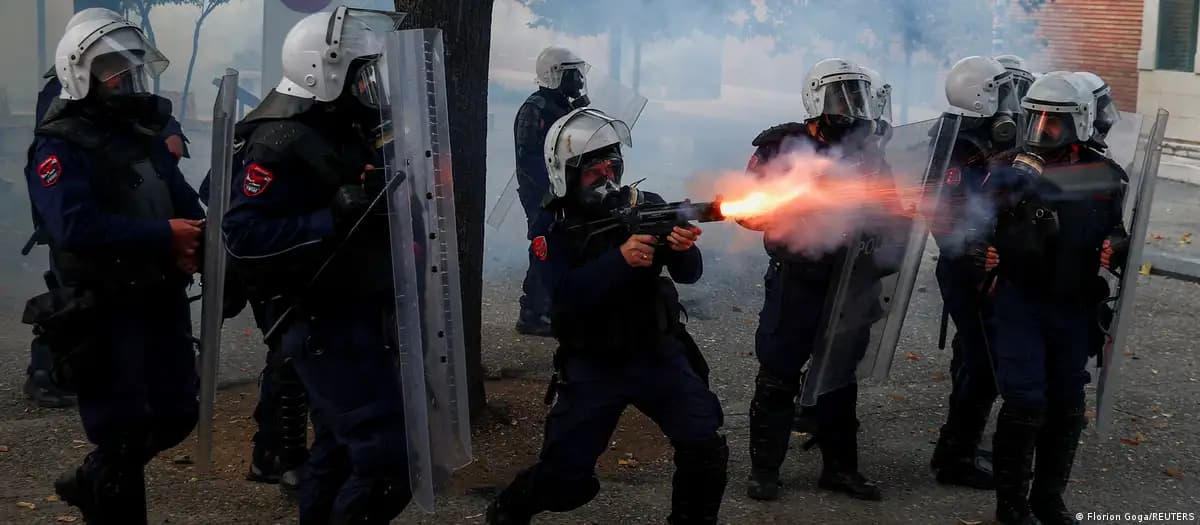
According to DW, on October 15, fierce clashes between demonstrators and police took place in Tirana for the third day in a row. Some protesters threw stones, smashed shop windows, built barricades, and set fire to garbage containers; police used water cannons and tear gas. Protest actions also took place in Shkodër, Korçë, and coastal towns in the south of the country. In Shkodër, the windows of the city hall building were smashed, and the offices of the ruling Socialist Party and the opposition Democratic Party were pelted with stones. In Korçë, windows of school buildings were broken and streets were blocked.
Casualties and detentions
According to the health ministry, on October 14, medical care in hospitals was provided to 89 people, including 61 police officers. Police reported that on that day 65 people were detained over attacks on officers, state institutions, and property; the day before, according to reports, another ten people were detained.
Protesters' demands and the prime minister's reaction
Protest participants are unhappy with high tuition fees, poor conditions at universities, and rising living costs. On October 15, they demanded that the prime minister resign by 13:00; the government did not respond to this demand. Edi Rama published a video of an inspection of a burned office on the Tirana university campus: he doubted that students had caused the destruction and blamed the opposition for the violence.
Context of the protests since May
Since late May, anti-government demonstrations have been held regularly in Albania. One of the triggers was a plan to build a luxury hotel on a protected natural area on the coast. According to DW, the project is linked to Donald Trump's daughter Ivanka Trump and her husband Jared Kushner. Protesters also oppose the lack of transparency in decision-making on the project and possible corruption.


