The key facts
- More than 4,000 damaged buildings in Gaza are slated for full or partial demolition; over 2,300 are still inhabited by nearly 44,000 people (preliminary UN estimates).
- On 16 September, the Al-Saada residential building collapsed in Gaza City: 21 people were killed, including 12 children and 5 women; civil defence received about 150 calls for help in a single day.
- Israel's COGAT says it will not allow heavy machinery and construction materials in until Hamas is disarmed; Hamas denies accusations of misusing aid.
Life under leaking roofs
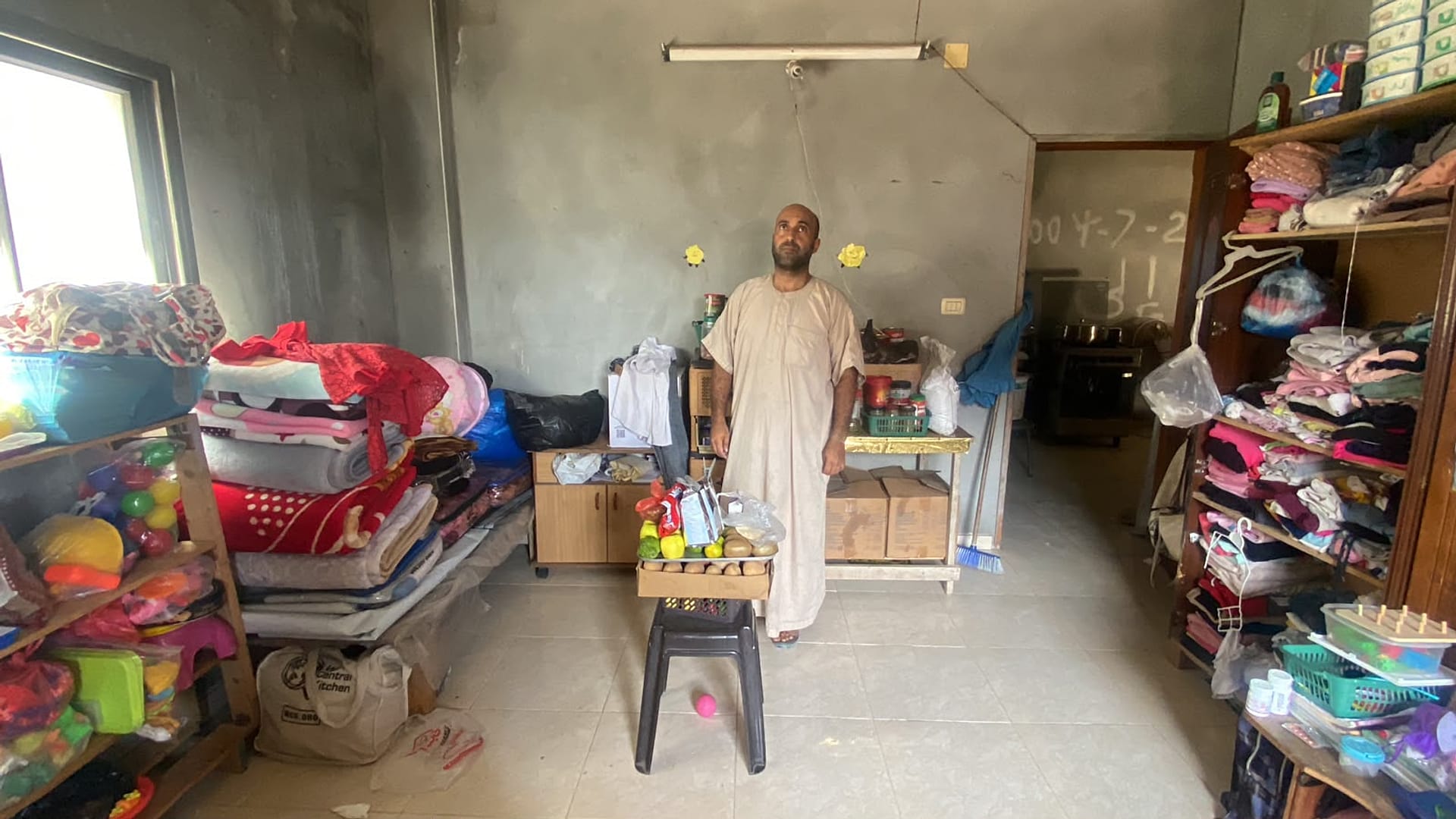
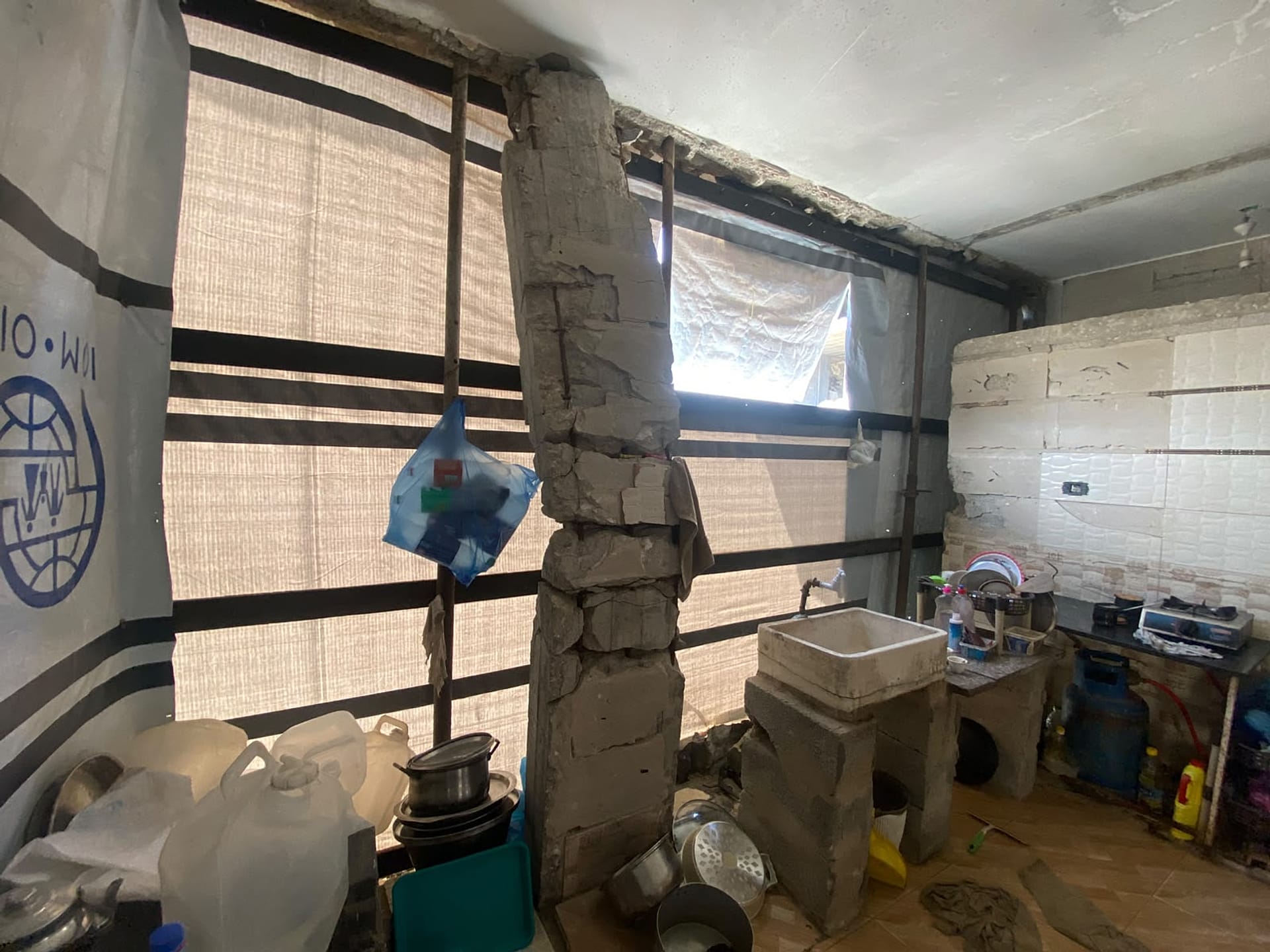
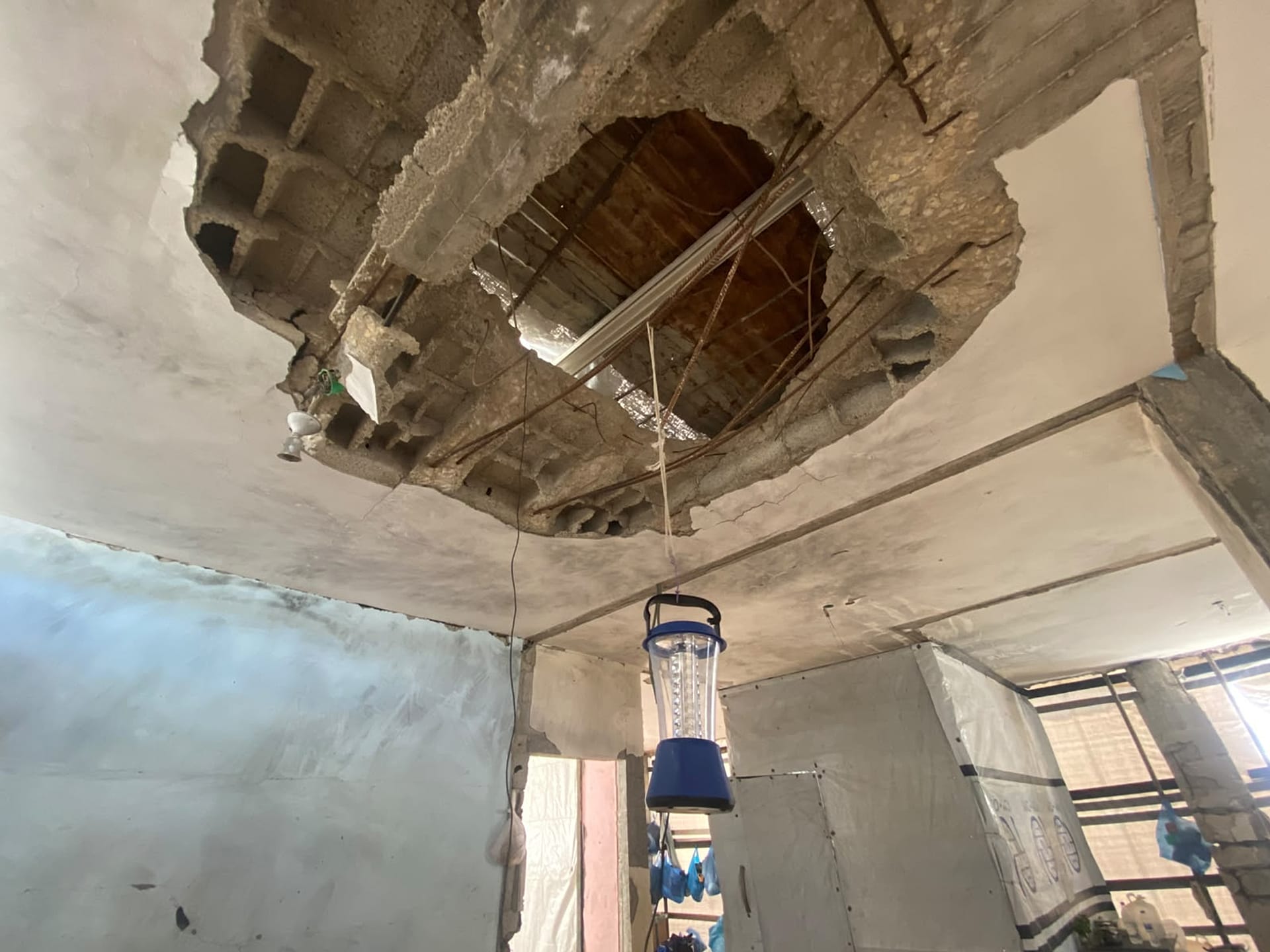
When the rain starts, Abdullah Siyam, a resident of Al-Mughraga in central Gaza, moves his family's bed to the only corner of the house where water does not seep in: shelling of neighbouring homes left cracks in the ceiling, and the family has no other housing. 'We move the mattresses there and sleep. It's the only way,' he told Euronews. His neighbour Maryam Abu Khazain collects water in containers on rainy days and pushes it out with a mop; after her blankets got soaked, she borrowed three from her daughter and returned them once they dried. 'It's as if we are living right out on the street,' she says. Muhammad Bardawil from the same neighbourhood fears facing winter with worn-out tents he cannot replace: in his words, wind and rain turn life into an ordeal 'whether we are in homes or in tents.'
Scale of destruction and rising prices
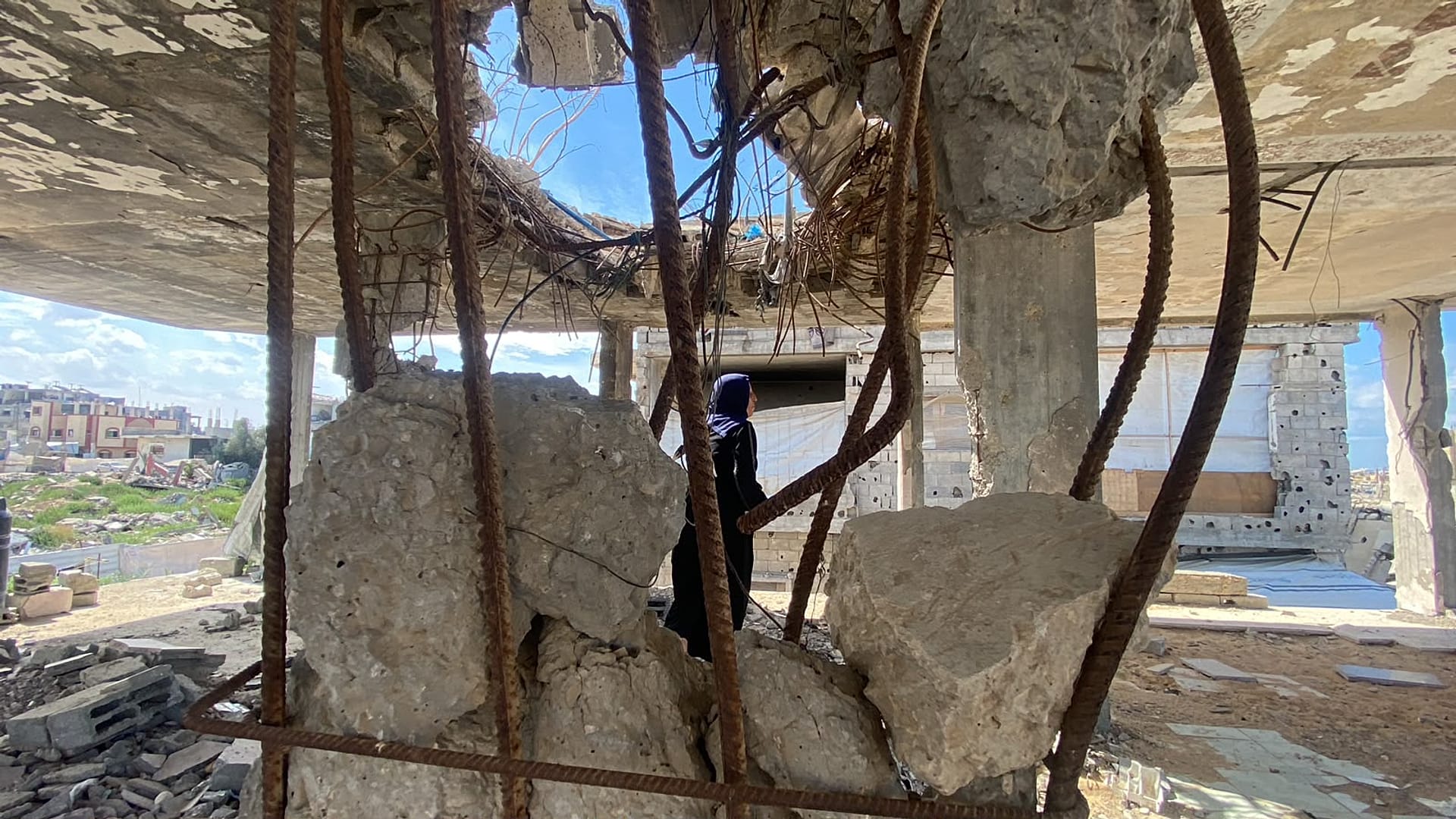
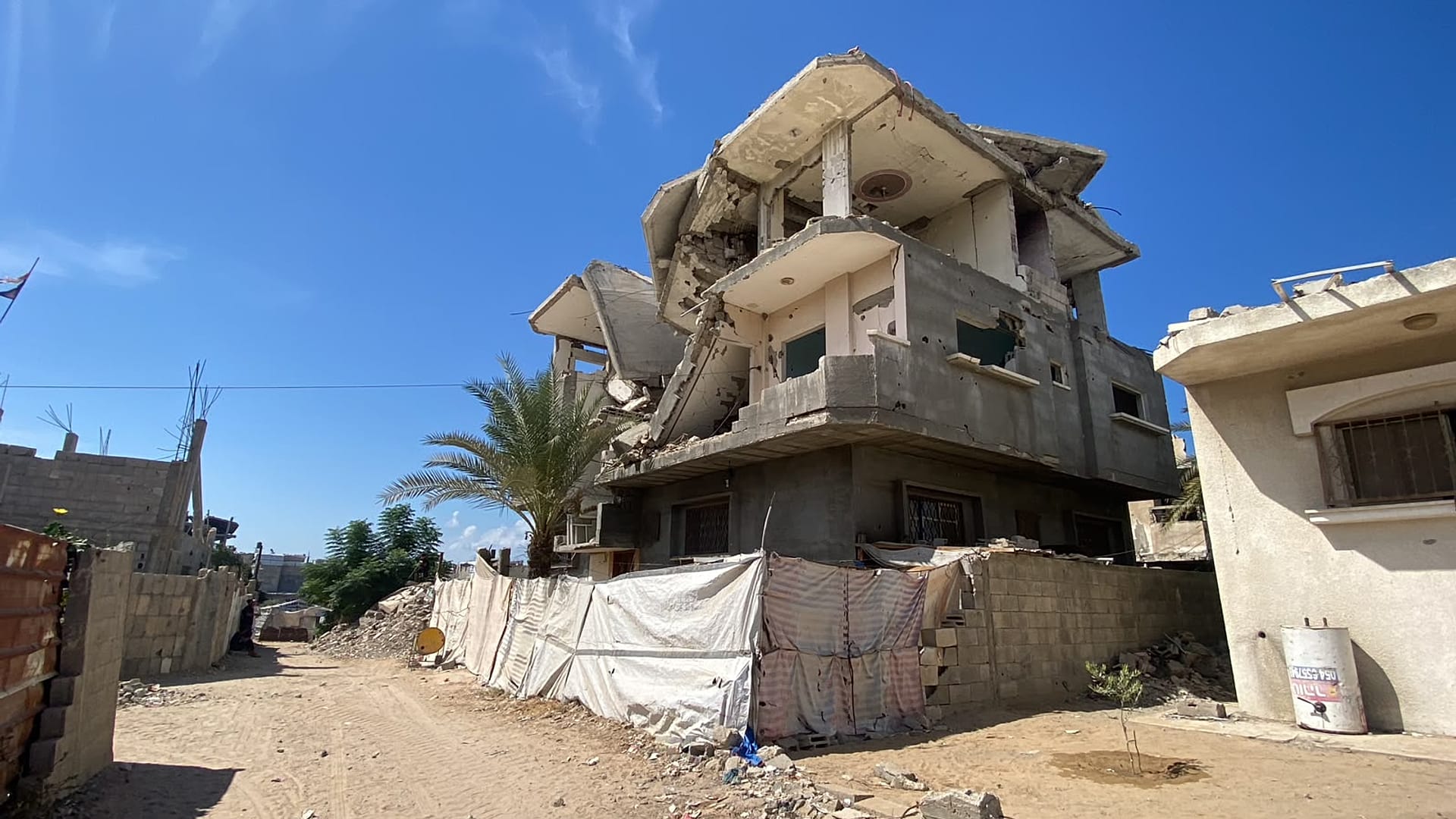
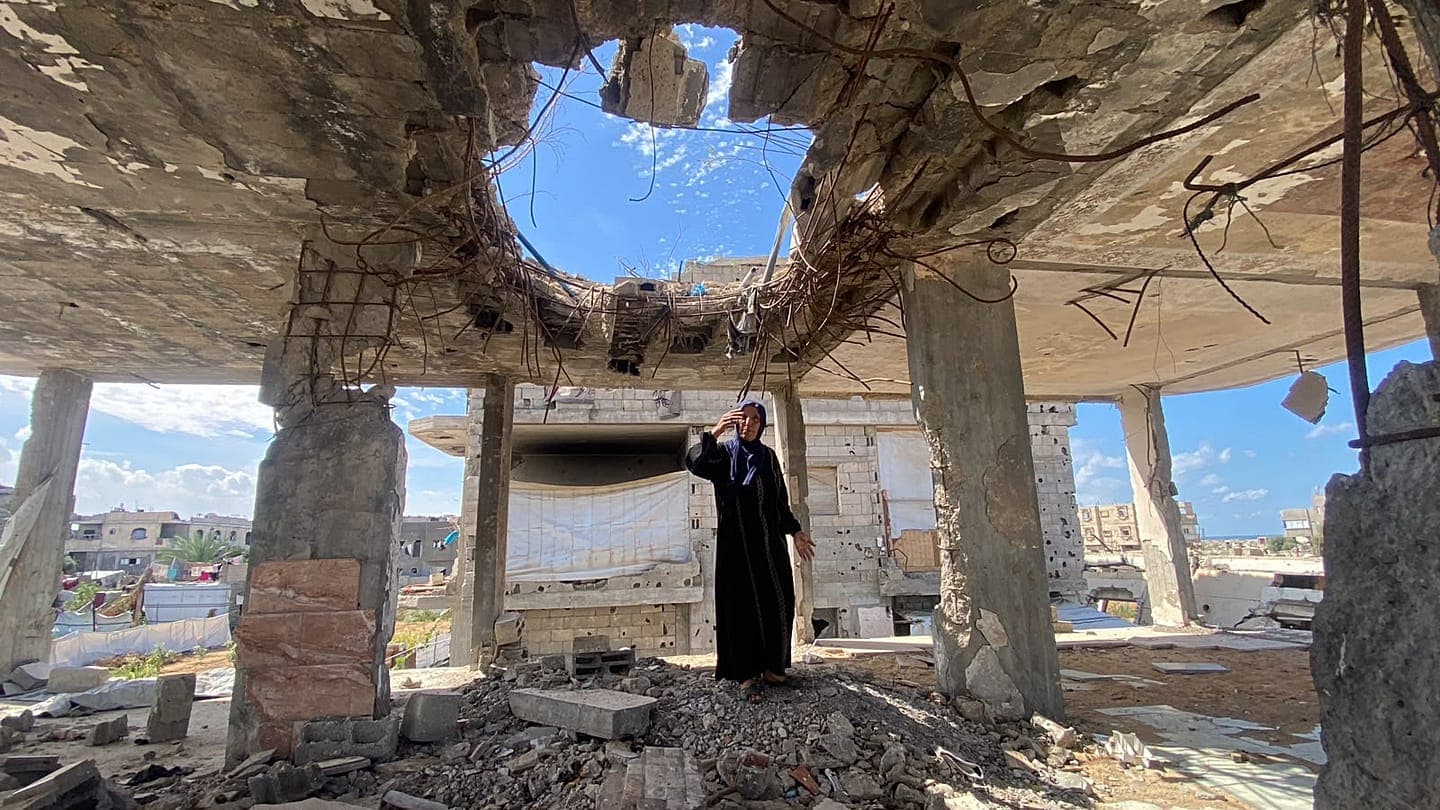
According to preliminary estimates cited in an October report by the UN Office for the Coordination of Humanitarian Affairs, more than 4,000 damaged buildings in Gaza are slated for full or partial demolition, including over 2,300 in which nearly 44,000 people still live. At a market in Deir al-Balah, prices for tarpaulin tents have risen from 120 to 180 shekels (35–53 euros), larger sizes cost about 230 shekels (68 euros), and a dome tent has gone up from 1,300 to 1,700 shekels (384–502 euros). Ahmed al-Siqali, displaced from Khan Younis, said reinforcing his tent cost him about 1,200 shekels (355 euros) — for beams and two tarps — money he raised with help from his brother outside the Strip. According to a June assessment cited by the Norwegian Refugee Council, 71% of surveyed families in damaged homes cannot afford repair materials. The 2023–2025 war, which according to the publication has killed more than 70,000 Palestinians — mostly women and children — has left a significant part of the territory in ruins; humanitarian organizations warn of near-famine conditions and the near-total collapse of healthcare.
The collapse of the Al-Saada building
On 16 September, the Al-Saada residential building collapsed in Gaza City; 21 Palestinians were killed, including 12 children and 5 women. Gaza's civil defence service said residents had been warned in advance but stayed because they had nowhere to go, and that the cause was structural damage sustained during the war. Service spokesman Mahmoud Basal warned on 17 September that the collapse of damaged high-rises in densely populated areas threatens both residents and people in tents nearby; in a single day the service received about 150 calls for help from residents of dangerous buildings. On 20 September, the Gaza government media office announced a plan to evacuate and demolish about 255 buildings at risk of collapse, with temporary housing to be provided, pointing to a shortage of heavy machinery, funding and safe sites; some families, it said, had not left despite the warnings. UN coordinator Ramesh Rajasingham — no, the coordinator Ramiz Alakbarov — after the collapse called for rescue equipment, machinery, fuel, tents and tarpaulins to be urgently delivered to vulnerable groups within four weeks.
Blockade of supplies and funding
The Norwegian Refugee Council reported that Israeli authorities in August approved the entry of 36,960 units of lumber and 660 emergency shelter kits, but blocked them on 26 August and 2 September, and later rejected a renewed UN request for coordination. Israel's Coordinator of Government Activities in the Territories (COGAT) told international media in September that it will not allow heavy machinery and construction materials through until Hamas is disarmed, accusing the movement of using humanitarian aid for its own purposes; Hamas denies this. As of 18 September, the UN shelter cluster had received only 26% of the required funding — $193.7 million. According to a late-September UN report, organizations and placed orders hold about 17,000 tents, tarpaulins and kits intended for roughly 50,000 families — these are stocks at various stages of readiness, not cargo waiting at crossings.
Preparing for the rains on the ground
On the ground, people are preparing for the rainy season: clearing drains, raising shelters above the ground, repairing sewage systems and looking for sites for voluntary relocation. A survey of more than 400 sites where displaced people are concentrated showed that 217 of them are at medium and high risk of flooding; about 235,000 people live there. To ensure their safety, demining, ground levelling, access to water, drainage and access roads are needed. Siyam says he used to consider rain in Gaza a blessing, but in the current state of his home he does not await it: 'Who would want to drown?' he asks.