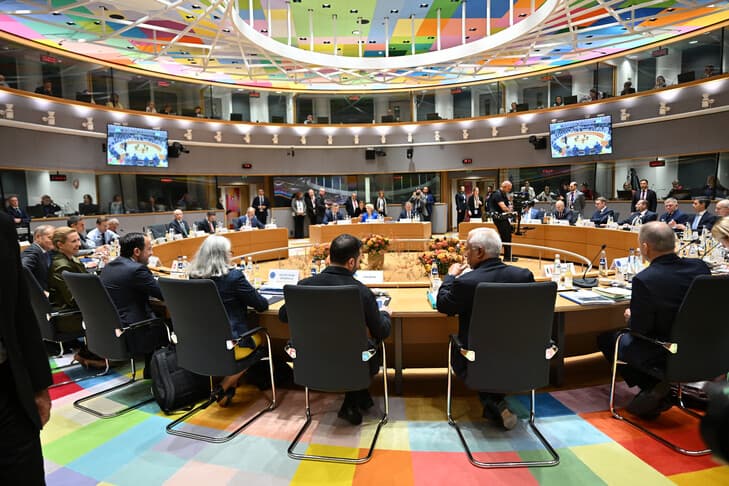
The key facts
- The European Council on 15–16 October in Brussels expressed regret over the US decision to temporarily lift sanctions on Russian diesel and reaffirmed support for Ukraine.
- Leaders called for the restoration of safe passage for vessels in the Black Sea and condemned attacks on shipping, including in the exclusive economic zones of Bulgaria and Romania.
- The EU condemned threats to shipping in the Strait of Hormuz, Houthi attacks, Israeli settlement activity, and expressed regret over US sanctions against the ICC.
Regret over the US decision on Russian diesel
European Union leaders on Friday expressed regret over the US decision to temporarily lift sanctions on Russian diesel and confirmed the continuation of support for Ukraine. The conclusions adopted following the two-day meeting of the European Council on 15–16 October in Brussels state: 'The European Council regrets the decision of the United States to temporarily lift sanctions on Russian diesel.' Last week, US President Donald Trump said he had struck a deal for diesel supplies from Russia to address the problem of high fuel prices.
The Black Sea and hybrid threats
Leaders called for the immediate restoration of safe passage for all civilian and commercial vessels in the Black Sea, describing attacks on shipping, including in the exclusive economic zones of Bulgaria and Romania, as 'unacceptable' and 'a serious violation of international and maritime law.' They called for strengthening measures against hybrid threats, protecting critical infrastructure and increasing preparedness, noting that additional restrictive measures and tighter visa requirements for Russian citizens would be urgently considered. In the field of European security, the need to strengthen the EU's defence capabilities while preserving NATO's role as the foundation of collective defence was underlined.
The Middle East
On the Middle East agenda, leaders expressed concern over escalating tensions and called for diplomatic efforts to prevent further destabilisation, emphasising the importance of freedom of navigation and maritime security. They strongly condemned threats to commercial shipping in the Strait of Hormuz and called for any agreements on the strait to comply with international law. Attacks by the Houthis against Saudi Arabia and civilian shipping in the Red Sea and the Bab el-Mandeb Strait were also condemned, with a call to immediately halt military operations.
Gaza, settlements and the ICC
On the situation in Gaza and the occupied West Bank, leaders expressed serious concern over the worsening humanitarian crisis, condemned the illegal expansion of settlements and the 'ongoing and increasing settler violence' against Palestinian civilians. They called on Israel to cancel settlement plans, including the proposed construction in the E1 area. The declaration states that businesses should not participate in tenders for construction contracts for E1 and other settlement projects, and that the participation of companies and financial institutions in settlement construction carries legal, economic and reputational risks, including the risk of serious violations of international law. Leaders also expressed regret over US sanctions against the International Criminal Court, called on Washington to lift these measures, and reaffirmed the EU's readiness to defend the court and ensure its access to financial and other services.


