The key facts
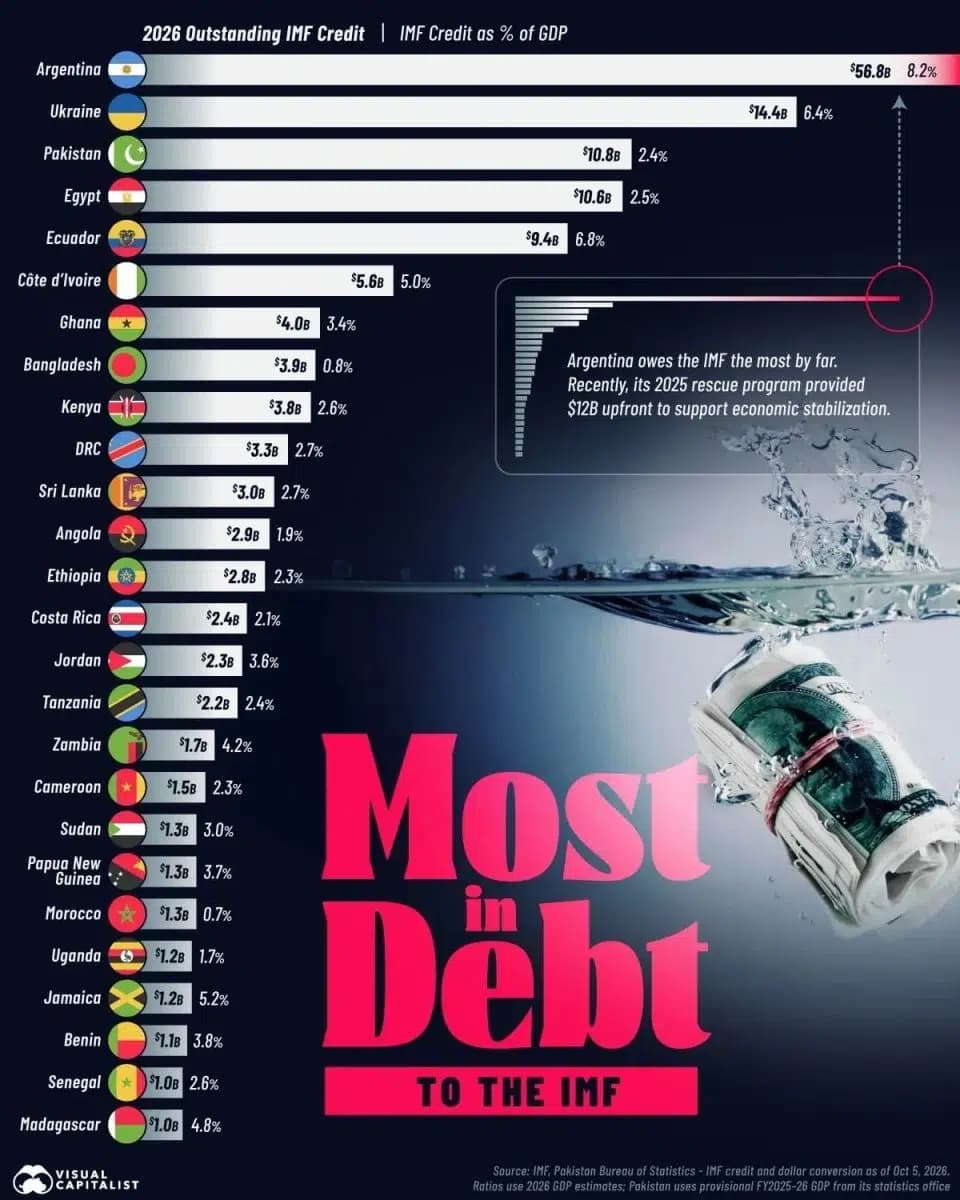
- Argentina is the IMF's largest debtor according to data as of early October 2026
- After Ukraine come Pakistan ($10.8 billion), Egypt ($10.6 billion) and Ecuador ($9.4 billion)
- The ranking reflects outstanding loans to the Fund, not countries' total external debt
The IMF's largest debtors
Visual Capitalist published an infographic based on IMF data as of early October 2026; debt amounts were converted into US dollars. The ranking reflects not countries' total external debt, but only outstanding loans to the Fund. Argentina ranks first — its debt exceeds the combined debt of the six states behind it. After Ukraine came Pakistan with $10.8 billion, Egypt with $10.6 billion and Ecuador with $9.4 billion.
Why Argentina ranks first
Argentina's large debt is explained by the fact that the country has been drawing on IMF funds for many years. Currency crises, high inflation and difficulties obtaining funds on international capital markets have repeatedly forced it to turn to the Fund. In 2018, amid a currency crisis, a record credit program of $57 billion was approved for Argentina, and in 2022 another major agreement was reached. The next program, approved in April 2025, provided for $20 billion in financing, including an immediate disbursement of $12 billion; the funds were aimed at stabilizing the economy, rebuilding currency reserves and strengthening investor confidence. The publication notes that these figures are the volumes of individual programs, and the country's current debt cannot be calculated by adding them up.
The debts of Ukraine and Pakistan
Ukraine's borrowings are linked to emergency expenditures arising from Russia's full-scale invasion, launched in 2022. According to the source, in February 2026 Ukraine agreed with the IMF on a new financing program of $8.1 billion, intended to support financial stability under wartime conditions. In Pakistan, the main problems cited include low tax revenues, a shortage of foreign currency and debt in the energy sector. IMF-supported reforms are aimed at broadening the tax base, replenishing currency reserves and restoring public finances to health.


