The key facts
- Thousands of schoolchildren have been blocking lycées for more than three weeks; on Saturday — hundreds of new actions with trade unions and the 'yellow vests'.
- Prime Minister Sébastien Lecornu accuses 'France Insoumise' of instrumentalising the protests; Mélenchon is popular among students.
- After a 15-year-old teenager lost his hand in Lens, the interior minister suspended the use of stun grenades.
Protests are gaining scale
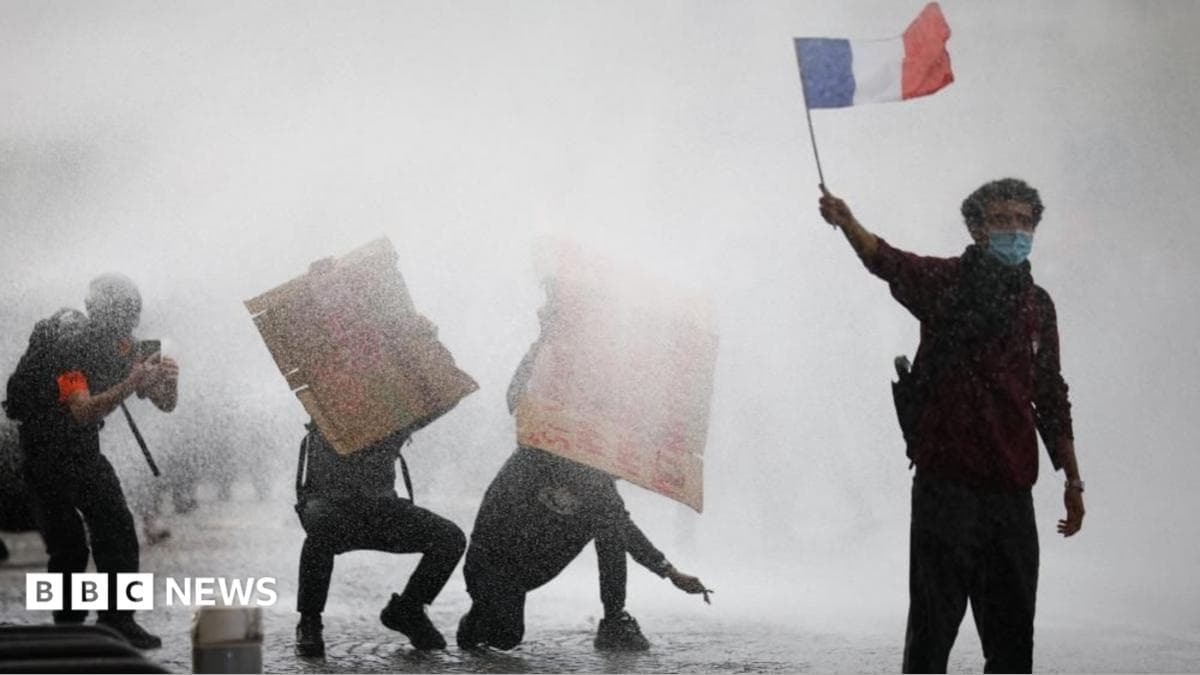
For more than three weeks, thousands of French schoolchildren have been barricading the entrances to lycées and taking to the streets, complaining about overcrowded classrooms, a shortage of teachers and the poor condition of buildings. Hundreds of new demonstrations across the country have been announced for Saturday, which trade unions and prominent figures of the 'yellow vests' movement are expected to join. Activist Jérôme Rodrigues called on people on Instagram to join the actions, saying that the protest must give a voice to those who 'want to live with dignity' and 'not choose between food and petrol'. 'Anger has no party. An empty fridge has no party,' he said.
Accusations of manipulation
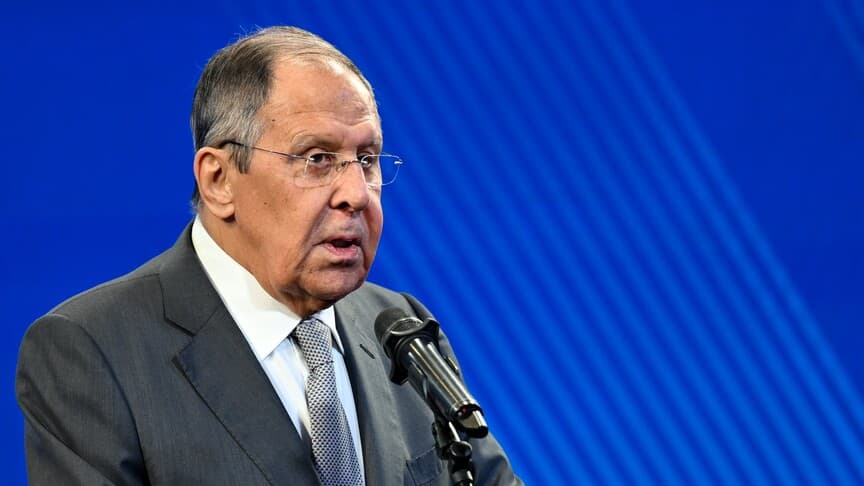
Prime Minister Sébastien Lecornu said on Wednesday that members of Jean-Luc Mélenchon's 'France Insoumise' (LFI) are 'instrumentalising the lycée students' movement for electoral advantage', encouraging the protests and condemning violence only for show. 'This hypocrisy is harming France,' he said, adding that the protests are turning into 'an urban violence movement'. At the same time, the slogan 'Mélenchon for president!' is often heard among students: supporters back his ideas of a wealth tax, lowering the voting age to 16, and note that he is the only candidate to have personally visited schools. About six months remain until the elections, which will take place in the spring of next year.
Violence and the authorities' response
During the protests at the beginning of the month, hundreds of people were injured, and a 15-year-old teenager in the city of Lens lost his hand. The Interior Ministry denies accusations of police violence, but the interior minister has suspended the use of stun grenades at school demonstrations. At a demonstration in Paris on Thursday, a BBC journalist met mothers with placards reading 'Mothers in solidarity', who took turns coordinating interaction between pupils and the police at blockaded schools. One of them, 37-year-old Gwenn, said she did not mind her son missing classes: 'It is far better for him to wake up to his civic duty and fight for justice.'
Economic background
Social discontent is combined with record-high costs of servicing the national debt, a deeply divided parliament and a 'carousel' of prime ministers — six heads of government in the last five years. Economist Anne-Laure Delattre (CNRS, Université Paris-Dauphine) believes the situation cannot be compared with the Greek debt crisis of 2012 or Argentina's in 2001: 'The situation is more like Britain in 2023 with Liz Truss' — the crisis was short because the markets knew the country had financial instruments. In her assessment, a 4% VAT increase would bring the necessary €120 billion, and the ECB would probably intervene if French finances were shaken enough to affect other European economies. Delattre believes a new president will not solve the problem: constitutional reform is needed, since the Fifth Republic is built around a strong president, while parliament merely blocks him. She also advocates protecting education funding and a fairer distribution of resources.
Political responses
Nationalist leader Marine Le Pen, the favourite of the presidential race, proposes cutting France's contribution to the EU budget by €11 billion. Centrist senator Anne-Catherine Loisier believes that students 'should feel they are being heard' and proposes redistributing existing education funding at the regional level, as well as decentralising power away from Paris. Polls, as in much of Europe, show that public trust in the political class is declining. The very subject of the protests has historical resonance: the student demonstrations of May 1968 grew into the largest general strike in French history.
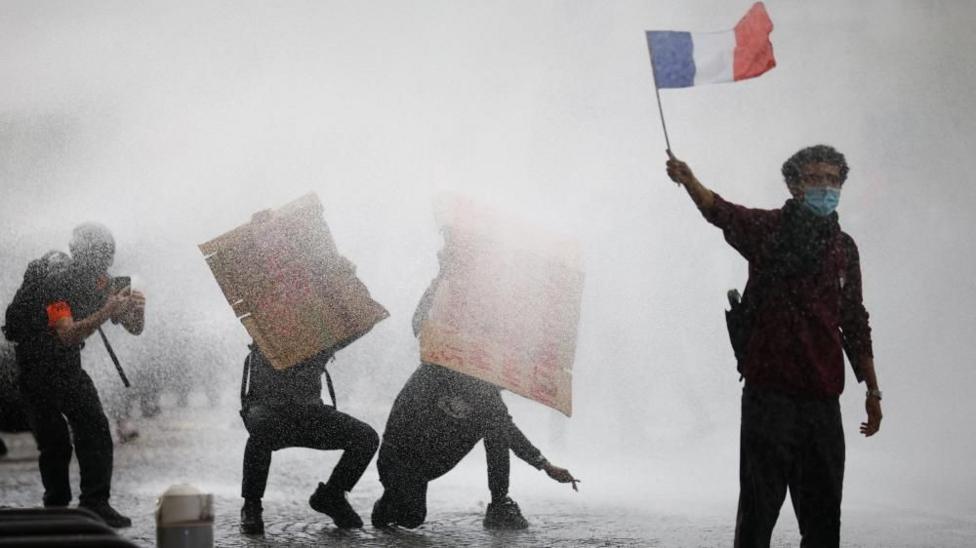 Image source, Reuters
The French prime minister has accused the radical left of weaponising the high school movement for electoral advantage
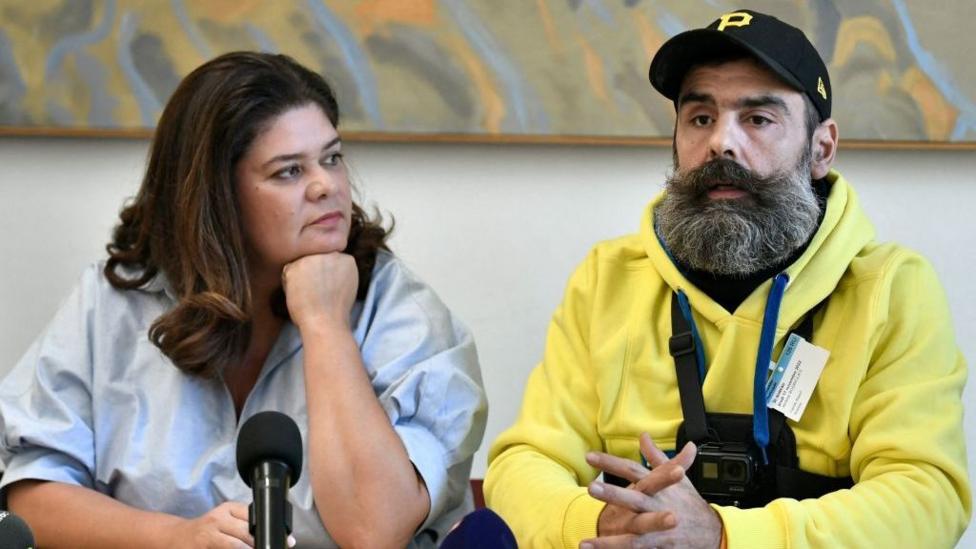 Image source, AFP via Getty Images
Jérôme Rodrigues (R) played a leading role in the gilets jaunes movement several years ago
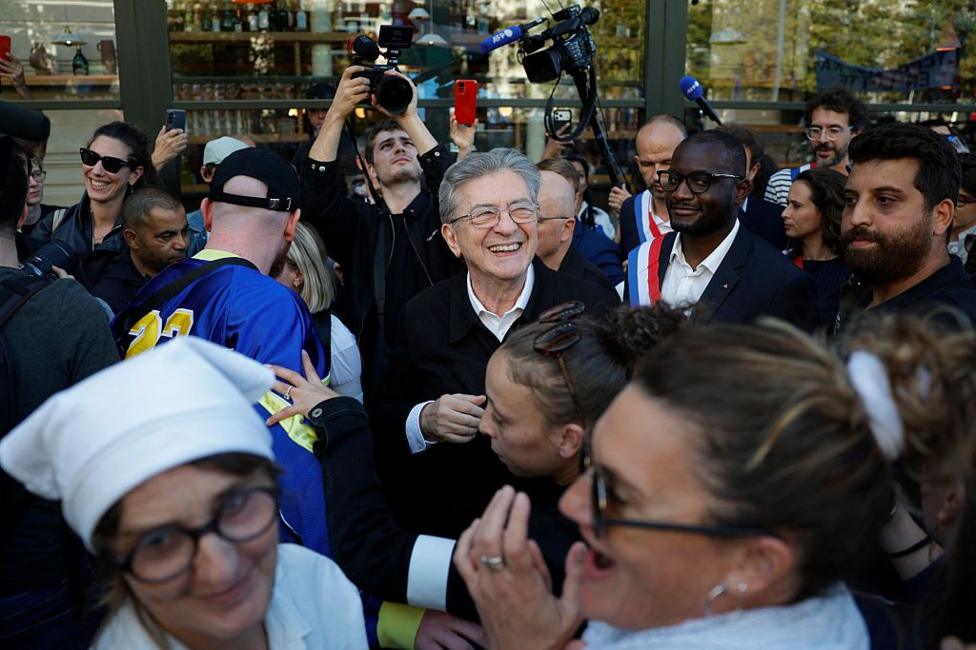 Image source, AFP via Getty Images
Radical-left LFI leader Jean-Luc Mélenchon (C) has been accused of exploiting the student protests ahead of next year's elections
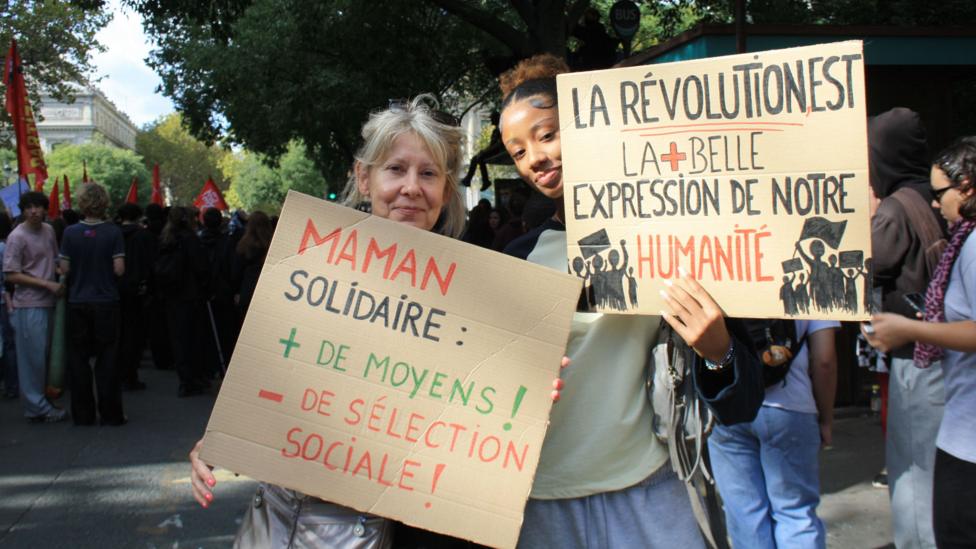
Lola (R) was joined in the protest by her mother Sandrine, who had been part of the 1968 student movement
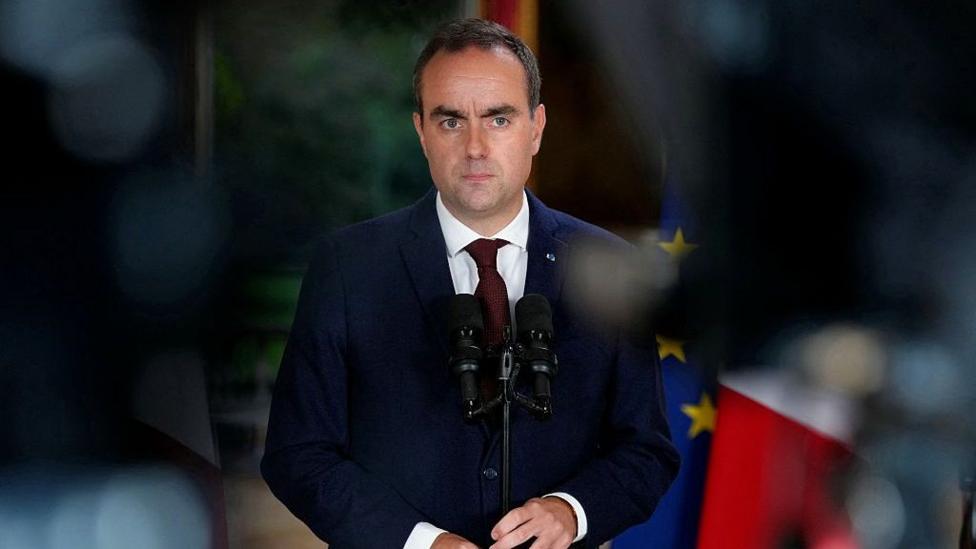 Image source, AFP via Getty Images
French Prime Minister Sébastien Lecornu has complained that the high school protests are turning into a "movement of urban violence"
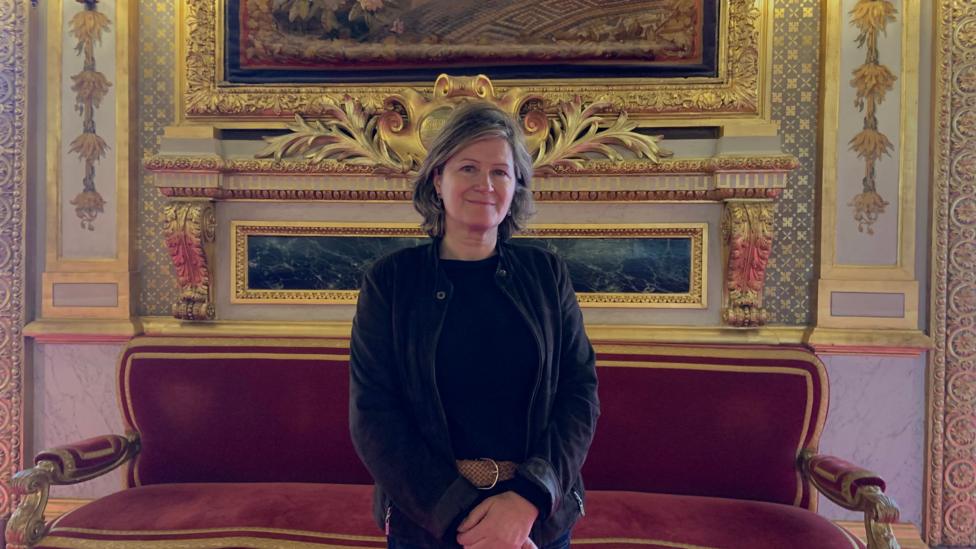
Senator Anne-Catherine Loisier believes the solution lies in decentralising power away from Paris