The key facts
- Panay believes a new generation of users will expect devices to understand their needs instead of opening apps
- Amazon introduced the Bee devices: a bracelet/pendant and a card for smartphones, recording audio with real-time processing and encrypted transcripts
- Raw audio is not stored; access to transcripts, including by Amazon employees, is blocked without the user's consent
A vision of computing without apps
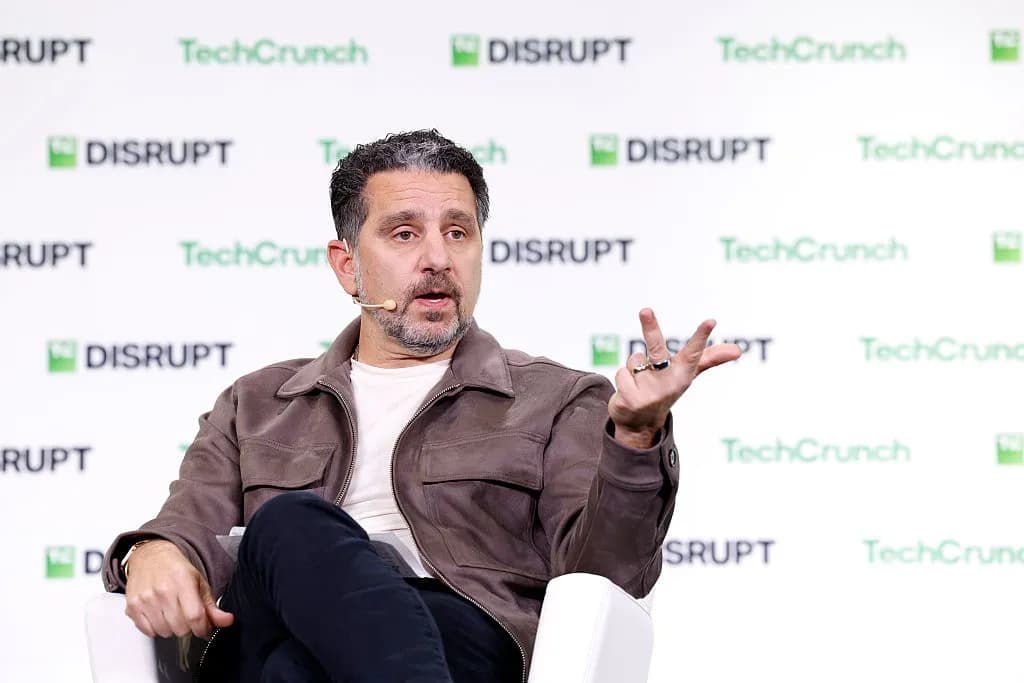
Speaking at TechCrunch Disrupt, Amazon's senior vice president of Devices, Alexa and Leo, Panos Panay, said the future of personal AI lies in ambient computing, not apps. According to him, users today have to remember what to ask a device, describing it with the formula 'point, capture, get.' Instead, he envisions a world that starts with ambient devices: they work in the background, use sensors and AI to determine on their own what needs to be done, allowing a person to stay more present and not fear missing something.
The launch of the Bee devices
Amazon's key bet in this direction is the new Bee wearables, introduced on Thursday: a bracelet that can be worn on the wrist or turned into a pendant, as well as a credit-card-sized device that attaches magnetically to the back of a smartphone. The gadgets passively record audio and keep notes about the user's day, surfacing tasks, reminders and useful observations.
The approach to privacy
To balance usefulness and privacy, the Bee devices do not store the original audio of conversations: audio is processed in real time and then deleted. Transcripts are encrypted with keys that are created and controlled by the user's device itself, so no one, including Amazon employees, can access them without deliberate sharing by the owner. Panay emphasized that privacy was a key factor in the design: 'You have to give customers control… for Bee you need to design with privacy in mind, and that's critical.'
The smartphone won't disappear
Panay, who joined Amazon after 19 years at Microsoft, where he oversaw the Surface line, clarified that he does not believe one form factor will replace another: the smartphone will remain an important device. Instead, in his view, a new class of devices with sensors will emerge that understand the user better and bring intelligence into the surrounding world, united by an 'intelligence layer' that must be useful. He suggests that an entire generation will stop saying 'give me an app' and will instead expect the device to understand on its own what is needed.