The key facts
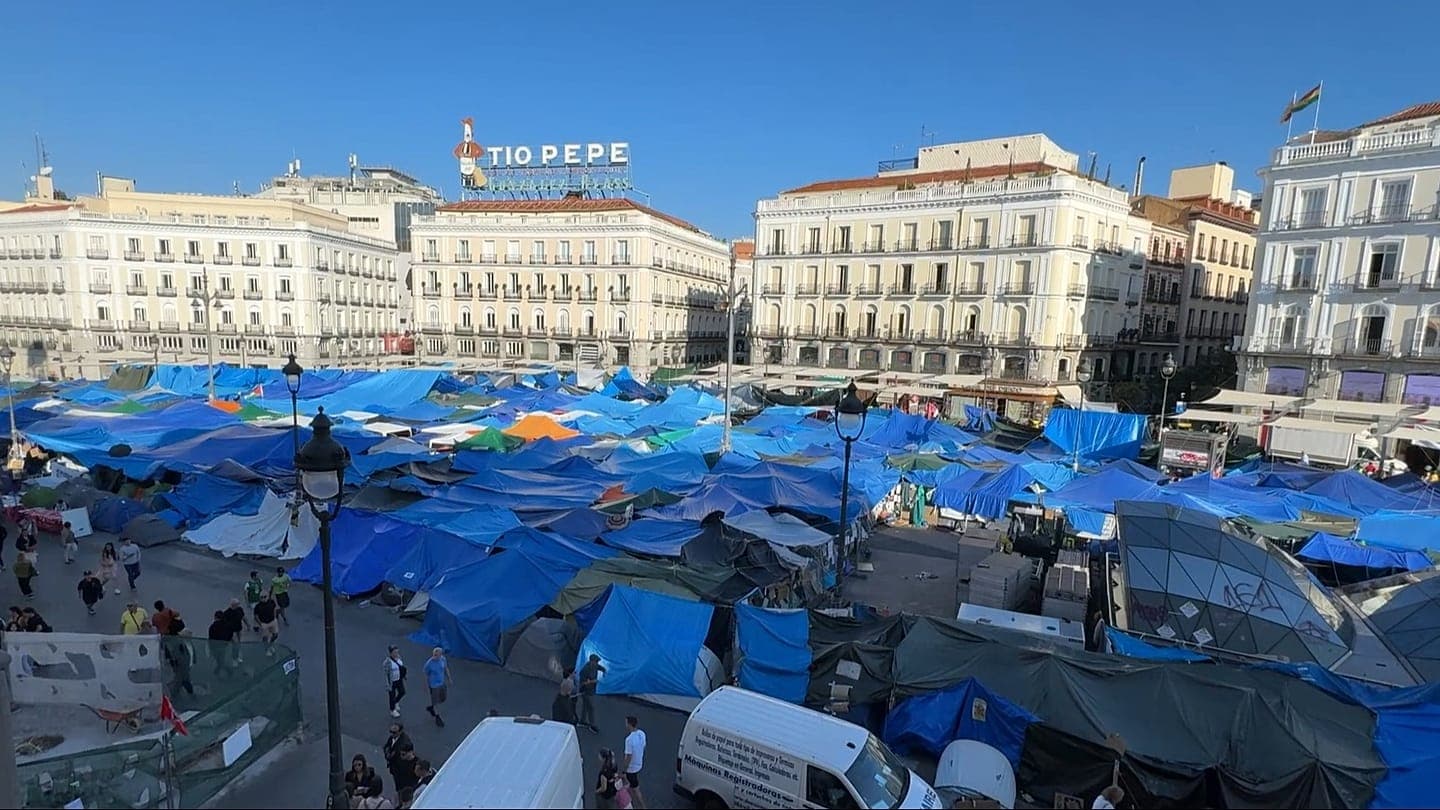
- The tent camp on Puerta del Sol has been in place for more than two weeks; participants complain of fatigue, lack of toilets and nighttime thefts, but emphasize their organization and mutual aid.
- Authorities of the Community of Madrid, after the High Court's refusal on 5 October, are ready to go all the way to the Supreme Court to secure the camp's eviction.
- The main demand is decent housing at affordable prices; protesters have not named a departure date, saying the decision will be made by the general assembly.
Camp in central Madrid enters its third week
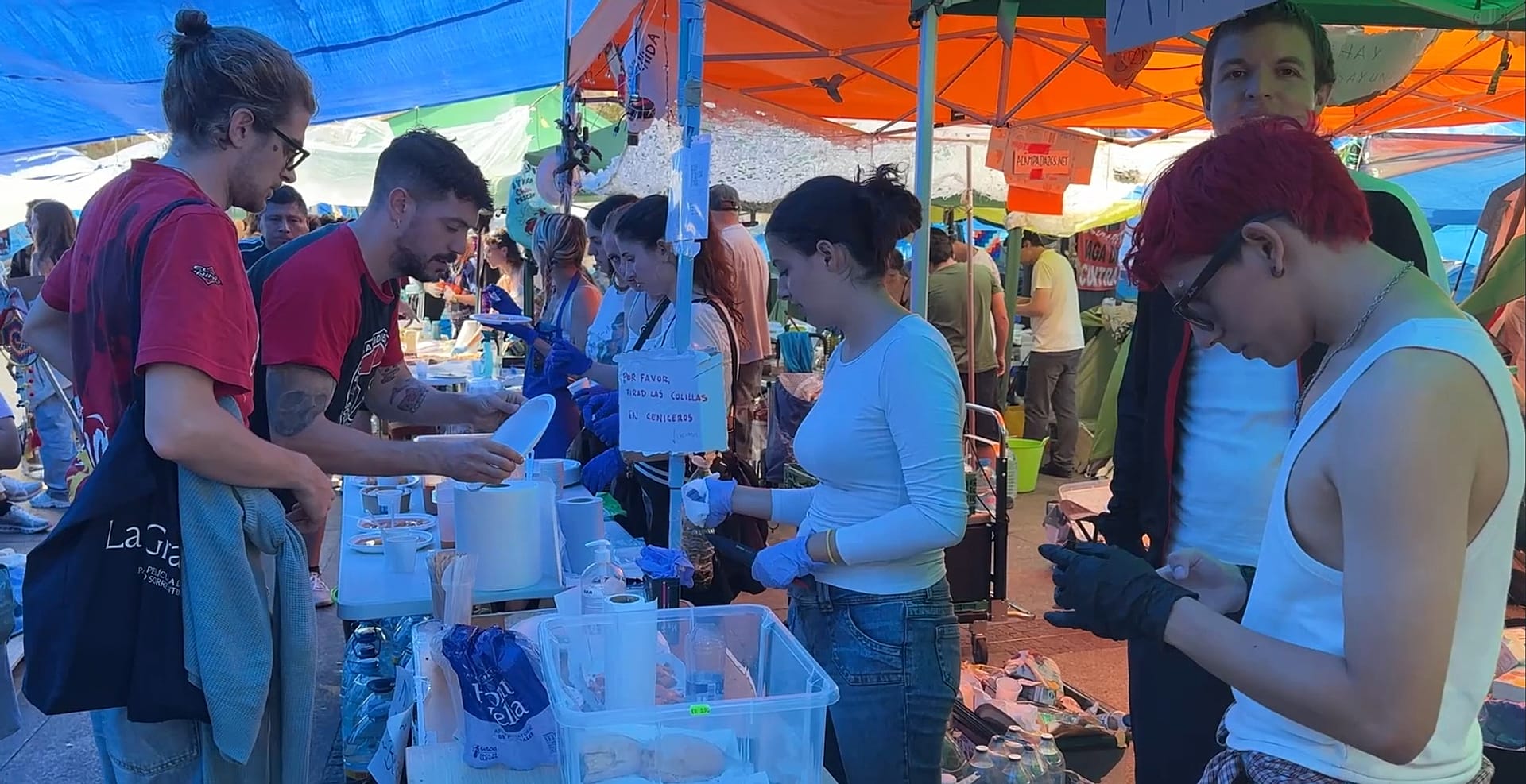
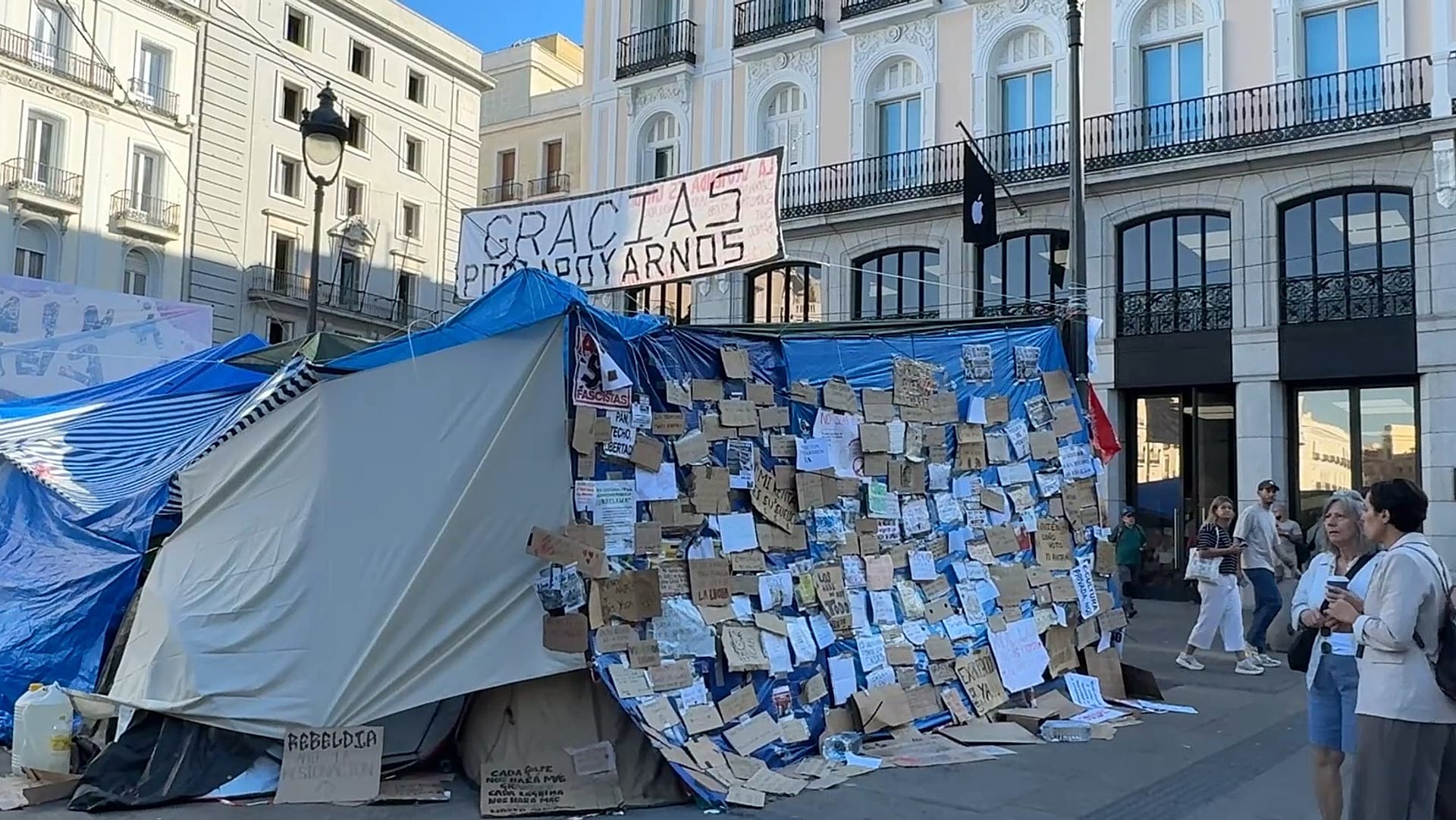
A tent camp of protesters against the housing crisis in Spain has been in place for more than two weeks on Puerta del Sol square in central Madrid. Euronews reported this, citing a visit by its correspondents to the square on 15 October 2026. A small community has formed around the camp: tents and canopies give participants shelter and a semblance of privacy, while inside there is food distribution, a medical aid area, volunteers offering legal advice, and even a small library. For many participants, the camp has become, in their words, something more than a place of protest — almost a family: during Euronews' visit, one of the protesters, who wished to remain anonymous, burst into tears as he described what the camp means to him, and his comrades came over to hug him and ask how he was feeling.
'We are tired, but we have become better organized'
Nacho, who has taken part in the action for almost three weeks as both protester and volunteer, spends most of the day cooking food and sorting incoming supplies. 'Right now we are at the limit of exhaustion, but at the same time we are better organized and more inspired,' he told Euronews from the central marquee. Due to exhaustion, he had to spend several nights at home. He emphasizes the camp's clear organization and the solidarity of city residents who bring food, water and hygiene products: 'We do not accept money. Everything we have is what people bring.' Another anonymous participant highlights the contribution of volunteer doctors and lawyers and says the experience shows the importance of being able to set aside differences and help one another.
Everyday hardships and a response to the authorities' accusations
Life in the camp comes with difficulties: the protesters have no toilets of their own, and some complain about problems with waste removal and nighttime thefts. Nacho acknowledges the inconveniences but assures that a cleaning committee operates in the camp. Pedro, another participant, rejects criticism of the camp's hygiene and defends the work of the volunteers, who include students and professionals from various fields. He also responded to accusations by the president of the Community of Madrid, Isabel Díaz Ayuso, about the presence of terrorists in the camp: according to him, this does not correspond to reality, and the Palestinian symbolism is connected with solidarity with the residents of Gaza, not with support for terrorism.
Authorities apply pressure through the courts
The government of the Community of Madrid insists on the camp's removal. Its representative Miguel Ángel García Martín said this week that the authorities will 'exhaust all legal mechanisms' to evict the camp, without ruling out going to the Supreme Court. This follows the Madrid High Court's refusal on 5 October to grant a request for the immediate dispersal of the camp. Madrid City Hall, according to Euronews, is considering changing the route of upcoming autumn events, including the Transhumance Festival, and moving part of the celebrations to Plaza Mayor in order to bypass the area occupied by the protesters.
Demand for affordable housing and an uncertain timeline
The participants' main demand is decent housing at affordable prices. Pedro notes that having a job no longer guarantees the ability to rent an apartment in Madrid: high prices, deposits and the financial requirements of some real estate agencies make access to housing difficult even with a stable income. He also criticizes the practice of converting apartments into sets of individual rooms for separate rental, which, in his view, further heats up the market. The protesters see the camp as a way to pressure the authorities and secure concrete measures; one of them assured that they will stay until an agreement is reached or progress is made, exclusively by peaceful means. The participants have no specific departure date: Nacho explained that the future of the action will be decided by the general assembly depending on the political goals set. For now, volunteers continue to distribute food, organize donations and maintain order: the fatigue is evident, but so is the desire to continue — participants insist that they only want to be heard and to find solutions to the housing crisis.