The key facts
- According to the FSB, the Swede, by its account, served in the Aidar battalion and arrived in Russia under the cover story of joining the Russian army; the charges have not been independently confirmed
- Japan summoned ambassador Nikolai Nozdrev and demanded consular access to Yuki Imai; CPJ demands his release
- On October 9, Medvedev wrote about replenishing the 'exchange fund' with foreigners to be exchanged for Russians
Detention of the Swede in Pskov Region
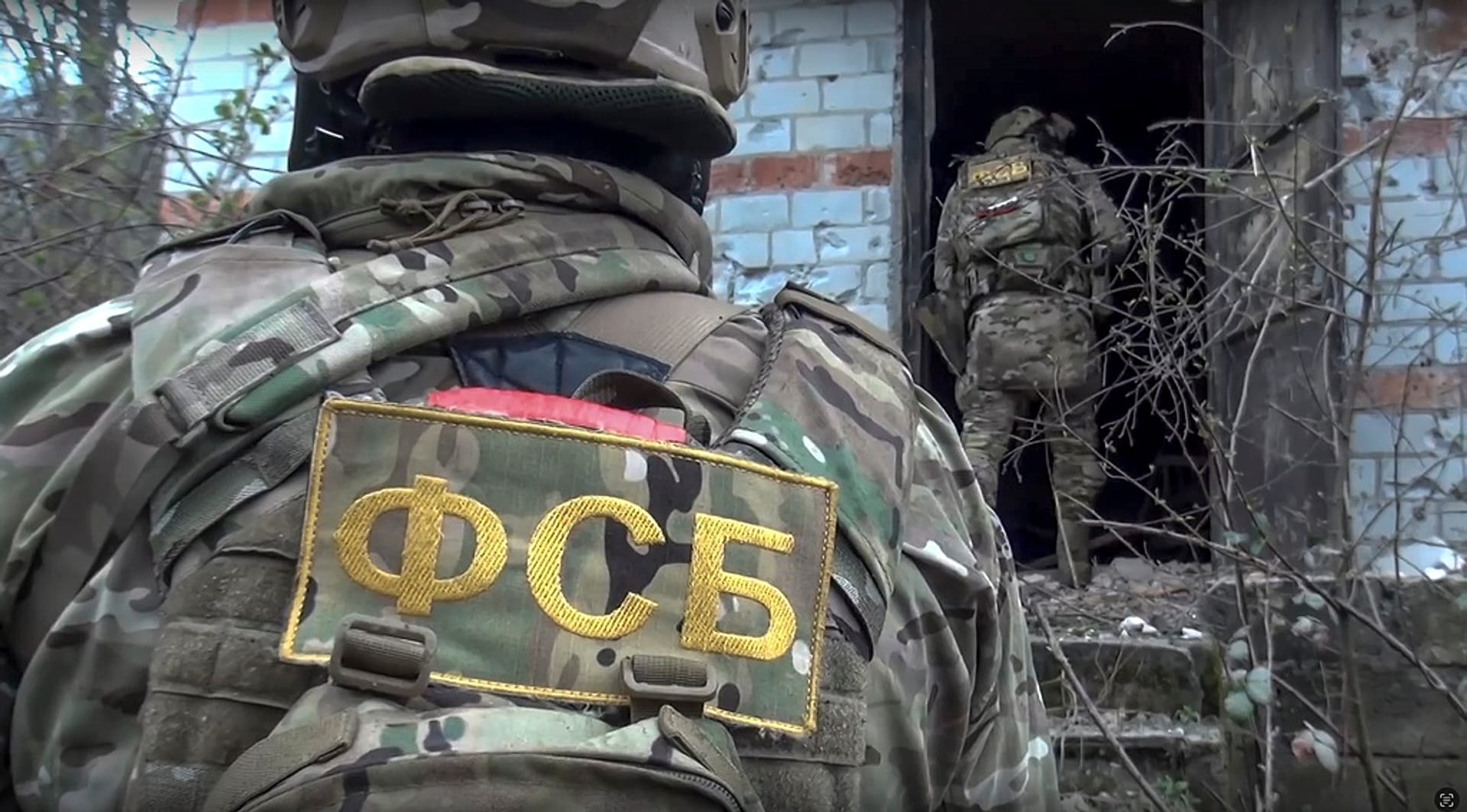
The Federal Security Service reported the detention of a Swedish citizen in the Sebezhsky District of Pskov Region, near the borders with Belarus and Latvia (according to Deutsche Welle, the region also borders Estonia). According to the FSB's version, the man arrived in Russia 'under the cover story of joining the ranks of the Russian Armed Forces,' while in fact intending to carry out sabotage at military facilities. In the interrogation video published by the FSB, he identified himself as Freddy Mikael Stolkrantz Lindholm; according to the Swedish TV channel SVT, he is 35 years old and lived near Stockholm. According to DW, in the video, where the man speaks English, he says he is from Stockholm, signed a contract with the Ukrainian Ministry of Defense and completed training in drone operation; Russian state TV showed, as claimed, his contract with Ukraine.
The Charges and the FSB's Version
According to the FSB, from February to June 2026 the detainee served on a contract basis as a squad commander of UAVs in the 24th Separate Assault Battalion 'Aidar' of the Ukrainian Armed Forces — a formation designated in Russia as a 'terrorist organization.' The agency stated it possesses documents confirming his participation in hostilities against Russia. A case has been opened on illegal border crossing; charges of organizing the activities of a terrorist organization and mercenarism are also possible. None of the FSB's claims can be independently verified. Ukraine has not commented on the arrest; the Swedish Foreign Ministry said it is aware of the situation but is not involved in it. A relative of the detainee told SVT that he had fought for Ukraine for about six months, then returned home and recently left for there again.
Arrest of the Japanese Journalist
The FSB reported the detention on Sakhalin of Yuki Imai, an employee of the Hokkaido Shimbun newspaper, at the moment when he was preparing to leave Russia. According to the investigation's version, he was gathering information on Russia's defense capability on assignment from Japanese intelligence services. Japanese Prime Minister Sanae Takaichi rejected the espionage charges. On Wednesday, Tokyo summoned Russian ambassador Nikolai Nozdrev: Kimitake Nakamura, head of the European department of Japan's Foreign Ministry, expressed protest both over the arrest and over the fact that Moscow announced it without informing the Japanese government in advance. Japan demanded explanations, consular access and guarantees of humane treatment. The Committee to Protect Journalists (CPJ) demanded Imai's immediate release; its director for Europe and Central Asia, Fiona O'Brien, stated that 'journalists must not be used as leverage in broader geopolitical disputes.' According to CPJ estimates, at least 30 journalists are being held in Russia in connection with their professional activities.
The 'Exchange Fund' Context
Observers note that both detentions fit into the practice of arresting foreigners in Russia on espionage or smuggling charges, which critics call hostage-taking for subsequent exchange. On October 9, after the detention in Montenegro of the founder of the Telegram channel 'Rybar' Mikhail Zvinchuk (later returned to Russia), Deputy Chairman of the Security Council Dmitry Medvedev wrote on Telegram: 'Now, quite possibly, we will need to replenish the exchange fund with European and American morons in order to pull out our own,' adding: 'There is no other way: to live with wolves means to howl like a wolf.' The last major exchange took place in August 2024: 26 people were freed — Russia released 16, the West 10, including two children. Russia then released, among others, The Wall Street Journal journalist Evan Gershkovich and former marine Paul Whelan (both sentenced to 16 years in a strict-regime colony on espionage charges), the Germans Rico Krieger (sentenced to death in Belarus) and Patrick Schebel (detained at Sheremetyevo over marijuana marmalade). Moscow received, among others, Vadim Krasikov, who was serving a life sentence in Germany for the murder of Zelimkhan Khangoshvili, Artem and Anna Dultsev, accused of espionage in Slovenia, and the Spanish journalist of Russian origin Pablo González (Pavel Rubtsov), detained in Poland. Earlier, under a similar scheme, in December 2022, American basketball player Brittney Griner was exchanged for Viktor Bout.