The key facts
- Houthis claimed responsibility for the Tuesday evening attack on Aramco's Dhahran headquarters; no casualties reported, with damage to the top three floors including CEO Amin Nasser's office.
- Brent crude exceeded $106 per barrel, Aramco shares fell 0.5%; Lufthansa suspended flights to Riyadh through November 18.
- The IMF projects a 3.3% contraction in Saudi Arabia's economy this year and 7.9% growth in 2027, assuming gradual reopening of the Strait of Hormuz starting March 2027.
Attack on Aramco Headquarters and IMF Response
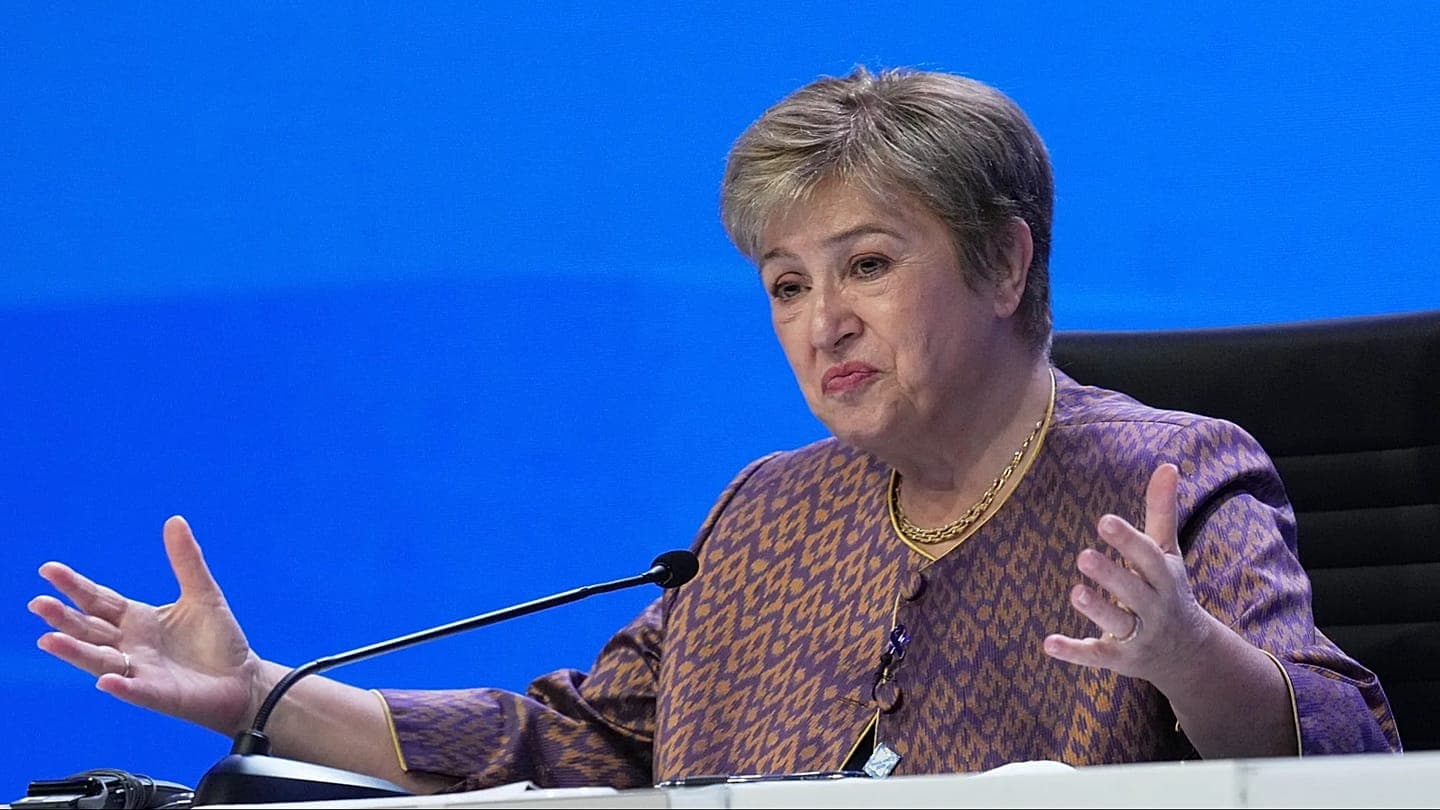
The International Monetary Fund warned on Wednesday that attacks on Saudi Arabia could impact economies worldwide following the strike on the oil giant Aramco's headquarters. IMF Managing Director Kristalina Georgieva highlighted the kingdom's importance to the global economy, stating that "what is happening could have potentially negative consequences for everyone, everywhere." The statement was made during the annual meetings of the IMF and the World Bank in Bangkok.
Details of the Attack
Saudi Arabia's Ministry of Energy reported that an attack on the administrative building of Aramco's headquarters in Dhahran occurred Tuesday evening, causing a small fire; there were no casualties or injuries. Responsibility was claimed by Iran-backed Yemeni Houthis, who have also targeted Saudi airports amid renewed fighting with the kingdom-led coalition. According to a Reuters source, the top three floors of the building, including CEO Amin Nasser's office, suffered significant damage. Two sources stated that operations at the complex continue normally, although some employees were advised to work from home; another source indicated that part of the functions has been temporarily relocated to overseas offices. Aramco manages drilling rigs, refineries, export terminals, and pipelines from its headquarters; the company did not respond to the agency's request for comment.
Markets and Air Travel
On Wednesday, oil prices rose: Brent traded above $106 per barrel, while Aramco shares fell 0.5% at the start of trading. Lufthansa suspended flights to Riyadh through November 18, according to its latest notice. Additionally, Reuters reported citing two informed sources that following attacks on Riyadh airport, Saudi authorities plan to allow top executives to participate in the Future Investment Initiative conference in an online format; the event is scheduled for the end of this month.
IMF Forecasts and Shipping Dependence
Saudi Arabia's economy was already under pressure due to the war with Iran and shipping disruptions through the Strait of Hormuz. The IMF expects a 3.3% contraction in the economy this year and 7.9% growth in 2027. The forecasts were published on Tuesday but were prepared before the deadly attack on Riyadh airport on Saturday. The recovery scenario assumes a gradual reopening of the Strait of Hormuz starting March 2027 and a return of shipping to pre-war conditions by October. The East-West pipeline, delivering oil to Yanbu on the Red Sea, allows exporters to bypass the strait; according to the IMF, this reduced damage compared to some neighboring countries. Georgieva added that the development of non-oil businesses also helped mitigate the war's impact on the kingdom's economy.
Warning for Poor Countries
Georgieva warned that poorer countries dependent on energy imports are suffering most from rising prices. She called on governments to support people facing increased costs for food and energy.


