The key facts
- BBC Verify: 254 incidents without a public outcome out of 300 reviews announced by the IDF; only 28 completed
- 158 cases in Gaza, 48 in the West Bank, 32 in Lebanon, 16 in Israel or in IDF custody
- The IDF cites "legal and operational constraints"; experts point to Geneva Conventions requirements on transparency
The scale of unfinished investigations
BBC Verify journalists, using specially created AI tools, analysed more than 60,000 reports from BBC News and Reuters for the period from 7 October 2023 to 19 August 2026 and identified 300 unique incidents for which the Israel Defense Forces (IDF) said it was conducting a review — "being studied", "being examined", "being checked". Outcomes were published on the IDF website for only 28 cases, and for another 18 it is unclear whether the investigation has been completed. Thus, at least 254 incidents have no public result. Of these, 158 occurred in Gaza, 48 in the West Bank, 32 in Lebanon and 16 in Israel or in IDF custody. In more than 200 cases, at least one person was reportedly killed. BBC Verify stresses that the search was not exhaustive.
The IDF's response
To numerous requests on each case, the IDF responded with information on only two incidents which, it said, are still under review. In a statement, the army said it treats "with the utmost seriousness" every report of possible violations and publishes investigation outcomes "when possible, taking into account legal and operational constraints, as well as privacy and information security constraints". The IDF also stated that during the war it took disciplinary measures in dozens of cases against soldiers who failed to meet standards, including removal from combat positions and reserve service. In August, the IDF published a rare report on five investigations in Gaza: the cases of the death of five-year-old Hind Rajab and of 15 Palestinian Red Crescent paramedics (in which soldiers allegedly fired more than 100 times) were referred to criminal investigation, while in the deaths of seven World Central Kitchen staff and four Médecins Sans Frontières staff no grounds for criminal proceedings were found. According to the report, the FFAM mechanism completed the review of about 150 cases transferred to the military prosecutor; the list of incidents is not disclosed.
Data from human rights groups and experts
According to the Israeli human rights group Yesh Din, obtained through freedom of information requests, from October 2023 to August 2024 at least 1,456 incidents related to Gaza were transferred to the FFAM; 12 reviews were completed and transferred to the military prosecutor, and two led to criminal cases. Yesh Din researcher Dan Owen believes the IDF often tries to "drag out" investigations. Oxford professor of international law Janina Dill recalled that under the Geneva Conventions a party to a conflict is obliged to "investigate and potentially prosecute its own", and said that "after three years, part of the investigations should have been completed". Professor Michael Schmitt of Reading University, who previously cooperated with the IDF, called the army's legal division a "gold standard" and noted that not every allegation entails a full investigation, and that disclosing details could help the adversary adapt. Former IDF lawyer Eran Shamir-Borer of the Israel Democracy Institute pointed to the "real difficulties" of gathering evidence in a hostile environment, but believes Israel would benefit from greater transparency.
Key incidents
Among the unfinished cases is the strike on the Tabeen school in eastern Gaza in August 2024: according to the Hamas-run civil defence, at least 93 people were killed, including six women and 11 children. The IDF claimed that a Hamas command centre was located in the building and that 31 militants were killed, and that casualty figures do not match its information; the case, according to the army, is still under review. Experts interviewed by BBC matched fragments of munitions at the site to an American GBU-39 guided bomb. Another example is the death of two women, Nahida and Samar Anton, from sniper fire on the grounds of the Catholic Holy Family Church in Gaza in December 2023; almost three years later, the IDF again says the incident is "under review". In the West Bank, where, according to the UN, more than 1,000 Palestinians have been killed since 11 October 2023, BBC examined more than 50 investigations, at least 26 of which involve the death or injury of women and children — including the death of 16-year-old Lujein Musleh near Jenin in September 2024. In Lebanon, where, according to the authorities, more than 4,000 people have been killed, almost 40 investigations were examined, including the strike on 10 November 2024 near Jbeil, in which, according to Lebanon's health ministry, 23 people were killed, including seven children.
Context
After the Hamas attacks of 7 October 2023, in which, according to reports, about 1,200 people were killed and 251 taken hostage, the IDF conducted large-scale operations in Gaza, stating the goals of returning the hostages and defeating Hamas. According to the Hamas-run health ministry, more than 74,000 Palestinians have been killed in Israeli attacks since the start of the war. The International Committee of the Red Cross publishes guidance according to which investigations of possible violations of international humanitarian law should be as transparent, prompt, thorough and impartial as possible.
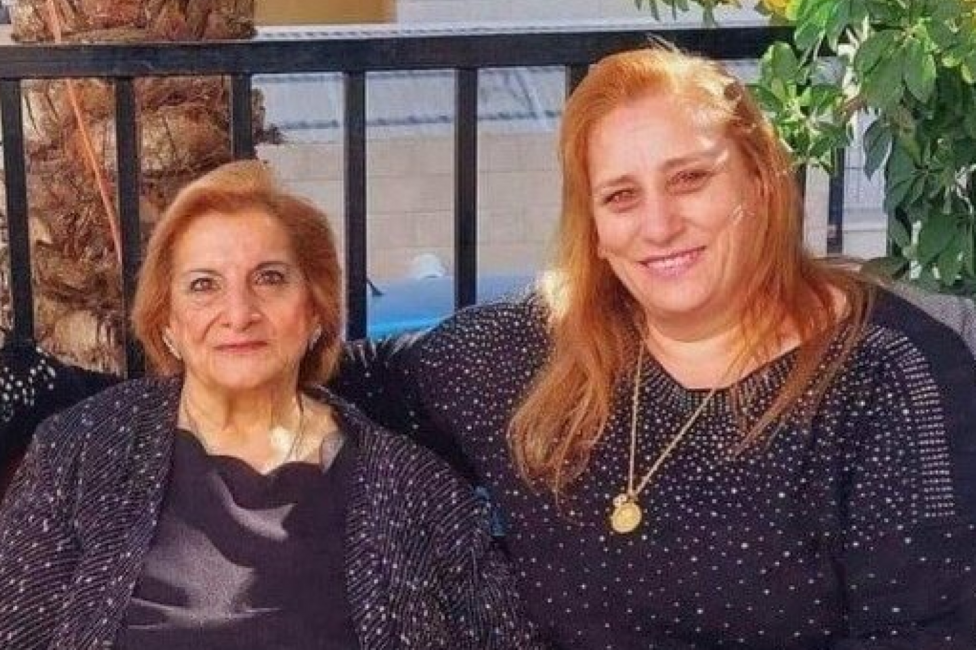 Image source, Latin Patriarchate of Jerusalem
Nahida and Samar Anton were killed by Israeli troops in Gaza in December 2023
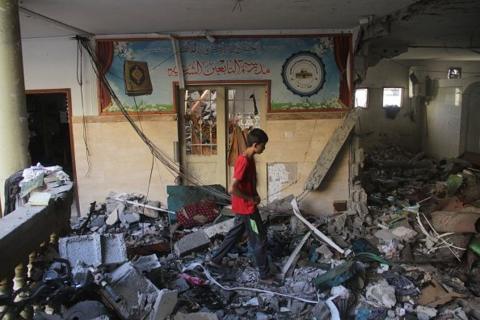 Image source, Getty Images
Palestinians inspect the destruction following the Israeli attack on the Al-Taba'een school building in August 2024
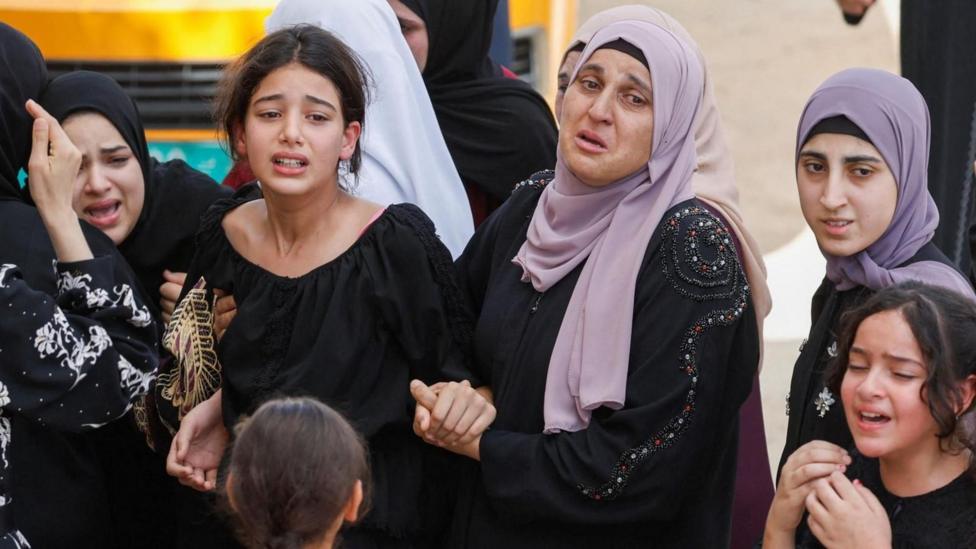 Image source, Reuters
Women and girls mourn during the funeral of 16-year-old Palestinian Lujain Musleh in the occupied West Bank in September 2024
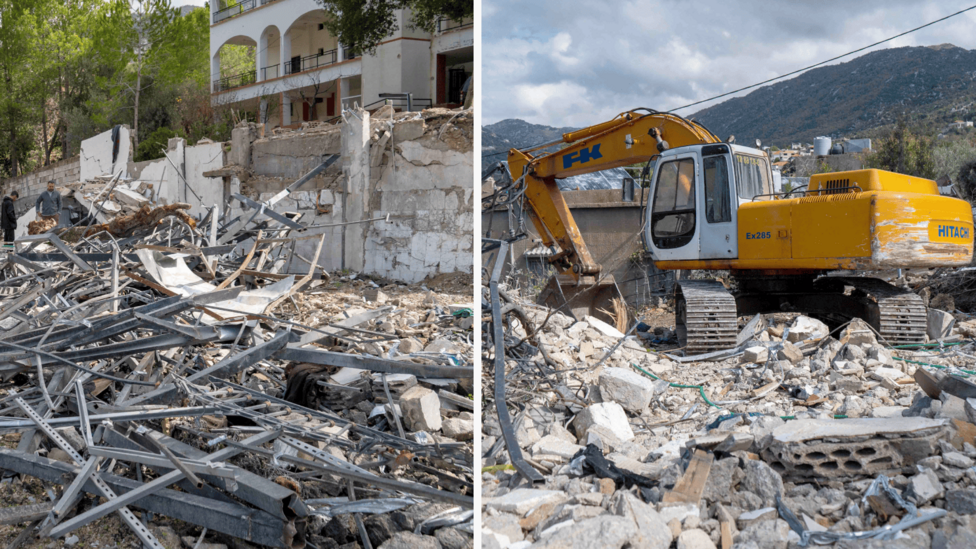 Image source, Getty Images
The aftermarth of an Israeli strike in the town of Almat in November 2024