The key facts
- The SGB and MIA shut down a fake call center in the Mirabad district of Tashkent; damage — $8 million
- The group of five people (aged 21–37) was led by a previously convicted man born in 1979; among the members was a bank cybersecurity specialist
- The money was converted into cryptocurrency and taken abroad through a fake company; ten people found involved
Special Services Operation
The State Security Service and the Ministry of Internal Affairs of Uzbekistan reported the termination of the activities of a fraudulent call center in Tashkent. The information was circulated by the Telegram channel XAVFSIZLIK, which is linked to the security service. The operation was carried out jointly by the SGB directorate and the internal affairs directorate of Syrdarya Region.
How the Scheme Worked
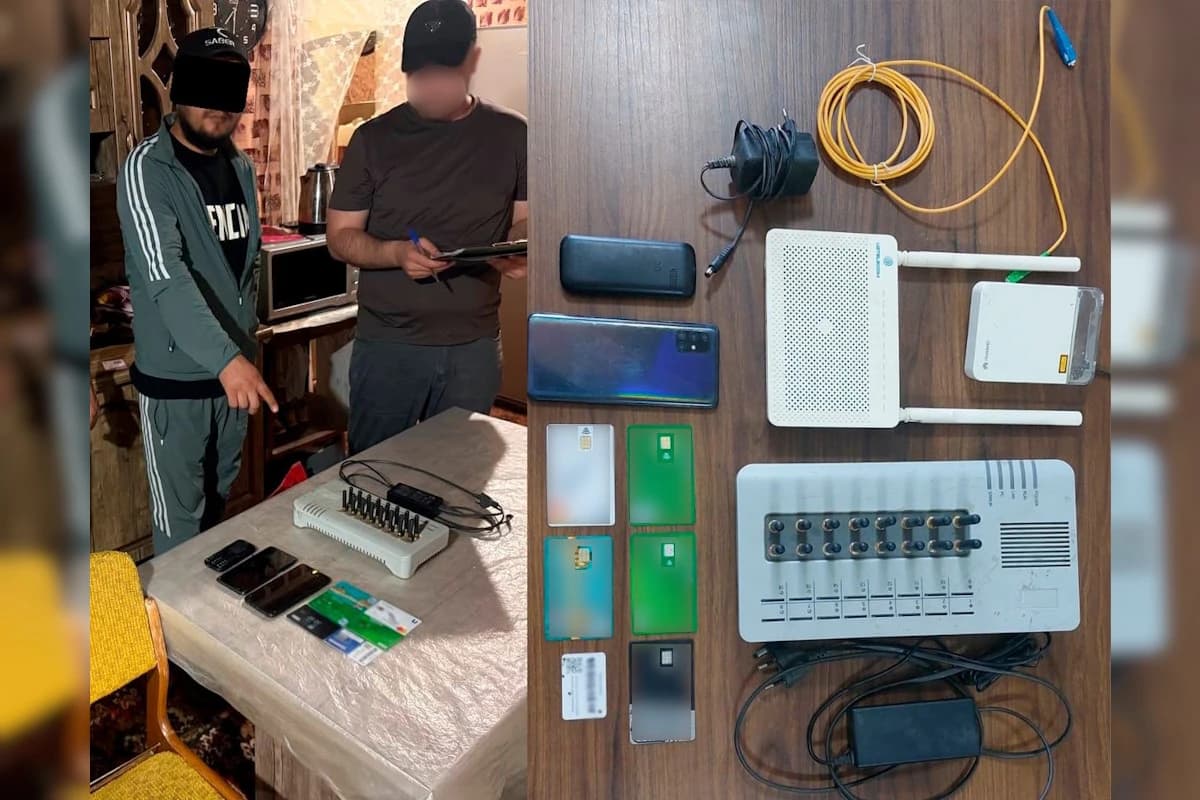
Five residents of Tashkent and Tashkent Region aged 21 to 37 (born 1989–2005) rented a non-residential premises in the capital's Mirabad district and set up a fake call center there. A citizen born in 1989, associated with the group, rented an apartment in his own name, where they installed an illegal GSM gateway — a device that allows making calls through mobile networks using SIM cards. The perpetrators called citizens posing as employees of various banks and told them about loans allegedly taken out in their names by fraudsters. Having obtained personal data through deception, they stole money from the victims' cards and took out online loans in their names.
Leader and Participants
The group was led by a previously convicted man born in 1979 — according to Daryo.uz, a 49-year-old resident of Tashkent Region. Among the group members was an employee of the cybersecurity department of the head office of 'one of the reputable banks' (the outlets do not name the bank).
Money Laundering and the Case
According to law enforcement, in total the suspects embezzled $8 million. The money was converted into cryptocurrency and taken abroad through a fake company to conceal its illegal origin. A criminal case has been opened under the relevant articles of the Criminal Code; during the preliminary investigation, ten people involved in the group's activities have been identified.
Similar Cases Earlier
Daryo.uz recalls previous episodes involving GSM gateways: in 2019, in the Yunusabad district of Tashkent, a 30-year-old man organized illegal international telephone communication in his home and was held accountable. In the Almazar district, a local resident, at the request of an acquaintance, installed a GSM gateway, a Wi-Fi router, and two network switches for a promised fee of 1 million soums per month; the equipment was kept in an ordinary chest. Earlier, Spot reported the detention in Tashkent of the organizers of a 'cyber bunker' who stole more than 300 million soums.