The key facts
- CedarDB is a TU Munich spin-off based on the Umbra research project, compatible with PostgreSQL
- Last May the company raised €5.3 million (~$6 million) and released Enterprise and Community Editions
- Limited access to CedarDB Cloud was announced at TechCrunch Disrupt; Databricks is moving in a similar direction with LTAP
One engine for transactions and analytics
Databases have traditionally been divided into two types: analytical ones help businesses identify trends and answer questions, while operational ones store everyday transaction records — orders and payments. The Munich engine CedarDB supports both scenarios, and, according to co-founder and CEO Moritz Sichert, with the rise of agentic AI this approach has become especially relevant: enterprise customers whose stacks store years of transactions well often find it difficult to quickly answer analytical questions in natural language.
Roots in science and a bet on efficiency
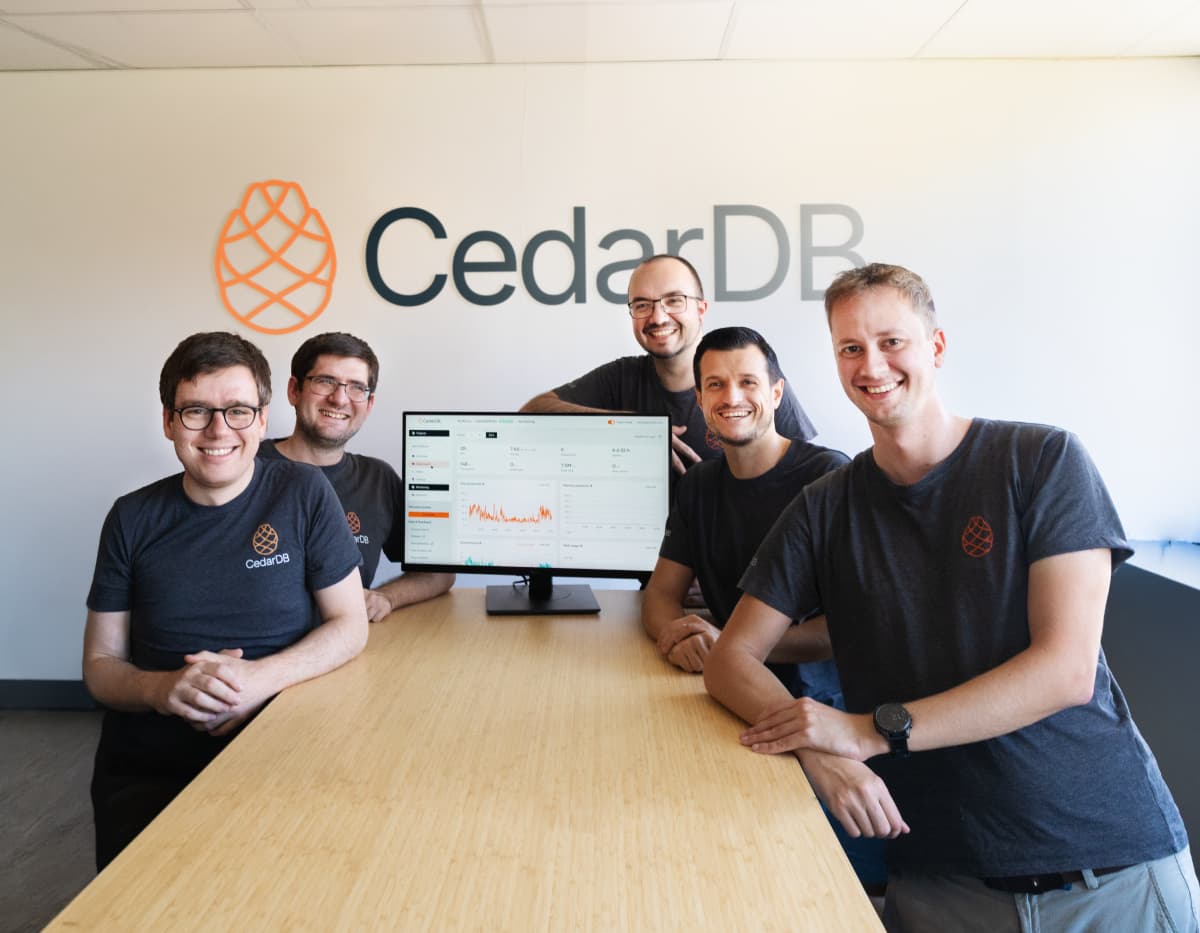
CedarDB was developed for about ten years and is a spin-off of the Technical University of Munich, based on the Umbra research project. The project was built from scratch to outperform legacy engines in processing speed through efficient use of modern hardware. Five Umbra researchers became co-founders: Moritz Sichert, Lukas Vogel, Philipp Fent, Dominik Durner and Christian Winter. The company promises higher performance without additional CPU and memory and with minimal changes for customers.
PostgreSQL compatibility
CedarDB is compatible with the popular open-source DBMS PostgreSQL. According to Sichert, this lowers the cost of migration — users do not need to rewrite applications — and also provides an additional advantage: the database follows the logic that LLMs are most familiar with from training data. In a blog post, co-founder Christian Winter described the team's priorities after leaving academia: reliability, fault tolerance and compatibility with popular tools. Sichert called many decisions lucky in hindsight, but emphasized that not everything was luck.
From on-premise to the cloud
The team debated for a long time whether to launch a cloud product right away, and ultimately last May released the on-premise version CedarDB Enterprise together with the free CedarDB Community Edition, simultaneously announcing a seed round of €5.3 million (about $6 million). The cloud was merely postponed: after beta testing with users from the waitlist, the company on Wednesday announced limited access to CedarDB Cloud on stage at TechCrunch Disrupt, where the startup is competing with 20 other companies for victory in the Startup Battlefield competition.
Competition with Databricks and round plans
The fully managed cloud version is expected to expand the user base beyond large enterprises and prepare CedarDB to compete with Databricks. At the Data + AI Summit in June, the American company named the "agentic era" as the reason for launching LTAP — a new data architecture designed to unify transactions, analytics, streaming and operational data on a single copy of storage in a data lake. Sichert sees this move as further confirmation of demand for what CedarDB does, although it is too early to judge how disruptive it will be for the market. The company plans to serve its first cloud users with its current team of 14 people, but if traction grows, expansion will be needed — "and then we will raise the next round," Sichert said.