The key facts
- Flávio Bolsonaro beat Lula by 2% in the first round; the second round is on October 25
- Under Jair Bolsonaro (2019–2023), about 45,586 km² of the Amazon was destroyed — more than the area of Denmark
- Under Lula, deforestation fell by 41%, but his administration backed expanding oil production
A Second Round the Whole World Is Watching
Brazil's presidential election draws attention far beyond the country's borders because of the environmental significance of its policies. Brazil holds the largest share of the Amazon rainforest — a crucial carbon sink. In the second round on October 25, incumbent President Luiz Inácio Lula da Silva will face Flávio Bolsonaro, son of right-wing former president Jair Bolsonaro. In the first round, Flávio Bolsonaro beat Lula by 2%, which alarmed environmentalists. Claudio Angelo, coordinator of international policy at the Climate Observatory (a network of Brazilian NGOs), called the possible outcome 'a second coming of Bolsonaro, only more radical,' and said that, 'risking sounding alarmist,' Lula's re-election is 'the only thing standing between us and the end of the Amazon.' In Rio de Janeiro, after the first round, students protested against the possible election of Flávio Bolsonaro.
The Elder Bolsonaro's Legacy
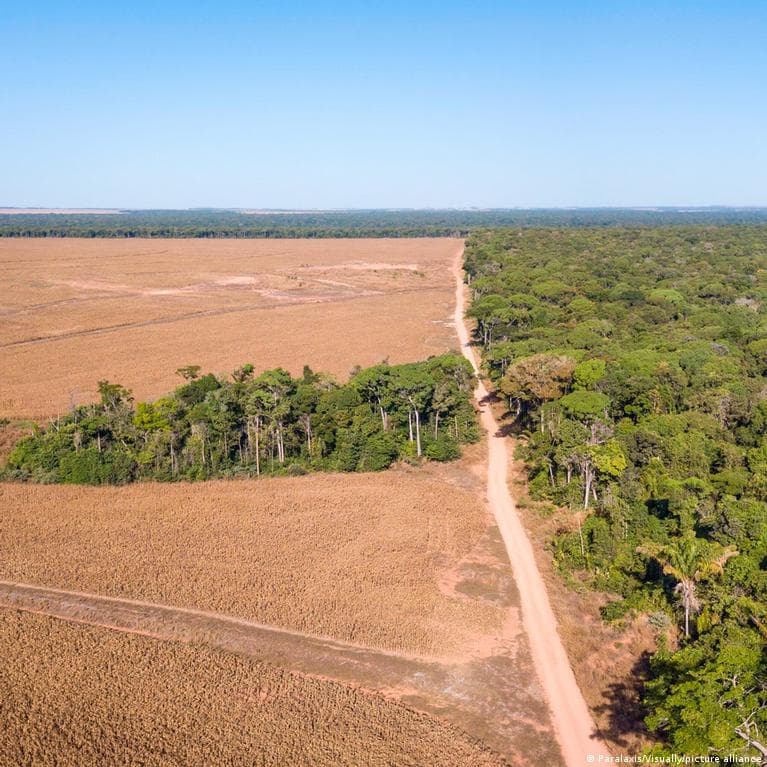
During Jair Bolsonaro's presidency (2019–2023), environmental agencies were weakened and oversight of logging was reduced. By estimates, about 45,586 km² of the Amazon was destroyed over four years — more than the area of Denmark. Claudio Forner, head of climate policy at the Berlin think tank Climate Analytics, noted that 'the environmental agenda was ignored' and deforestation control was dismantled. Scientists warn that some parts of the forest now emit more carbon than they absorb.
Lula's Record and Its Contradictions
Lula came to power with a program to protect the Amazon: he called for ending deforestation by 2030, strengthened forest monitoring, and reinforced the environmental agency IBAMA. Deforestation fell sharply: 2026 promises to be the lowest year for this indicator in a decade, meaning a 41% reduction compared with the Bolsonaro period. However, experts do not consider Lula's administration an unambiguous climate success: it backed plans to expand oil production, including approval of exploratory drilling. Angelo called this decision a 'betrayal' of Lula's mandate, but overall assessed his climate record as 'impressive,' joking that Lula is 'the worst climate leader in the world, apart from all the others.' Last year, Brazil hosted the COP30 climate conference in the Amazonian city of Belém, cementing its role as a climate leader.
Flávio Bolsonaro's Environmental Agenda
Experts criticize Flávio Bolsonaro's forest-protection record. In 2019, as a senator, he introduced a bill that would have allowed landowners to freely manage their land instead of the current requirement to preserve 80% of the territory under native vegetation. Bolsonaro also promised to end illegal deforestation by 2029 — a year earlier than Lula. Angelo is skeptical: 'He will end illegal deforestation not by enforcing the law, but by legalizing it.' Ana Yang, director of the Environment and Society Centre at London's Chatham House, noted that a president's signal determines whether 'it is now acceptable to clear the forest,' and that 'if enforcement capacity is reduced, deforestation grows.' In August, in an interview with Brazilian media, Bolsonaro said he considers extreme weather events cyclical and does not attribute them exclusively to human influence. Forner added that climate change has become a partisan issue: the right portrays it as a 'made-up problem' and regulation as a threat to economic growth.
Climate Is Not a Priority for Voters
Despite the global significance of the election, for many Brazilians climate is not among their priorities. According to Yang, people are primarily concerned with access to education, sanitation, and healthcare; a road through the Amazon to access these services, criticized from abroad for destroying the forest, would be desirable for voters. 'They have no time to worry. Not because they don't want to. They are concerned with their own survival,' she said. Experts agree that the outcome of the second round could determine the fate of the Amazon and broader efforts to curb global warming.