The key facts
- Merz: “There are international companies where people work 12 hours in a row. Three times a week, and then — that's enough”
- The draft law will set a weekly, not daily, maximum of working hours
- The new labor minister Alexander Schweitzer was appointed on October 13; the previous head of the ministry, Bärbel Bas, left the post on October 12
Chancellor proposed a flexible work schedule
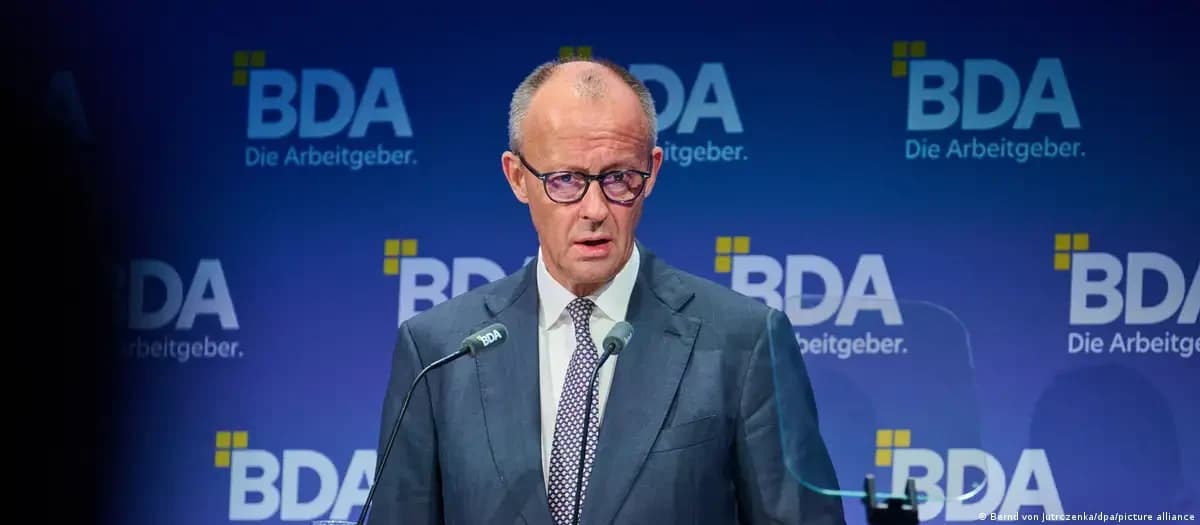
German Chancellor Friedrich Merz spoke on October 13 at the Employers' Day event organized by the Confederation of German Employers' Associations (BDA) in Berlin. This was reported by DW, citing a publication by Kun.uz. In the Chancellor's view, flexible working time arrangements create new opportunities for both companies and employees.
12 hours three times a week
“There are international companies where people work 12 hours in a row. Three times a week, and then — that's enough,” Merz said. In his assessment, such a regime allows employees to devote more time to their families. The Chancellor noted that work beyond eight hours cannot always be regarded as exploitation: it can give companies and workers the opportunity to distribute working time more conveniently.
Draft law on a weekly limit of hours
Merz emphasized that the government should already have prepared a draft law on a flexible approach to working time. According to the plan, the document will establish not a daily but a weekly maximum limit of working hours, which, as expected, will open up the possibility of creating various work schedules.
Other initiatives and personnel changes
The Chancellor also spoke in favor of expanding companies' ability to conclude fixed-term employment contracts with workers and of simplifying the procedure for dismissing top-level managers. The final version of the draft law must be prepared by Germany's new Minister of Labour and Social Affairs, Alexander Schweitzer, who was appointed to this post by President Frank-Walter Steinmeier on October 13. Having previously led the government of the state of Rhineland-Palatinate, Schweitzer will also have to carry out a pension reform. The previous minister, Bärbel Bas, announced on October 12 that due to difficult personal circumstances she could not fully perform her duties in the government and the party, and would leave the posts of labour minister and co-chair of the Social Democratic Party.