The key facts
- Russia struck Darnytsia CHP-4 and other Ukrainian energy facilities; Zelensky called the strike a demonstrative show of disrespect toward the US
- More than 600,000 people were left without electricity; five people were killed in Kyiv and more than 20 wounded
- Russia reported downing 902 drones; the attack on Balakovo hit Sberbank's data center, causing disruptions to banking and internet services
Strike on Kyiv's energy infrastructure after the truce announcement
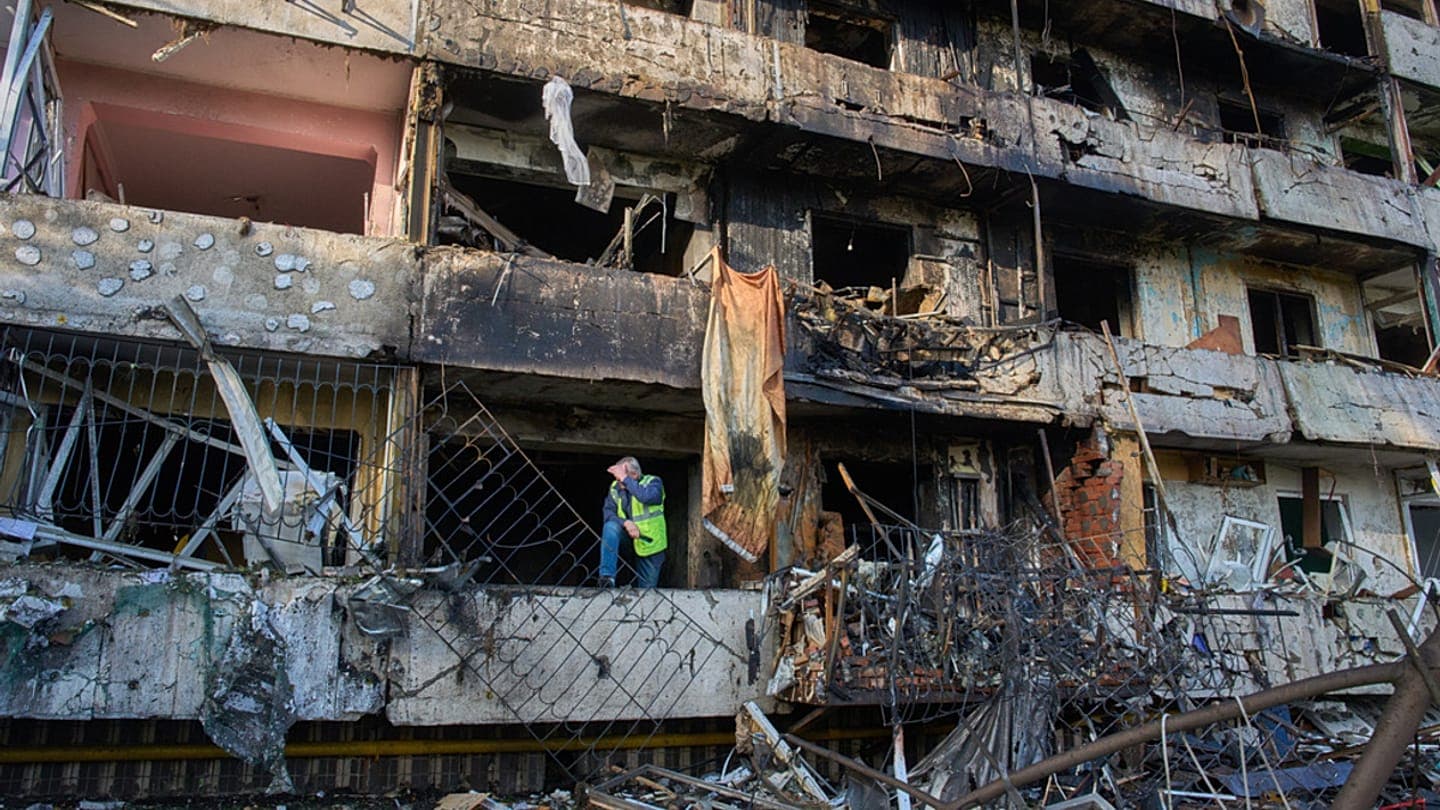
Despite the 'energy truce' unilaterally declared by US President Donald Trump over the weekend and supported by Kyiv, Russian forces continued strikes on Ukraine's energy infrastructure. Ukrainian President Volodymyr Zelensky said the Darnytsia CHP-4 — one of Kyiv's main energy facilities, supplying the capital with heat and electricity — was damaged by a Russian ballistic missile. According to him, at least 600,000 people were left without electricity, and larger-scale outages were possible. Zelensky called the strike 'absolutely deliberate and demonstrative in its scale' and said 'there has never been such demonstrative disrespect toward the US from Russia before.' He also noted that once again there were 'no warnings from partners' before the strike, and added that, according to intelligence, the Russians are preparing new ballistic missile launches.
Casualties and destruction in Ukraine
On the night of October 14, according to the Ukrainian side, Russia struck with 39 ballistic and cruise missiles and 128 drones; the main strike hit Kyiv, Kyiv and Kharkiv regions. Air defense forces shot down or intercepted 4 missiles and 115 drones. A Russian drone hit the 'YevroHurt' wholesale store in Lutsk — six people were killed, and two more, including a child, were injured in a 9-story residential building. Five people were killed in Kyiv and more than 20 wounded; one death each was reported by regional authorities in Dnipropetrovsk, Zaporizhzhia and Kherson regions. Prime Minister Serhiy Koretskyi wrote that all three city CHP plants in Kyiv were attacked overnight. Consumers were left without electricity in Kyiv as well as in Kharkiv, Chernihiv, Sumy, Donetsk, Dnipropetrovsk, Khmelnytskyi and Zaporizhzhia regions; a number of Kyiv districts experienced water supply problems. Five people suffered severe burns in an FPV drone strike on a transport company in Derhachi, and five were wounded in strikes on Rivne and the region.
Dispute over intelligence and the truce
After the strikes 'without warnings from partners', suggestions emerged on Monday evening that the US had cut off Ukraine's access to intelligence information. Trump denied this: 'We are helping them and sharing intelligence,' he said, adding that the US is working with Ukraine and Russia on ending the war. Ukrainian Foreign Minister Andrii Sybiha said that with the overnight strikes on cities, Vladimir Putin rejected the 'energy truce' proposed by the US. Kyiv Mayor Vitali Klitschko reported on Telegram about a massive missile strike on the city's energy facilities and power outages. Zelensky had previously noted that Ukraine was ready to observe the truce if Russia did the same; according to Euronews, the Kremlin did not respond to this request.
Mutual accusations over refineries
Russia, citing Deputy Prime Minister for Energy Alexander Novak, accused Ukraine of attacks on two oil refineries — in Saratov and Ryazan regions — in violation of the 'energy truce'. 'We see that the Ukrainian side is not demonstrating movement toward an energy truce,' Russian agencies quoted Novak as saying. Zelensky's adviser Dmytro Lytvyn called the statement 'fake', clarifying that other facilities had been hit, 'but not refineries'.
Drone attack on Russia and strike on Sberbank's data center
Russia's Ministry of Defense reported that overnight air defense forces destroyed 902 Ukrainian drones over about 20 Russian regions and annexed Crimea, including 180 in the Moscow area. Moscow Mayor Sergei Sobyanin said 493 drones were heading toward Moscow and called the attack one of the largest in recent weeks. Vnukovo airport's operations were suspended for more than eight hours; according to TASS, more than 30 aircraft were diverted to other cities, including 19 planes that landed in Nizhny Novgorod, St. Petersburg, Minsk, Pskov and Istanbul. According to Telegram channels, restrictions were also imposed at airports in Volgograd, Nizhny Novgorod, Samara, Penza, Saratov and Yaroslavl. Authorities of Saratov region reported at least one death in the raid on Balakovo, where a metallurgical plant and Sberbank's data processing center were damaged. Sber's First Deputy Chairman of the Board Alexander Vedyakhin confirmed the attack, assuring that all systems and services were operating normally. This data center was planned to host Russia's largest supercomputer, with commissioning in 2027; it is unknown whether it was damaged.
Outages of online services and strikes on Yandex data centers
According to the resources Sboy.rf and Downdetector, in Moscow, St. Petersburg, Novosibirsk region and other regions there was a sharp increase in complaints about Sber service disruptions: the app, website and GigaChat neural network were not working. Tochka Bank's online banking and 'Business Online' service were down; the Sber-linked delivery service 'Samokat' was also not working, and disruptions were observed in Mail.ru services, hosting provider Reg.ru and the Kontur ecosystem. In addition, in recent days, according to a source, the Ukrainian Armed Forces carried out several strikes on Yandex data centers that hosted the company's supercomputers; disruptions were reported in a number of Russian regions and neighboring countries. It is estimated that Yandex may need up to six months to fix the consequences.


