The key facts
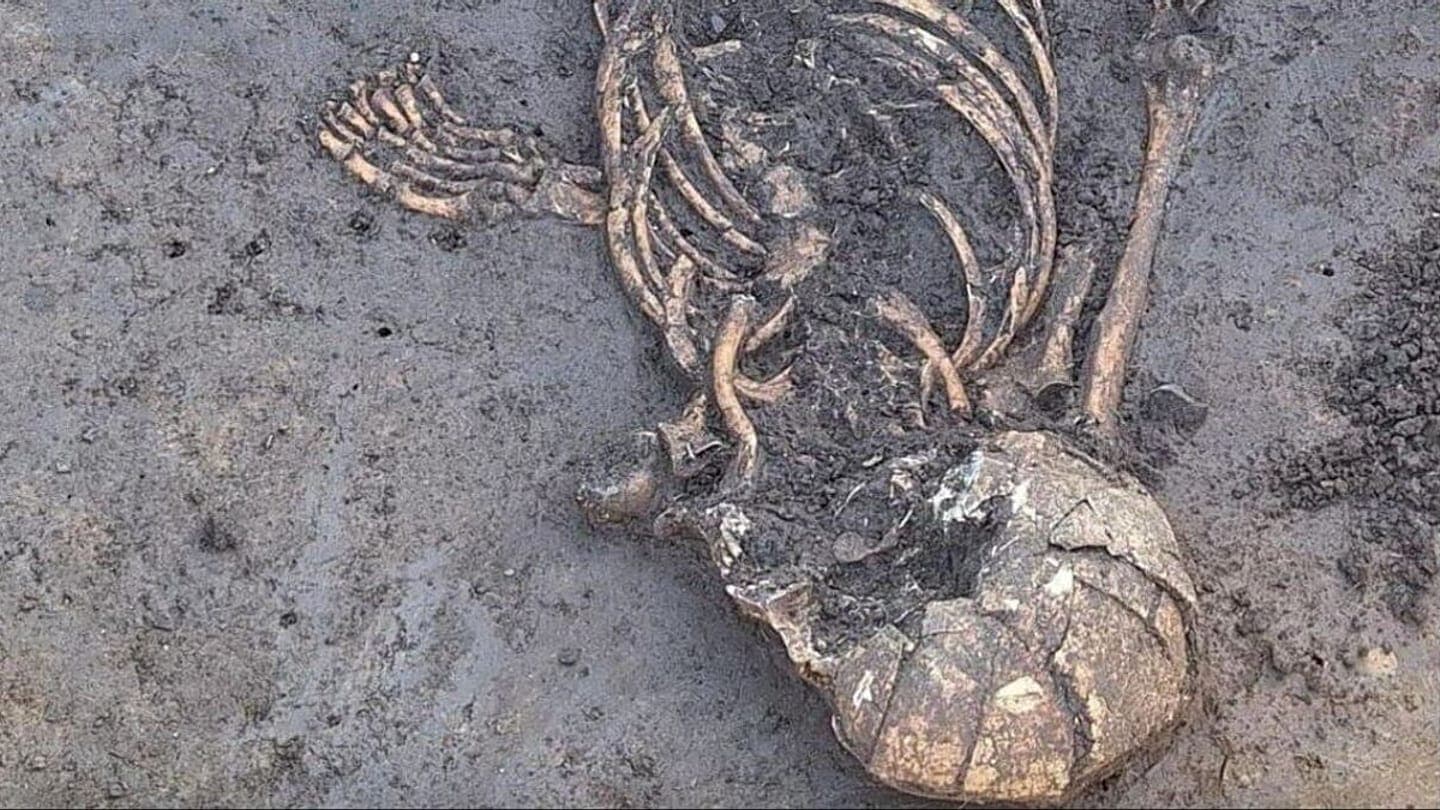
- In Großköllnbach, the skeleton of a young person about 7,000 years old was found in an unusual, 'twisted' position.
- The cause of the deformation of the cervical spine remains unclear — research is ongoing.
- About 150 features were excavated at the site, including three longhouses and dome-shaped clay ovens.
An unusual burial from the era of the first farmers
In Großköllnbach in Lower Bavaria (Dingolfing-Landau district), on the site of the future 'Steigäcker IV' development, archaeologists discovered human remains in a pit dating to roughly 7,000 years ago. The find was made after five weeks of excavation, when an inconspicuous darkening of the soil turned out to be a burial. District archaeologist Dr. Florian Eibel notes that what is unusual above all is the form of the burial: people of the Linear Pottery culture usually buried their dead in a crouched position on the side with legs drawn up, but here the deceased's right leg was strongly flexed, while the left was bent and turned outward. The bottom of the pit was uneven and sloped; in the archaeologist's assessment, the body may have shifted down the slope after being laid in place, causing individual bones to move or become pressed into the soft clay. It remains unclear whether the position was intentional from the start or resulted from conditions in the grave.
A young person and the mystery of the spine
Preliminary examinations show that the deceased was an adolescent or young adult — this is indicated by growth zones in the bones that had not yet fully closed. Particular attention from specialists is drawn to the cervical spine, where a pronounced deformation is visible. It has not yet been established whether it is connected with a disease or an anatomical feature during life, or whether it appeared after death due to the position of the body in the grave. The skeleton has been fully removed and handed over to the district archaeological service, where anthropologists will study it; results are promised to be announced once the research is complete.
A settlement with houses, ovens and imported stone
The skeleton is not the only find: the excavations revealed an extensive settlement landscape of the Linear Pottery culture, which emerged in the sixth millennium BC and is associated with the spread of the first agriculture in Central Europe. About 150 features were documented over five weeks. The outlines of three large longhouses can be traced, although apparently no more than two existed at the same time. Hearths and food-preparation areas are well preserved, including dome-shaped clay ovens with a layer of pebbles for heat insulation — there food was cooked, grain was processed and, probably, communal life was organized. Grinding slabs were also found: in the archaeologists' assessment, the rock may have been brought from across the Danube or from the Bavarian Forest. If this is confirmed, the finds will indicate that the first farmers were already extracting and transporting raw materials over considerable distances.


