The key facts
- The Saxony-Anhalt Landtag called for ending aid to Ukraine and pursuing talks with Russia — an initiative by AfD and BSW
- AfD won the September 2026 elections with almost 44%, but without an absolute majority; only BSW is ready for coalition talks
- DW experts disagree in their assessments: some see a 'Querfront', others consider BSW reactionary rather than a left-wing force
Landtag Appeal Against Aid to Ukraine
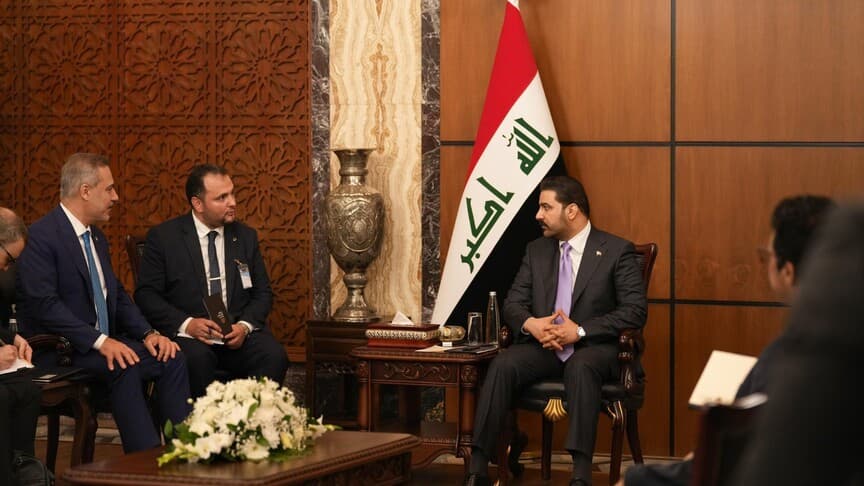
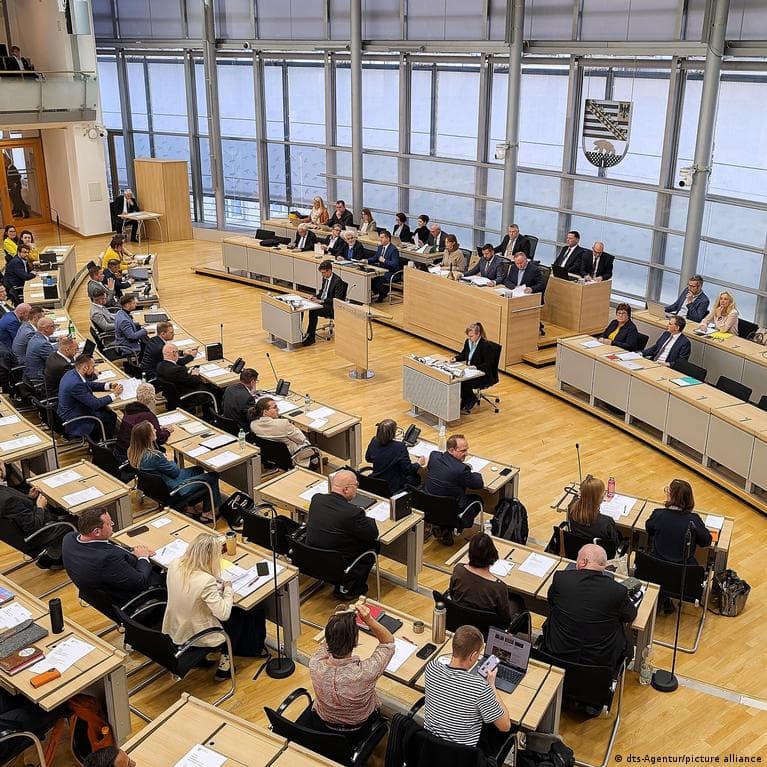
The state parliament of Saxony-Anhalt, at an extraordinary session, adopted an appeal demanding the immediate cessation of all financial and military aid from Germany to Ukraine. The document was supported by the right-wing populist Alternative for Germany (AfD) and the Alliance for Social Justice and Economic Reasonableness (BSW), which combines left-wing economic positions with right-wing populist views on migration. Both parties call on the state's incumbent Minister-President, Sven Schulze of the CDU, to advocate in the Bundesrat for peace talks with Russia. Since the federal states have no authority in foreign policy, the appeal will have no direct impact on Germany's policy toward Ukraine.
Criticism from the Other Parties
The initiative drew sharp criticism from all other parties in the Landtag. CDU deputy Stefan Ruland stated: 'Anyone who demands a ceasefire only from the side that was attacked is calling not for peace, but for capitulation.' On behalf of BSW, deputy Claudia Wittig called on the Minister-President 'to use all available avenues to work for peace.'
Context: Government Formation Talks
The session took place against the backdrop of talks on forming a new state government. AfD won the September 2026 elections decisively, gaining just under 44% of the vote, but did not secure an absolute majority in parliament. BSW, which barely cleared the representation threshold, is the only party willing to enter formal talks with AfD: the others rule out cooperation, since the state's security authorities classify AfD as a 'confirmed right-wing extremist' party.
AfD and BSW Growing Closer
Observers view the joint appeal as a sign of a possible lasting rapprochement between parties from different ideological traditions. Political scientist Armin Pfahl-Traughber noted in an interview with DW their shared traits: rejection of the political establishment, a pro-Russian stance, and criticism of support for Ukraine. BSW was founded in 2024 by Sahra Wagenknecht after she left the Left Party, where she represented the 'Communist Platform,' which advocated close ties with Russia. AfD has also repeatedly expressed sympathy for Putin's system: after the start of the war, AfD chairman in Thuringia Björn Höcke called Russia 'a defender of the peace of free and sovereign states.'
Early October Meeting and Expert Assessments
The parties' rapprochement drew attention after a meeting in early October in Saxony-Anhalt — a 'trust-building dinner' hosted by a right-wing publishing house, attended by controversial figures from both the right-wing and 'dogmatic left' flanks. The organizer, editor-in-chief of the magazine Compact Jürgen Elsässer, has for years promoted the idea of a 'Querfront' — an alliance of the far left and far right against the establishment. Pfahl-Traughber does not consider AfD-BSW cooperation such an alliance and doubts that BSW remains part of the left at all: the party, in his words, is economically left but culturally right. Historian Ilko-Sascha Kowalczuk asserts that 'BSW was never left-wing, it has always been reactionary,' and calls both parties 'two sides of the same coin' and 'Kremlin mouthpieces' seeking an authoritarian transformation of the state. He warns that although the appeal will not affect policy immediately, the parties' positions are resonating, especially in eastern Germany, and the erosion of solidarity with Ukraine could spread to parts of the SPD and CDU.