The key facts
- Merz called for reforms of the pension system, the care sector and the labor market, warning of a 'gap of justice between generations'
- The Chancellor stated that aid to Ukraine is not financed at the expense of social spending, thanks to the exemption from debt limits
- In Hamburg, the trial of Serhii K., accused of involvement in the Nord Stream explosions in 2022, began
Merz: reforms are necessary for the sake of justice between generations
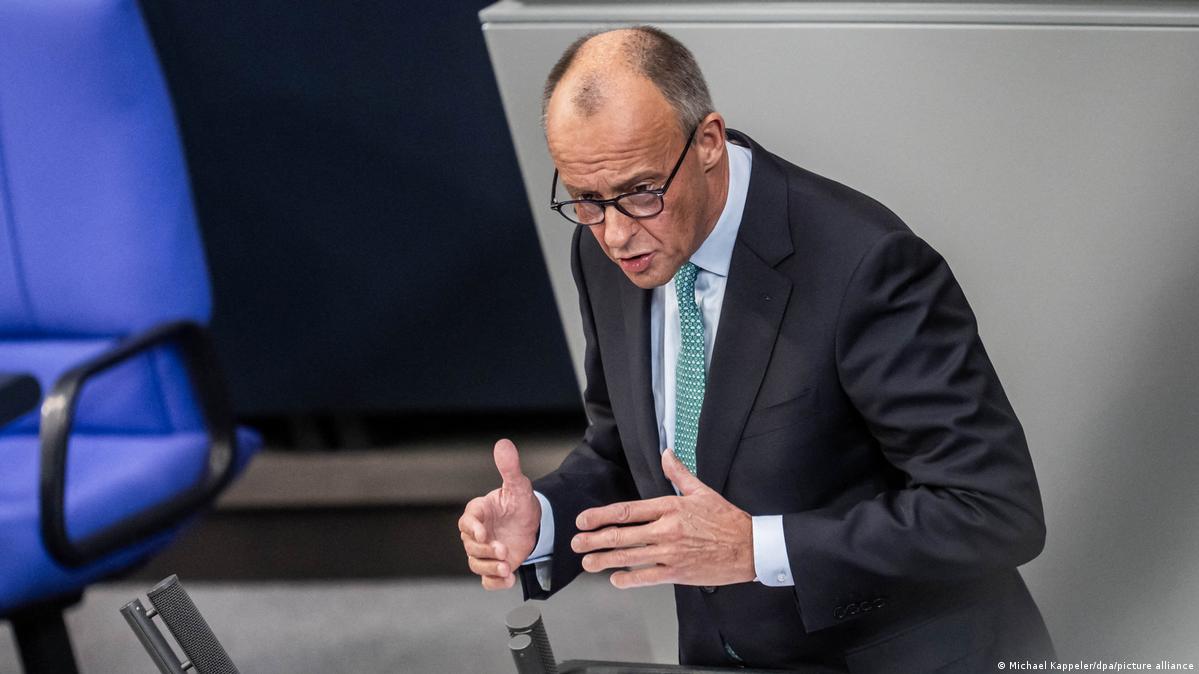
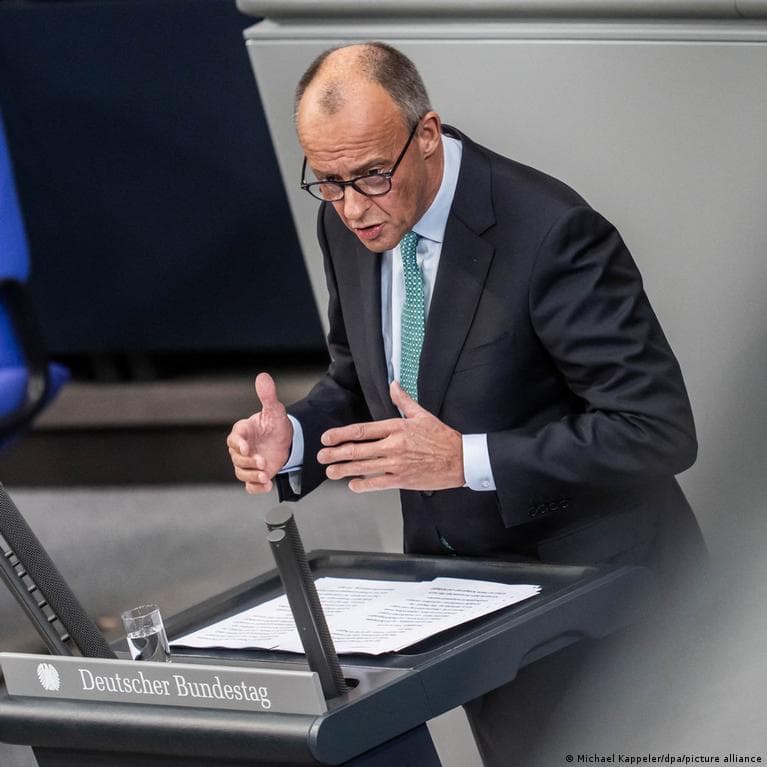
German Chancellor Friedrich Merz delivered a major programmatic speech in the Bundestag on October 14 ahead of the EU summit in Brussels, which will take place on Thursday and Friday. He warned that a 'gap of justice between generations' is growing in the country, and that children and young people risk bearing an unjustifiably large burden if reforms are not carried out. Merz admitted that previous governments, including those led by his CDU, paid insufficient attention to the long-term consequences of their decisions. He presented a broad program of reforms covering pensions, the care sector, the labor market, economic competitiveness and the modernization of the state. According to him, justice means equal opportunities and justice between generations, not redistribution at the expense of those who create economic value. As noted by DW's Berlin bureau, Merz also used Christian references, which is likely connected with the CDU's losses in three state elections this autumn and demands from party colleagues to show more empathy.
Merz rejected accusations of harm to social spending and accused the extremes of stoking chaos
The Chancellor rejected accusations from the far right and far left that support for Ukraine comes at the expense of social spending: 'Not a single euro is taken from social spending,' he said, explaining that defense and aid to Ukraine are financed through an additional loan thanks to the exemption from the constitutional debt limits. Merz also accused politicians of the far-left and far-right flanks of deliberately dividing society, spreading disinformation and downplaying the Russian threat: 'It gives the impression that you want chaos because you hope to derive political benefit from it.' At the same time, he acknowledged that extremist movements may rely on legitimate discontent, and named constructive politics as the only answer. According to DW, the AfD leads in national polls, and the Left Party has become the largest party in Berlin.
AfD and BSW vote together in Saxony-Anhalt
In Saxony-Anhalt, the AfD, which won the September 2026 elections but does not have a majority to form a government, together with the 'Sahra Wagenknecht Union' (BSW), which holds five seats in the state parliament, put forward a motion demanding an end to arms deliveries to Ukraine, the lifting of sanctions against Russia and the start of peace negotiations, as well as stopping financial aid to Ukraine beyond humanitarian assistance. The motion is merely symbolic, since such decisions are made by the federal government and the EU. Observers see in this a sign of closer long-term cooperation between two parties from different ideological camps; the BSW is so far the only party officially negotiating with the AfD on forming a government.
Trial over the Nord Stream sabotage began in Hamburg
In Hamburg, the trial began of a 50-year-old Ukrainian, listed under the name Serhii K. (the surname is withheld under German privacy laws). He is charged with complicity in a war crime by attacking civilian energy infrastructure, disrupting public services, organizing explosions and destroying structures. The prosecution asserts that he led a group of professional divers, an explosives specialist and a boat captain who planned the blowing up of the Nord Stream pipelines off the Danish coast in September 2022, allegedly on behalf of unidentified Ukrainian state bodies with the aim of depriving Russia of gas revenues to finance the war. The explosions damaged Nord Stream 1 and destroyed the not-yet-commissioned Nord Stream 2. Serhii K., arrested in Italy in 2025 and extradited to Germany, denies involvement. President Volodymyr Zelensky has also rejected any official connection of Kyiv to the attack. A small pro-Ukrainian rally took place outside the courthouse with a placard reading 'Russia is a terrorist,' and a student who arrived from Kyiv called the accused a hero.
Inflation rose to 3.3% amid a spike in fuel prices
Annual inflation in Germany in September reached 3.3% — the highest since December 2023, the Federal Statistical Office confirmed (in August it was 2.9%, in July 2.8%). The president of the office, Ruth Brand, linked the rise to energy prices: they rose by 14.9% year on year — the strongest increase since February 2023. Motor fuel rose in price by 37.1%, diesel heating oil by 74.9%, firewood and pellets by 15.6%. At the same time, electricity became cheaper by 5.5%, natural gas by 2.8%, district heating by 1%, which the office partly explains by government measures since the beginning of the year.
Other news: blockade of a nuclear convoy, rise in suicides and the sugar tax dispute
In Dorsten, police detained three anti-nuclear activists who descended from a bridge over the A31 motorway with a banner to block a convoy of radioactive waste heading to Ahaus. According to authorities' estimates, storing all the waste from decommissioned reactors may take until 2028. According to the health ministry, in 2025 at least 11,334 people died by suicide in Germany — 9.3% more than a year earlier and 15.6% above the decade average; the rise is partly linked to an increase in the number of women (by 17.9% since 2021) and to more than 1,000 assisted suicides of elderly and frail people, which are in a legal grey zone. The health ministry proposed reforms in August, including a national suicide prevention hotline, but medical and charitable organizations stated that the budget of 1.4 million euros will not cover such measures in the long term. In addition, according to German media reports, the ruling CDU/SPD coalition has agreed on a tax on sugary drinks from July 1 of next year with an exemption for small producers; Hesse's Minister-President Boris Rhein (CDU) criticized the plan, stating that companies will pass the costs on to consumers, and that the measure serves 'plugging holes in the federal budget.'