The key facts
- A mobile palliative care service for children has been operating in the Samarkand region since September 28
- More than 300 children in need of palliative care have been identified in the region
- Teams visit 8 to 12 families daily; construction of a children's hospice continues
Launch of the service
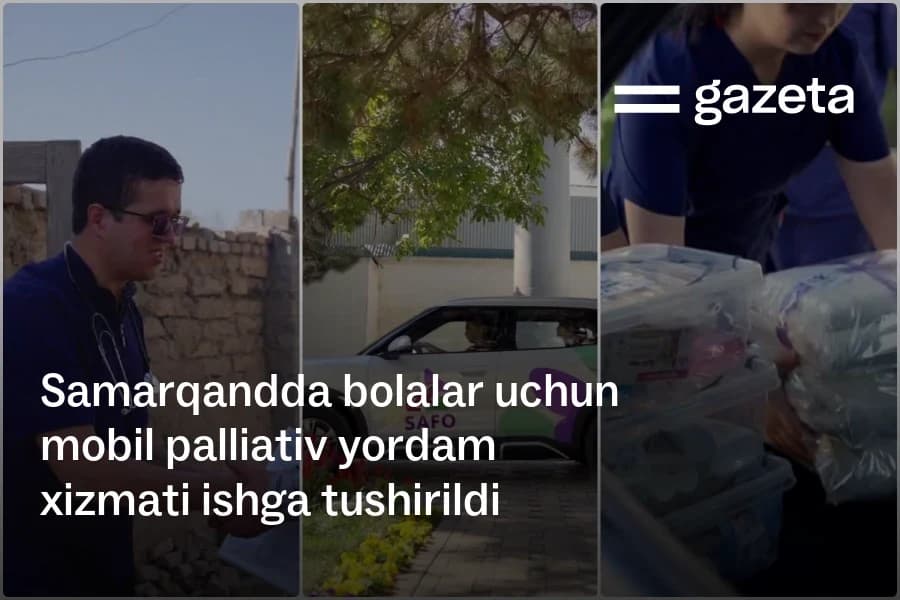
A mobile palliative care service for children with severe and incurable illnesses began operating in the Samarkand region on September 28, the press service of the National Agency for Social Protection of Uzbekistan reported. The teams include medical specialists, social workers and psychologists. Their tasks include home-based assistance, pain and symptom relief, development of individual care plans for children and their caregivers, as well as teaching parents caregiving skills. According to the agency, more than 300 children in need of special assistance have been identified in the region.
How the service works
The Inson social services center opens an individual case file for each child and helps with obtaining social services and technical rehabilitation aids, including adapted wheelchairs, standing frames, functional beds and mattresses for pressure sore prevention. In a video by the agency, an employee said that the mobile team visits 8 to 12 people at home daily. She noted that families often lose hope and try to refuse assistance, and she explains to them that they can receive social support.
Opinions and quotes
Relatives of the children spoke about the difficulties of care that requires a lot of time and effort; one of them noted that he had to sell his car for his child's treatment. One of the mothers said: "He cannot hear, sees poorly, cannot sit, does not speak — in short, he has problems with everything. But he is a child just like all the others. He should also get to see the world." First Deputy Director of the National Agency for Social Protection Shakhnoza Mirziyoyeva emphasized that palliative care does not depend on whether the patient will live a month or a year: "We will monitor him every day and provide assistance." According to her, the goal of the project is to give families the opportunity to receive care at home or in a hospice, as well as to change attitudes toward children with incurable illnesses. "In creating this project, I wanted the word 'hospice' to stop being frightening, especially for parents. Seeking palliative care does not mean giving up on a child or losing hope. It means that you are no longer alone. We cannot always change the diagnosis. But we can make sure that children have as many good days as possible spent next to those they love," she noted.
Context of palliative care development
The National Agency for Social Protection reported that construction of a children's hospice in the Samarkand region continues in parallel; the plans are to make the mobile service and the hospice part of a unified system of palliative care for children and support for their families. In June, the Association for Palliative and Hospice Care opened in Tashkent; its board chairman Yakhyo Ziyayev spoke about plans to launch mobile teams and to move away from the concept that hospices must be inpatient-only. According to him, in the future the process was planned to be monitored through the E-Palliative electronic platform. On June 11, the president was presented with plans to create, from September 1, a unified system of palliative and hospice care based on the integration of medical and social services, with the phased establishment of hospices in all regions and the designation of the Tashkent Interregional Hospice as responsible for methodological management. A 50-bed hospice for adults was planned in the Kibray district of the Tashkent region: it was supposed to open in 2019, but due to a lack of funds the project was postponed annually; the opening dates were moved from the end of the first quarter to July.