The key facts
- Residents of the Yunusabad district complained about deteriorating air quality and unpleasant odors from coal-heated greenhouses
- Greenhouse farms ask to be allowed to operate on the condition of switching to 'green' technologies and online emission monitoring
- It is proposed to use gas, electricity, geothermal and solar energy, as well as waste heat from thermal power plants
Residents' complaints and inspection
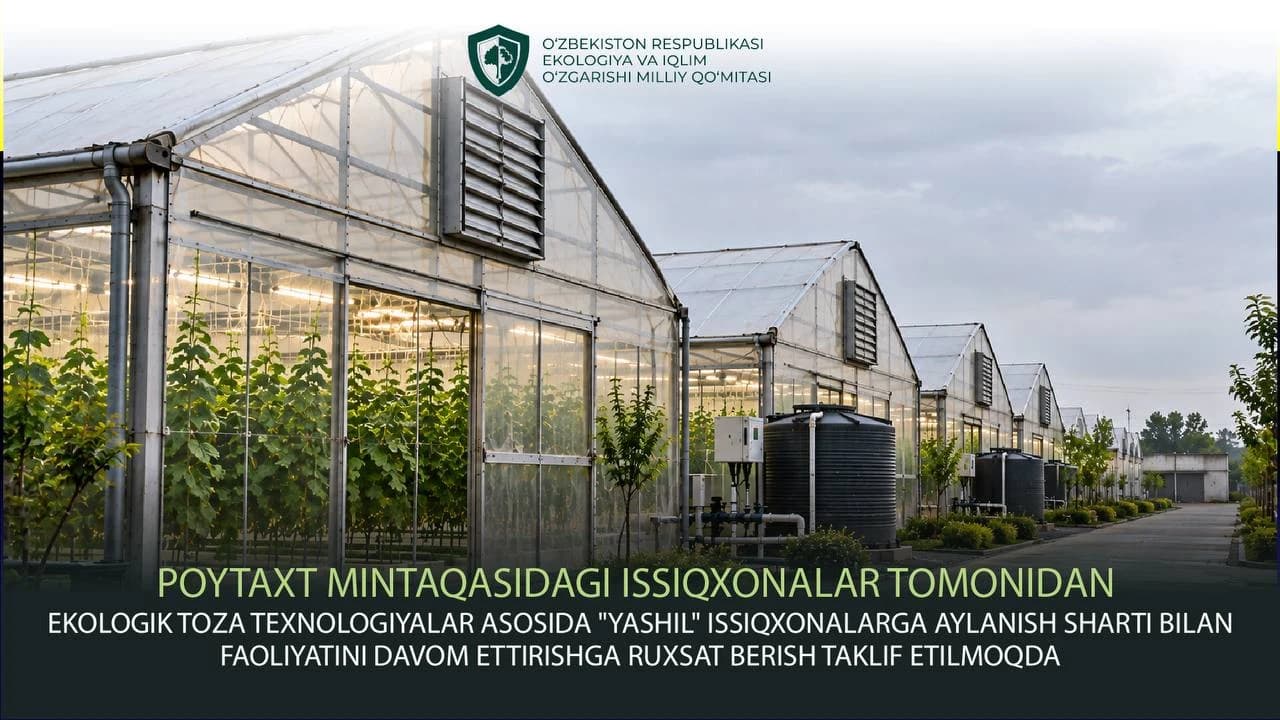
Greenhouses in the capital region have been proposed to be allowed to continue operating on the condition of switching to environmentally friendly technologies and becoming 'green' greenhouses. This was reported by the press service of the National Committee for Ecology and Climate Change. According to the committee, due to a sharp nighttime drop in temperature and windless weather, an inversion occurred in the atmosphere, leading to an increase in citizens' complaints about pollutants from greenhouses operating on coal. In particular, residents of the Yunusabad district reported deteriorating air quality and unpleasant odors from coal heating of greenhouses. In response to all appeals, organizations went to the site to study the situation, and air samples were taken to obtain reliable data on pollutants.
Comprehensive measures
A special commission is implementing a set of measures to reduce the negative impact of anthropogenic sources on the atmospheric air of Tashkent. The main sources of impact are industrial enterprises, motor transport (except electric buses and electric vehicles), the city's heating system, and, in the autumn-winter season, greenhouse farms located near residential areas.
Proposals from greenhouse farms
Representatives of greenhouse farms have repeatedly submitted statements expressing their readiness to modernize their facilities, switch to environmentally friendly heating technologies, and reduce emissions to a safe level in accordance with the standards of environmental services. It is proposed to introduce energy-saving technologies, re-equip facilities with modern heating systems, and introduce online monitoring of atmospheric emissions. In particular, greenhouses with heating systems and a positive conclusion of the state environmental expertise are proposed to operate on natural gas, including liquefied gas, electricity, geothermal and solar energy, as well as on waste heat from thermal power plants.