The key facts
- European Commission: €197 billion ($209 billion) in payments for Russian energy from March 2022 to July 2026; Novak claims $320.7 billion, Trump — $250 billion
- The EU's dependence on Russian energy carriers, according to the EC, fell from 42–45% in 2022 to 12%
- A complete phase-out of Russian gas and LNG under REPowerEU is scheduled for January 1, 2027
A dispute over figures
The European Commission on Tuesday, October 13, 2026, refuted the statement by Russian Deputy Prime Minister Alexander Novak that the EU has spent $320.7 billion (€302 billion) on Russian energy resources since 2022. According to a Commission representative, citing the Eurostat COMEXT database, Russia supplied the EU with €197 billion ($209 billion) worth of energy between March 2022 and July 2026. Novak's figure is roughly $112 billion higher than the EC's data. The discrepancy is partly explained by methodology: the Commission's calculations cover import payments up to July 2026, whereas Novak speaks of supplies since 2022 without specifying the list of goods, valuation methods, or the exact period.
Brussels' position
EC representative Anna-Kaisa Itkonen told journalists: “I cannot confirm other people's figures. I can only confirm that we are seeing a clear downward trend in our dependence on Russia — from 42–45% in 2022 to the current 12%.” According to the Commission, by 2023 only 6% of the EU's fossil fuel spending went to Russia. The EC also emphasized that without the REPowerEU program launched after the invasion of Ukraine, the bloc would have spent €475 billion on Russian fossil fuels — €278 billion more.
Novak's statement
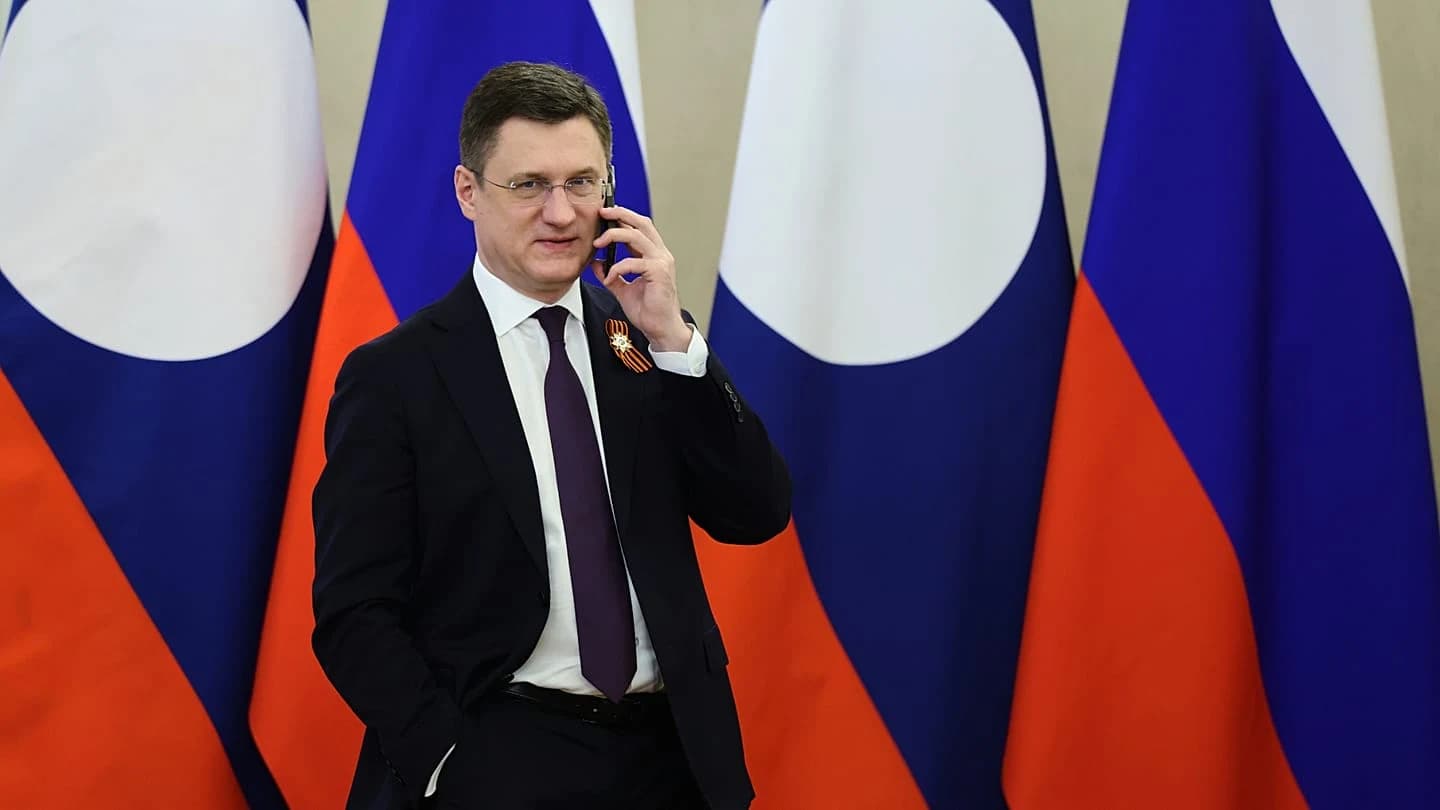
In an interview with the Russian state TV channel Vesti, Novak said: “For the period from 2022 to the present, the volume of energy supplies to European Union countries amounts to 320.7 billion dollars.” He added that in the first nine months of 2026, Europe received supplies worth $21.3 billion despite sanctions. According to him, Russia fulfills its contractual obligations and supplies energy along routes where exemptions apply, including the Arctic route, which brought Moscow €9.7 billion for LNG over nine months. Novak also stated that additional supplies of Russian diesel fuel, including to the US, could reduce pressure on the market caused by disruptions in the Strait of Hormuz area and the reduction of global oil refining capacity.
Trump's figure
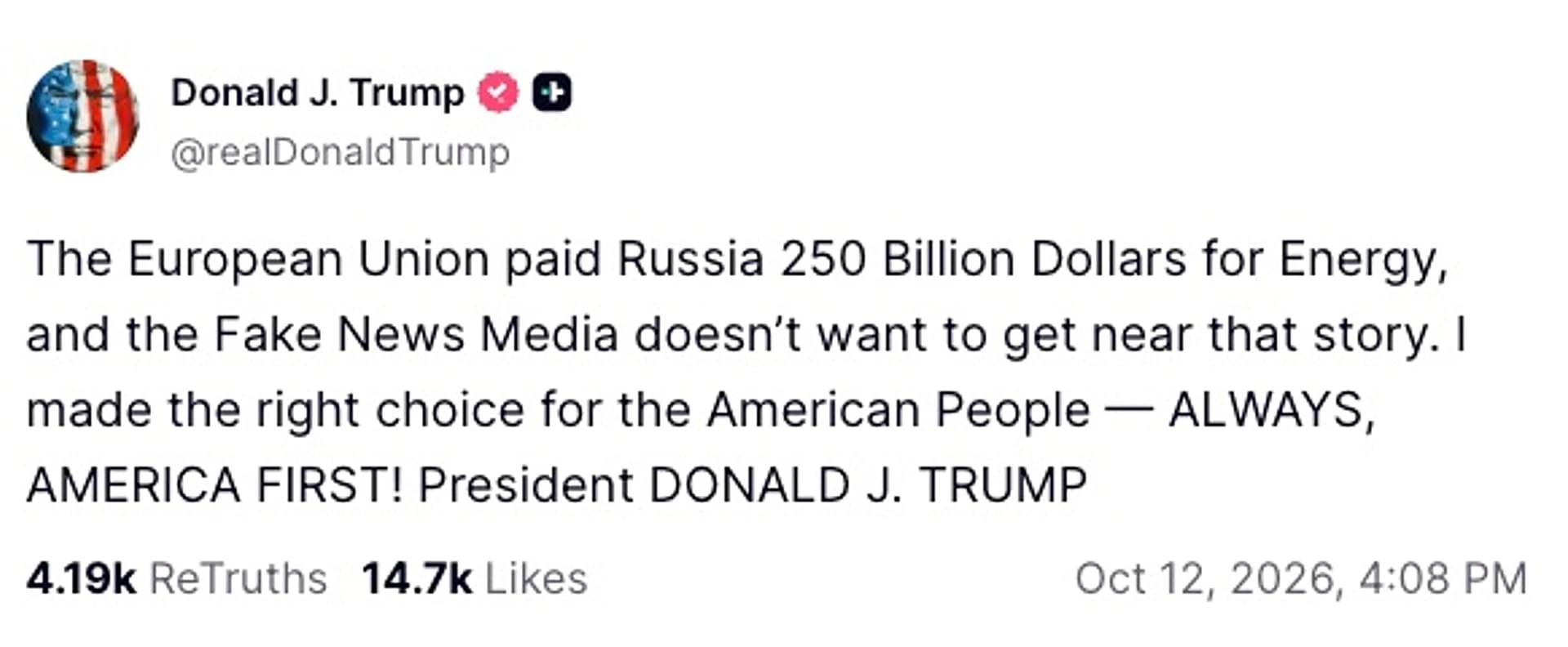
US President Donald Trump wrote on Truth Social on October 12 that the EU paid Russia $250 billion (€223 billion) for energy — roughly $41 billion more than the EC's data. He uses this estimate to justify his “America First” policy, arguing that Europeans continue to finance Russia while relying on the US for security.
Current exemptions and plans
The EU continues to import some Russian energy under exemptions granted as a concession to landlocked countries such as Hungary and Slovakia, as well as to holders of long-term contracts. “For now, importing some energy from Russia is still allowed, since the final deadline for such supplies will come next year,” Itkonen added. Under REPowerEU, Brussels plans to “completely stop imports of gas and LNG from Russia” by January 1, 2027.