The key facts
- Since January 2026, more than 190 people have been killed in Kyiv as a result of Russian drone attacks
- Russia is attacking Kyiv's power grid, which has led to electricity outages
- On October 14, a drone hit a business center between the school and the home of the story's heroine; the Southern Bridge is closed after drone strikes
A Day That Begins with an Air Raid Alert
AFP correspondents described one day in the life of 44-year-old Kyiv resident Anastasia Zhmutska — a mother of three and a hospital employee. The air raid alert ended at 8:15 a.m. with an explosion in the distance, after which she was finally able to take her 14-year-old son Orest to school. According to her, since the end of summer Russia has 'added a few extra tasks' to her usual concerns: alerts and explosions interrupt the nights and set the rhythm of the days. She builds her schedule — from school to looking after her 19-year-old son — depending on the risk of strikes. The day before, she took her five-year-old daughter to a safe place, a second home, to her father.
Living with Power Outages
After supermarkets and gas stations, Russia, according to AFP, is now attacking the power grid, which has led to outages. In Anastasia's bag are two power banks, which she charges at work, where the electricity supply is not interrupted. When light appears in her apartment, she rushes to start the laundry, and for the rest of the lighting she uses a string of fairy lights. 'It keeps getting harder, but you still have to cope with it,' she told AFP. 'There is always a way out of any everyday situation — at least, over the past five years I have managed to find it.'
School Underground
At school, the classroom gradually fills with tired children after another sleepless night. Literature teacher Nadya Sherekhor admitted that the attacks have affected the quality of lessons: 'Kyiv does not sleep.' At 9:00 a moment of silence was held in memory of those killed since 2022 — the children stood with their hands on their hearts to the anthem of Ukraine from loudspeakers. At 10:44, as drones approached Kyiv, an alert sounded, and the children went down to the underground space beneath the school, where in a cramped corridor they continued English and math lessons. Orest has gotten used to bomb shelters, but in recent months he has become more anxious: 'I keep everything to myself.' A drone flew overhead above the school, the crackle of anti-aircraft fire rang out, followed by a distant explosion.
Constant Vigilance and the October 14 Strike
At the hospital, Anastasia discusses with colleagues which canned goods to buy and how much water to stockpile. 'I constantly think about how to organize everything, because the hardest thing for me is making decisions. I carry this burden of responsibility all the time,' she says. She monitors school WhatsApp chats, Telegram channels that track drones, and her son's GPS tracker. At 2:00 p.m., Orest leaves for gymnastics practice — he dreams of becoming an Olympic athlete — before the power outages paralyze public transport. The mother's anxiety level rose after October 14, when a Russian drone hit a business center between her school and her home: a student waiting for a bus was seriously injured, and shrapnel fell on her house.
The Road Home via a Closed Bridge
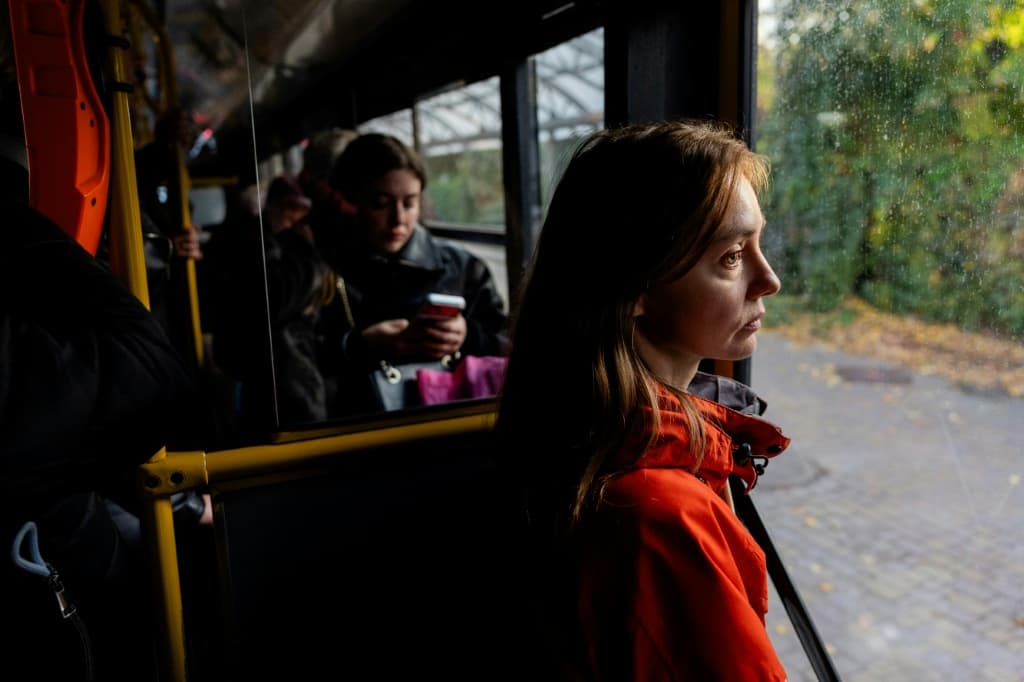
At 6:00 p.m., the family sets off by bus to the second home on the other bank of the Dnipro. 'It is a calm place, but getting there is an ordeal,' says Anastasia. Near the Southern Bridge, closed after being hit by Russian drones last week, traffic jams build up: at rush hour, the 15-kilometer road took her two hours. 'It seems things can't get any harder, but I know they will,' she adds. Asked what would be the point at which she would leave Kyiv, Anastasia, after a pause, replied: 'I have asked myself this question several times already. And I don't know the answer.'