The key facts
- The expedition departs Spain on 18 October; the route runs from Novolazarevskaya station to Concordia station via the Pole of Inaccessibility, with return in early February
- The 15-metre sled uses 20 kites of 5–150 m² and solar energy; speeds up to 80 km/h, averaging about 25 km/h
- 16 scientific projects are planned, including a NASA study and the WindSled Mind project on the effects of 85 days of crew isolation
Crossing Antarctica without emissions
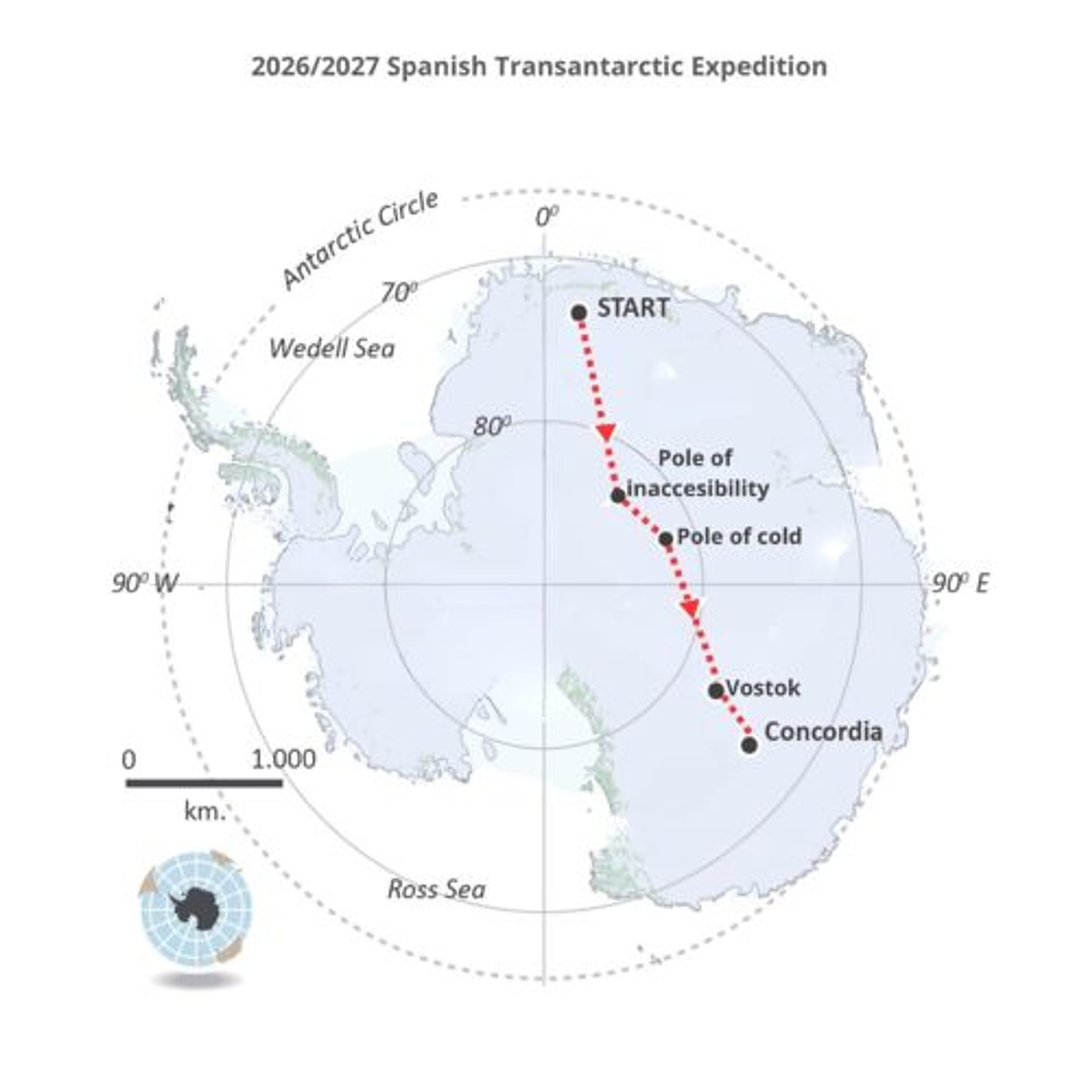
Spanish polar explorer Ramón Larramendi will lead the scientific expedition Trineo de Viento Antártida 2026-2027, which will cover about 3,400 kilometres across the Antarctic interior in roughly 80 days without using fossil fuels for travel. The start is scheduled for 18 October, with the return to Spain in early February. The route will begin near the Russian Novolazarevskaya station in Queen Maud Land and finish at the Franco-Italian Concordia station on Dome C, after crossing the Pole of Inaccessibility and areas adjacent to the Pole of Cold. In an interview with Euronews, Larramendi called the 'wind sled' 'completely unique in the world' — according to him, it is a combination of traditional technologies and advanced engineering solutions that allows covering long distances without internal combustion engines or aerial delivery of supplies.
How the 'wind sled' works
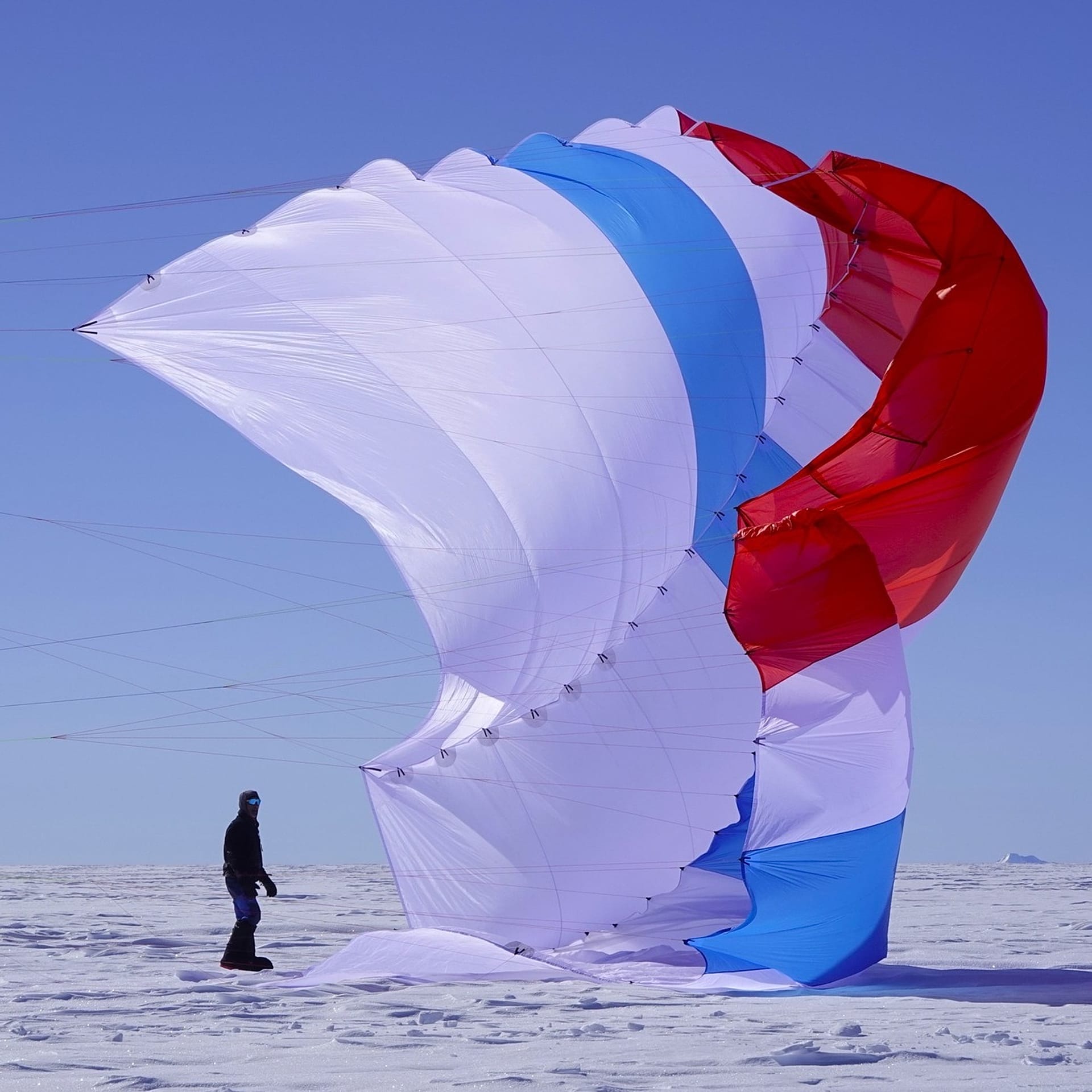
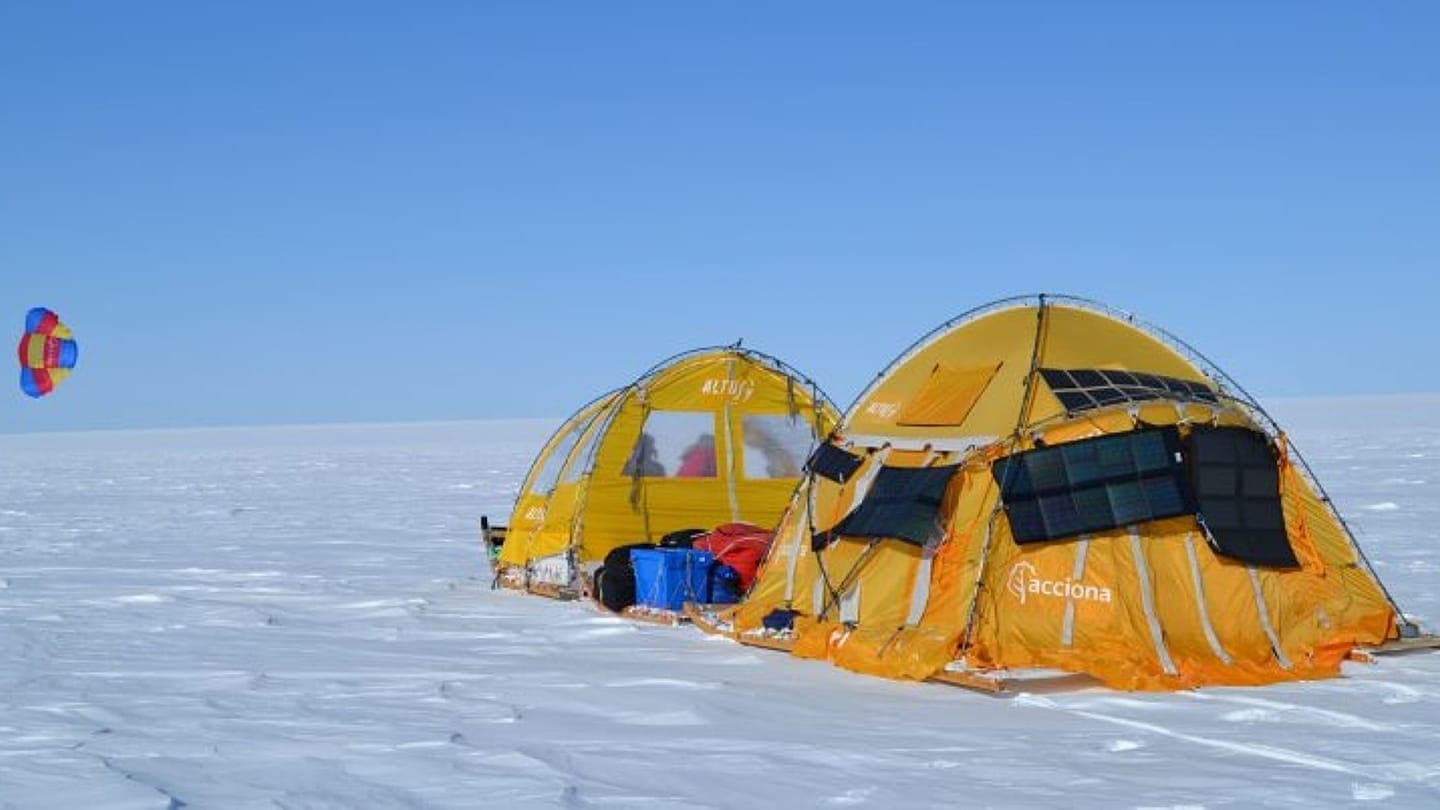
The platform uses kites for propulsion and solar energy to power scientific equipment. The design, inspired by Inuit culture, is the result of about 25 years of development and testing, during which Larramendi has travelled more than 28,000 kilometres over ice. The crew consists of four modules and is 15 metres long, capable of carrying up to 2,100 kilograms of cargo, although this time only about 250 kilograms of scientific instruments will be on board initially. The team has 20 kites ranging from five to 150 square metres, selected according to the weather: in favourable conditions the sled can reach 80 km/h at an average pace of about 25 km/h. For comparison, the publication cites data from the 2011-2012 Scientific Trans-Antarctic Expedition, which covered a comparable distance on tracked trucks, snowmobiles and sleds, consuming approximately 170,000 litres of fuel over two months. Larramendi claims that other renewable-energy systems may emerge, but 'none will be more sustainable and with less impact than the wind sled'.
16 scientific projects
The expedition will implement 16 projects selected through a competition by the Spanish Polar Committee, with participation from CSIC, CIEMAT, INTA, six Spanish universities and international organisations. Scientists will receive direct measurements in areas where there is virtually no data, complementing satellite information and data from permanent stations. Among the work is a project by NASA's Ames Research Center led by Spaniard Alfonso Dávila: using sensors for temperature, relative humidity and electrical conductivity, researchers will test whether conditions favourable for microbial life, including the possible appearance of liquid water, could have formed inside salt rocks in extreme cold. The Dinglac project, led by glaciologist Francisco Navarro of the Polytechnic University of Madrid, will use ground-penetrating radar to analyse the first ten metres of the snow pack in order to understand the accumulation and displacement of snow layers and refine estimates of the Antarctic ice sheet's mass change. The campaign will also study microplastics, persistent pollutants, possible microorganisms and viruses, terrestrial magnetism and the operation of the Galileo navigation system; some experiments are linked to space research.
The crew as a research subject
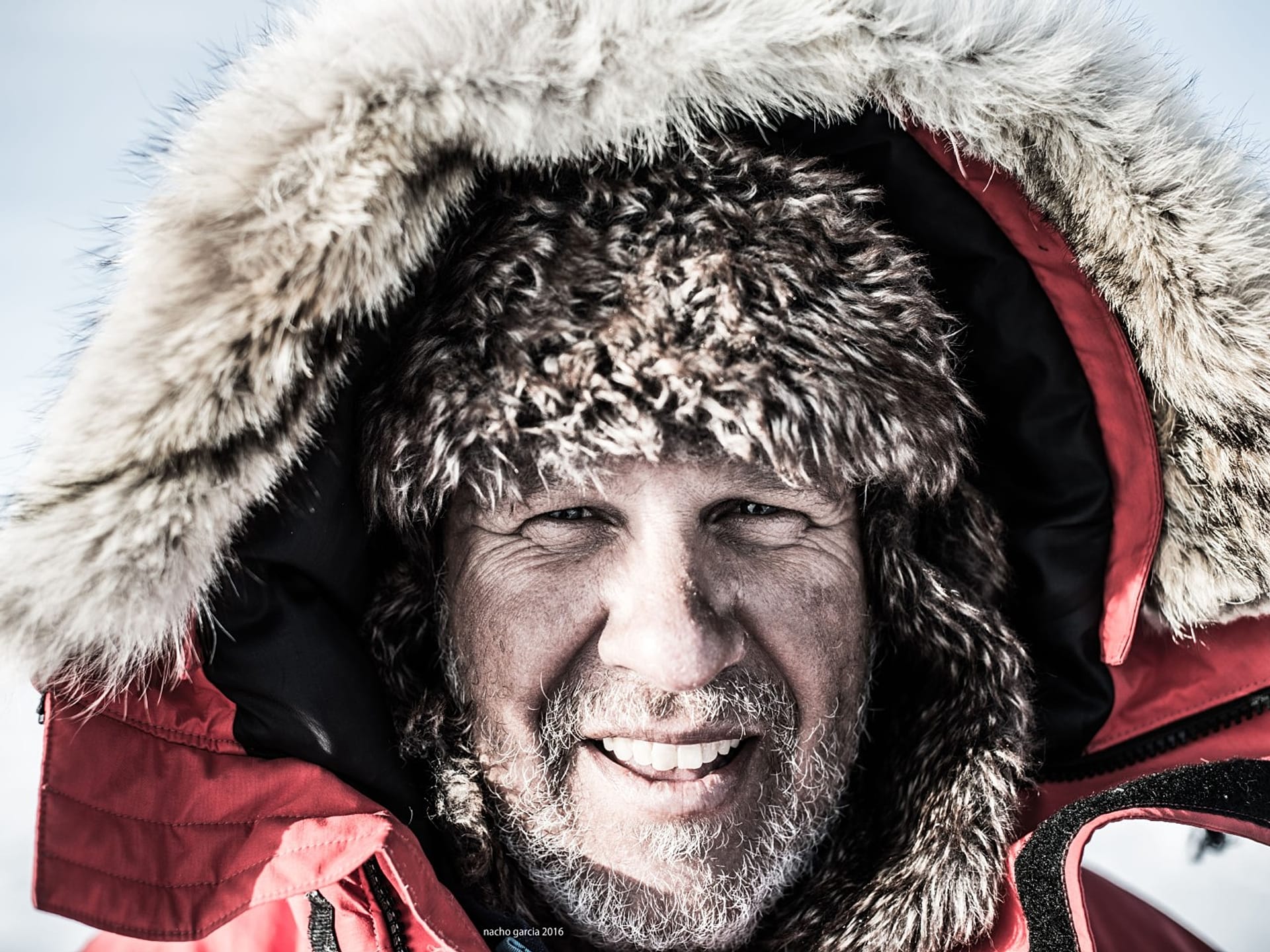
Four experienced polar explorers are taking part in the expedition: Larramendi himself, Hilo Moreno (polar guide and mountain technician), Mariusz Potocki (a scientist from the University of Maine in the USA) and Javier Selva (photographer, documentary filmmaker and technical director of video filming), who already accompanied Larramendi on the 2011-2012 Antarctic expedition. The participants themselves will become the subject of the WindSled Mind project led by Gabriel G. de la Torre of the University of Cádiz: he will analyse the effects of prolonged isolation on psychological reactions, sleep and crew interaction. According to Larramendi, 'we are part of a research project and, yes, we feel a bit like guinea pigs, but we are happy', and 'in a sense, we ourselves are the experiment: four people isolated for 85 days in the depths of the Antarctic continent'. In total, he explained, the expedition includes two projects in which the participants themselves are the subject of study. The goal is to gain knowledge for future long-duration space missions, where astronauts will face confined spaces, high risk and distance from Earth. The team will bring supplies and equipment to manage for weeks without external support, although there is an evacuation plan in case of a medical or other emergency.
Logistics and future expeditions
The expedition's progress can be followed in real time on the website tierraspolares.es. The participants will set up five scientific stations along the way with long stops for sampling, experiments and measurements. Upon reaching Concordia, they will leave the continent by air; the scientific equipment will be returned to Spain with the help of the French side, while the sled will remain dismantled at the base for a possible future crossing in the reverse direction. The aim is to make the expeditions repeatable so that data from different years can be compared: 'Regular data collection is absolutely necessary to see variations,' Larramendi emphasises. The route is part of the XL Antarctic Research Campaign, dedicated to the 40th anniversary of the Spanish polar expedition, and is intended to consolidate a low-impact format of research in the depths of the continent.