The key facts
- All five bleached fragments that were in contact recovered within seven weeks; the separated ones died
- Symbiotic algae migrated within just three days and doubled every four days — 10 times faster than in wild corals
- The method requires genetic identity of the corals, so it is not yet suitable for restoring entire reefs
An accidental discovery in the laboratory
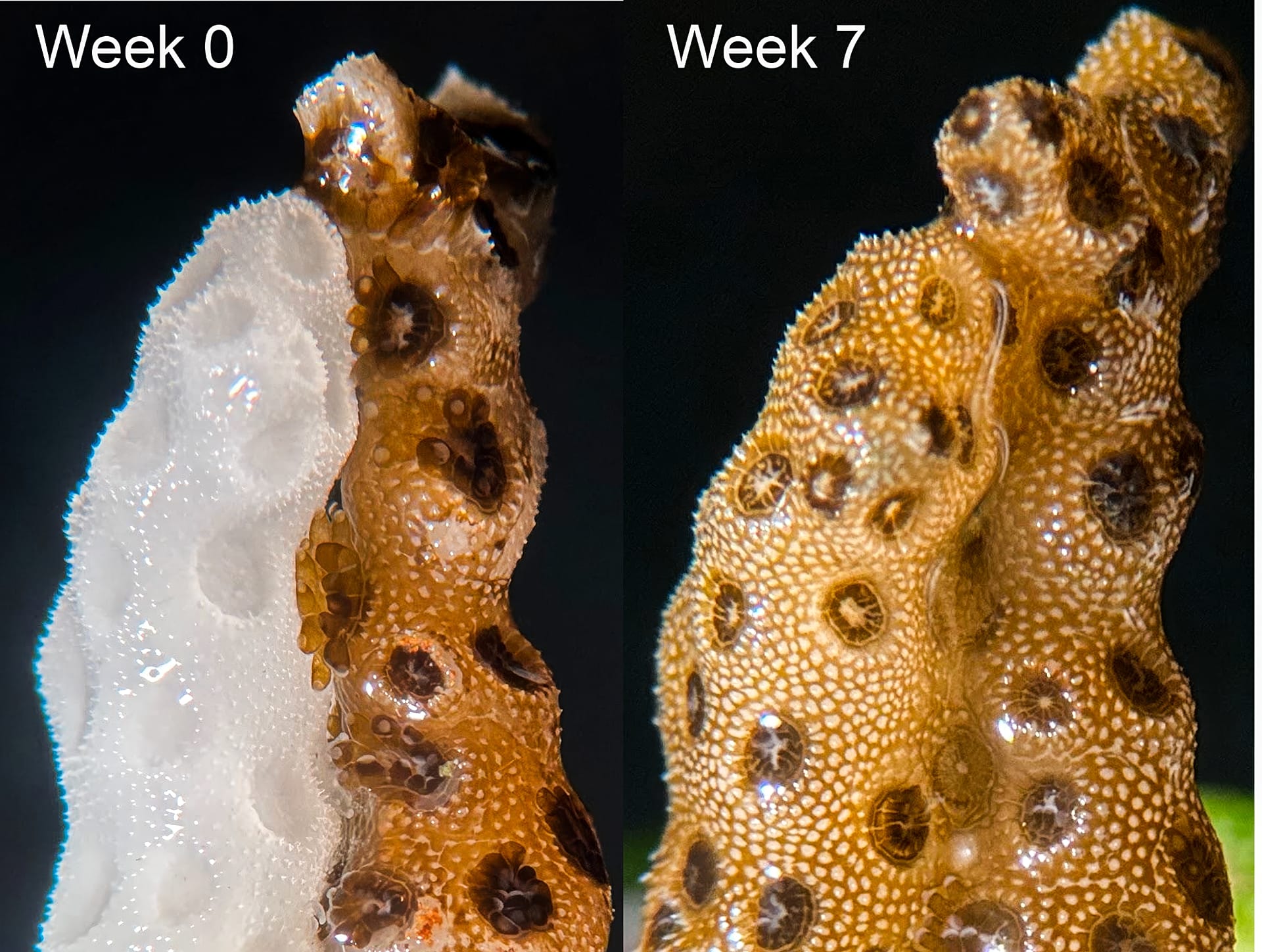
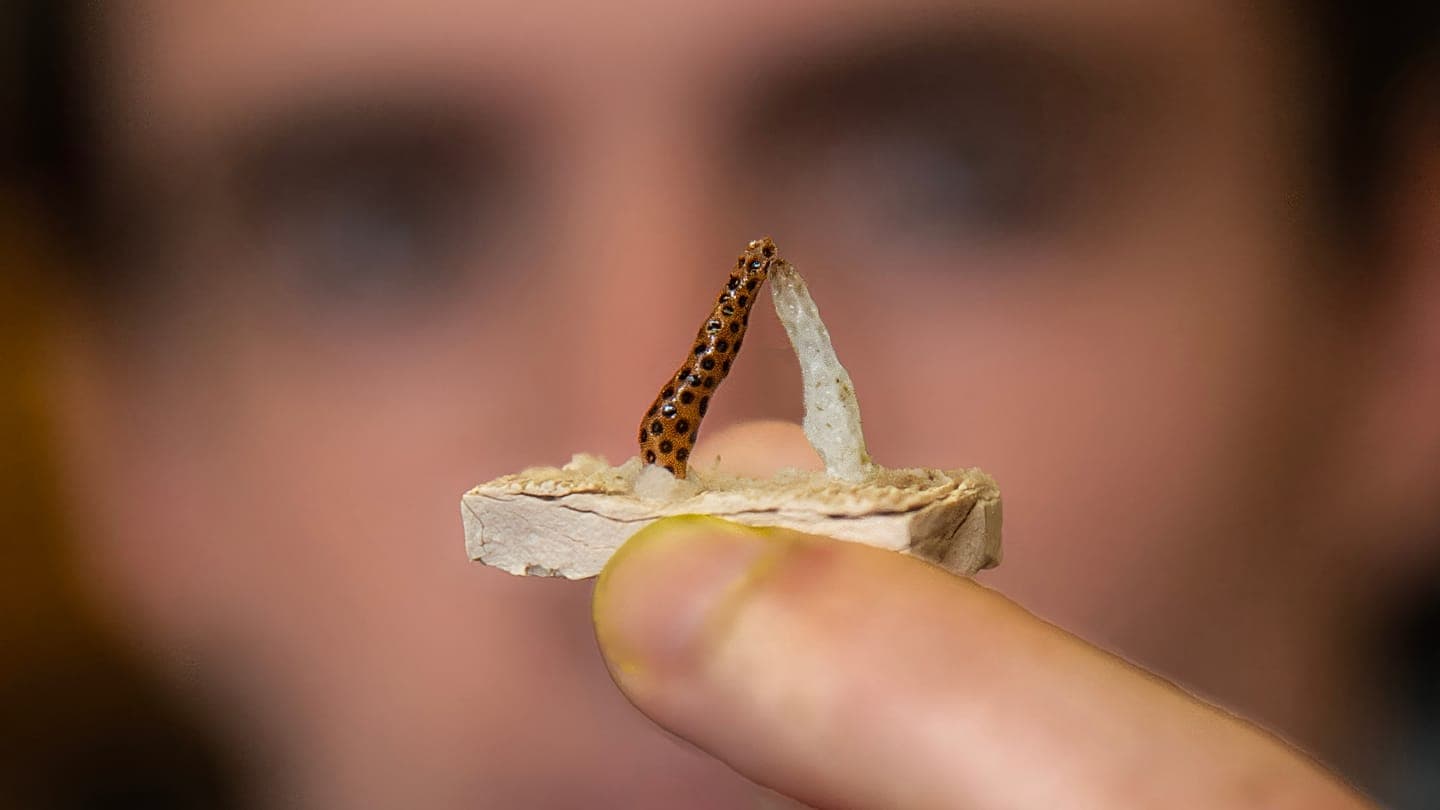
Scientists at Stanford University have discovered a way to bring bleached corals back to life by placing them in contact with healthy fragments of the same colony for just a few days. The results are published in the journal Science Advances. The discovery happened by accident in 2025: Professor Steve Palumbi noticed in a laboratory aquarium two pieces of coral that had fallen onto each other — one healthy, the other bleached. At the point of contact, the whitened coral began to regain its color.
The experiment and the recovery mechanism
Danny Collins, a Stanford graduate student and lead author of the study, prepared 10 pairs of fragments from a single colony: five pairs were touching, while the rest were separated by a few millimeters. After seven weeks, all five bleached fragments that had been in contact had recovered, while the separated ones died. Under the microscope, it turned out that the corals had fused, forming channels through which algae and nutrients passed from the healthy to the bleached ones. Within just three days, the beneficial algae began migrating, and after about a week the bleached fragments had received enough symbionts to recover on their own. In the second week, the algae doubled every four days — roughly 10 times faster than in wild corals, according to Palumbi. 'Bleached corals can be dying, but they are not dead yet,' Collins noted.
Limitations of the method
The scientists emphasize that the method is not yet ready for use in the ocean: for tissues to fuse, the corals must be genetically identical, meaning each damaged coral needs a healthy 'twin' from the same colony, which makes the approach of little use for restoring entire reefs. The researchers hope to find a way to deliver the beneficial algae without direct contact and genetic twins. 'Bleached corals are often considered hopeless because recovery after heat waves is very slow, if it happens at all,' said Professor Fiorenza Micheli.
Context: reefs are running out of time to recover
According to the Global Coral Reef Monitoring Network, over the past four decades the world has lost nearly 10% of living corals, and from 2023 to 2024 alone, nearly 9% during the global bleaching event — the largest one-year decline in the history of observations. Global bleaching now occurs roughly every five to six years, leaving reefs less and less time to recover. The report warns that reefs will continue to degrade unless anthropogenic emissions and threats such as overfishing, water pollution, and coastal development are reduced. Palumbi stressed that the technology 'does not mitigate heat waves, but merely helps cope with their consequences,' yet it could improve the efficiency of reef restoration efforts.