The key facts
- The number of Russian citizens in the AZR register fell from 308,015 (2023) to 284,225 (end of 2025) — due to the acquisition of German citizenship, not mass departure.
- After the 2024 reform, the naturalization period was shortened from eight to five years and dual citizenship was allowed; in 2025 the three-year track was abolished by the new government.
- The most passports were issued in Bavaria (7,385), North Rhine-Westphalia (6,136) and Berlin (4,849); women among new citizens are roughly twice as numerous as men.
The number of Russians in the register is shrinking, but not because of departure
After the start of Russia's full-scale war against Ukraine in 2022, hundreds of thousands of Russians left the country; by some estimates, at least half a million people left. One of the main destinations for emigration was Germany, which even before the war was home to the largest Russian community in the European Union. According to Germany's Federal Statistical Office (Destatis), at the end of 2021 the Central Register of Foreigners (AZR) listed 268,620 Russian citizens, in 2022 — 290,615, and in 2023 — 308,015. From 2024 the number began to decline and by the end of 2025 stood at 284,225. However, as the outlet notes, this does not mean mass departure: several thousand people leave the country each year, while new migrants continue to arrive. The main reason for the change in the statistics is the acquisition of Russian citizenship... or rather, German: once a German passport is obtained, a person is removed from the register even if they retain Russian citizenship.
On what grounds Russians live in Germany
Over the past four years, the structure of residence permits has also changed. The largest group remains holders of permanent residence permits, although their number fell from 141,320 at the end of 2021 to 131,505 at the end of 2025. The number of Russians with temporary residence permits on humanitarian, political and international-law grounds grew from 14,040 to 23,770; the main growth occurred in 2022–2023, slowed in 2024, and practically stopped in 2025. The number of those in Germany for work increased from 9,420 in 2021 to 15,735 by 2025: if in 2021 men and women with work permits were roughly equal in number, by the end of 2025 there were almost a quarter more men. Family reunification remains one of the most common grounds: as of December 31, 2025, 39,955 Russians held such a residence permit, their number having barely changed over four years, with about two-thirds of the group being women.
Citizenship reform and rising naturalization
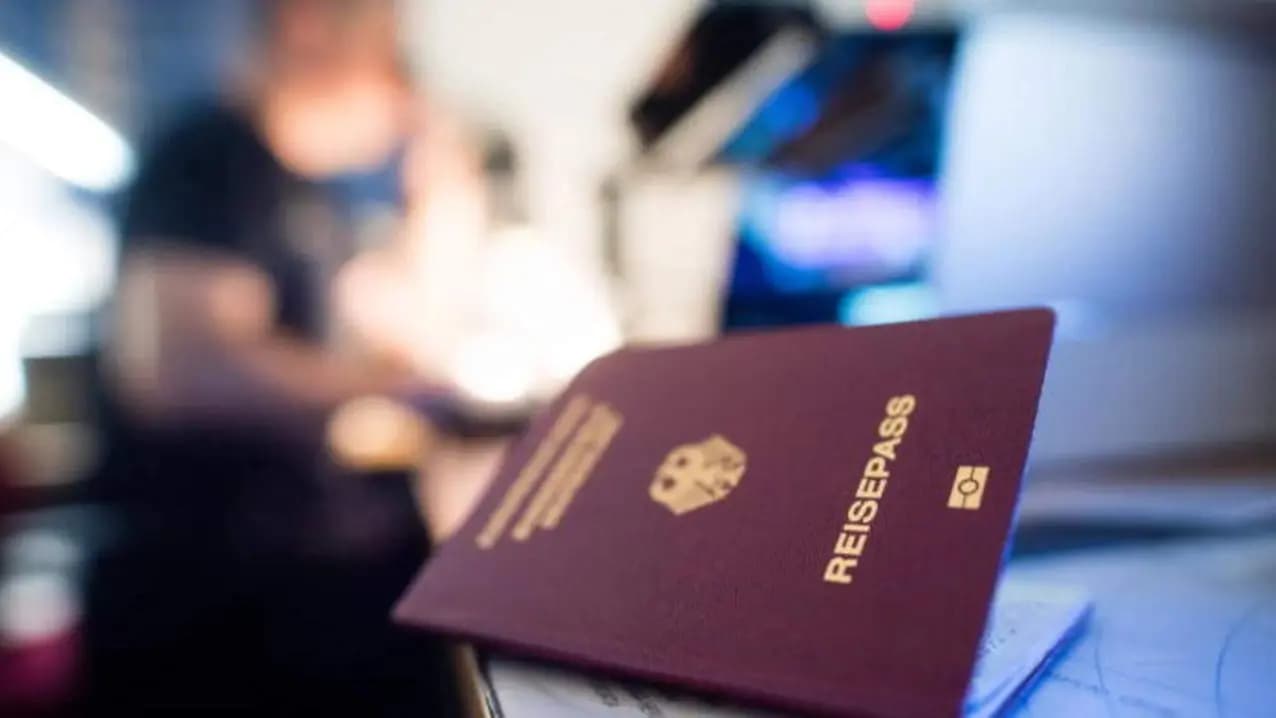
The sharp increase in the number of Russians obtaining German passports is linked to the 2024 legislative reform. The residence period required for naturalization was shortened from eight years to five, and foreigners were allowed to keep their previous passport — previously dual citizenship was permitted only in individual cases, including for late resettlers (Aussiedler) and their families. Some categories of foreigners were allowed to obtain citizenship after just three years of residence, but after the change of government in 2025 this option was abolished; some Russians from the latest wave of migration managed to use it. According to Destatis, before 2024 about two thousand Russians received German citizenship annually, in 2024 — 12,980, and in 2025 — 19,736.
Regions and cities
The most German passports in 2024–2025 were obtained by Russians in Bavaria — 7,385 people, followed by North Rhine-Westphalia (6,136) in second place and Berlin (4,849) in third. The fewest cases were registered in Saarland — 95. Among those acquiring citizenship, women are consistently roughly twice as numerous as men. As for residence, almost three-quarters (73.7%) of Russians without German citizenship live in the western states, 13.9% in the eastern ones (former GDR), and 12.4% in Berlin. As of December 31, 2025, the largest numbers of such Russians were in North Rhine-Westphalia (54,065), Bavaria (43,305) and Berlin (35,165), and the smallest in Saarland (2,410). Among cities, Berlin leads by a wide margin, followed by Munich (12,785) and Hamburg (10,620).