The key facts
- Excavations at the Jarkutan site began in October; the expedition is led by Komil Rahimov
- Mud-brick structures, a hearth 70 cm in diameter, and four intact ceramic vessels in one of the burials have been found
- A child burial and household pits of the Jarkutan stage of the Sapalli culture have been discovered; dating — 3rd–2nd millennia BCE
Excavations at a Bronze Age site
Structures, a hearth and burials dating to the Bronze Age have been discovered at the Jarkutan archaeological site in Surkhandarya region. This was reported by the Cultural Heritage Agency of Uzbekistan. Archaeological excavations and scientific research at the site began in October of this year. The expedition is led by Komil Rahimov, senior researcher at the Yahyo Gulyamov Samarkand Institute of Archaeology and candidate of historical sciences. Also taking part in the work are students of Termez State University and Francesca Congedo, a master's student at the University of Salento in Italy.
What has been found
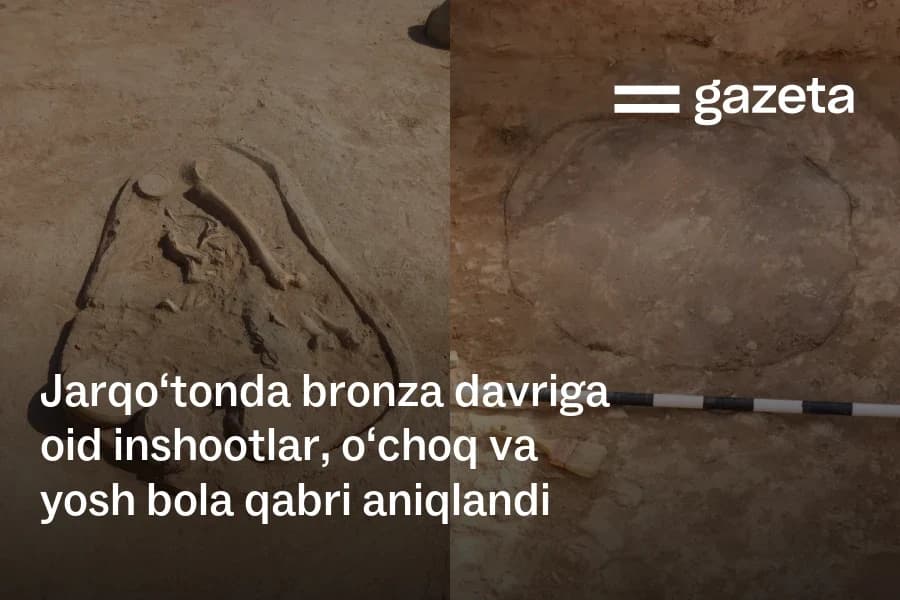
During excavations on the site's territory, mud-brick structures and a hearth 70 centimeters in diameter were discovered. According to the Agency, these finds are important for studying the building traditions and the layout of dwellings of the Jarkutan stage. During excavations in the western part of the site's necropolis, four intact ceramic vessels were found in one of the burials.
A child burial and household pits
Excavations beyond the main territory of the site made it possible to identify the burial of a young child, as well as a household pit and two round ash pits belonging to the Jarkutan stage of the Sapalli culture.
Dating and further work
The discovered finds are dated to the Bronze Age — the 3rd–2nd millennia BCE. According to the Agency, they make it possible to study in greater depth the way of life of the ancient population, its economic activities, burial rites and the stages of historical development of the site's territory. Comparative and typological analysis of the finds, as expected, will yield new scientific conclusions about the functions of individual areas of Jarkutan and their development over time. Excavations and research at the site continue.


