The key facts
- Kenichi Yoda took over as head of Studio Ghibli on June 22, replacing Hiroyuki Fukuda
- The studio will receive the 2026 Princess of Asturias Award in Communication and Humanities
- Yoda evaded direct answers about pacifism in modern Japan and about a quote from 'Porco Rosso', but spoke out against AI in creativity
New studio president on the eve of the award
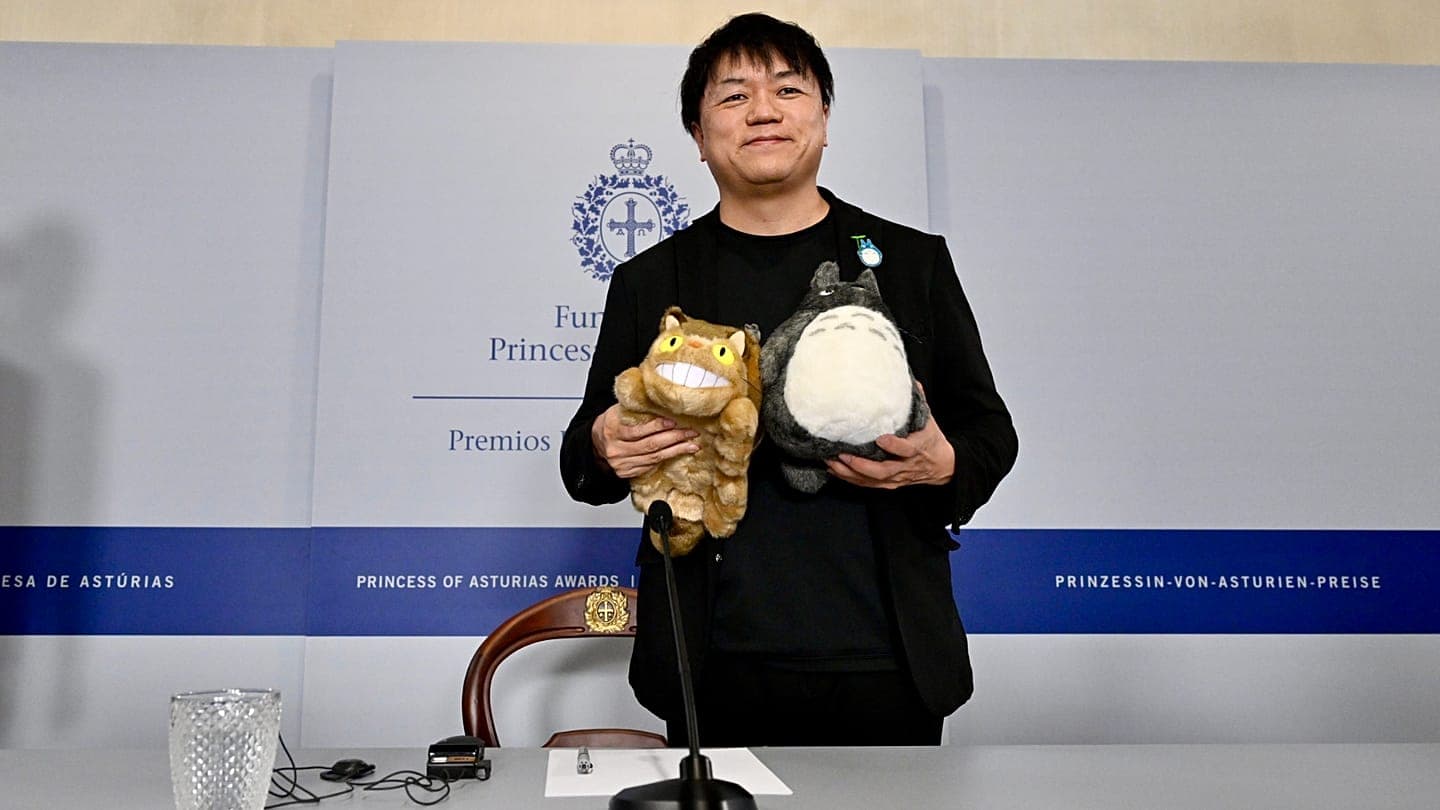
Kenichi Yoda (born 1974), who previously worked as a culture writer at the Yomiuri Shimbun newspaper and covered Studio Ghibli early in his career, took over the studio on June 22, replacing Hiroyuki Fukuda as president. The Euronews interview took place 48 hours before Yoda, on behalf of the studio, will accept the 2026 Princess of Asturias Award in Communication and Humanities. According to the outlet, the ideas of the late Isao Takahata and Hayao Miyazaki, as well as the work of roughly two hundred studio employees, remain for millions of people worldwide one of the first 'windows' into Japanese culture.
Soft power and pacifism
Asked whether the studio considers itself an instrument of Japanese 'soft power', Yoda replied that the works are created because directors and animators put their soul into them, not for the sake of diplomacy. Euronews notes that the theme of armed conflict constantly runs through the studio's screenplays alongside environmental protection, friendship and strong female characters: Takahata was a committed pacifist and defender of Article 9 of the constitution, while Miyazaki absorbed the theme of war from childhood — his family's company manufactured parts for military aircraft of the fascist bloc during World War II. The outlet asks whether it is possible to make pacifist films in Japan, which is directing an unprecedented share of GDP to its Self-Defense Forces and whose 'Defense White Paper' is promoted by far-right politician Sanae Takaichi. Yoda evaded a direct answer, noting that the theme of war is very important to the studio, but that Miyazaki is at the same time fascinated by the beauty of weapons and combat aircraft as objects — 'and that is, in a sense, very human'.
'Porco Rosso' and Macron
Answering a question about whether the line of the hero of 'Porco Rosso' (1992) — 'better to be a pig than a fascist' — is acceptable today, Yoda again preferred to avoid passing judgment. He only said that he is very pleased that, according to him, one of Emmanuel Macron's favorite films is precisely 'Porco Rosso', recalling the French president's statement during an official visit to Japan.
Attitude toward AI
The topic of AI arose in connection with a viral 2016 video in which Miyazaki sharply criticized two developers who were offering a prototype AI system for animation, saying: 'This is an insult to life itself.' Yoda noted with weariness that ten years later he is asked about this in every interview. In his words, predicting the development of AI is extremely difficult, but if there is something to say now — imagine two restaurants: in one, the food is prepared by AI, in the other, by people. 'I would without a doubt choose the second,' he said, adding that he says this in a personal capacity as well.
Ghibli and its time
Concluding the interview, Yoda added that Ghibli is very deeply connected to its time: the studio discusses daily what it can do in this era, and, by his feeling, it creates something considered. 'In the very act of artistic creation, we have great honesty. It is not about a business plan: it is about seriously considering what answer the studio gives to its time,' he emphasized. Euronews concludes that the coming decade will show whether the studio, after the generational change from Miyazaki, who remains active at 85, can preserve its creative independence and ideals.