The key facts
- The blocks were found during the restoration of the 1850 column in 2005–2007
- Their origin was linked to Peter the Great's Ivanovsky Canal (33 locks)
- In 2014 the stones were incorporated into the facade of the museum complex in Mokhovoye
A Three-Century History of the Stones
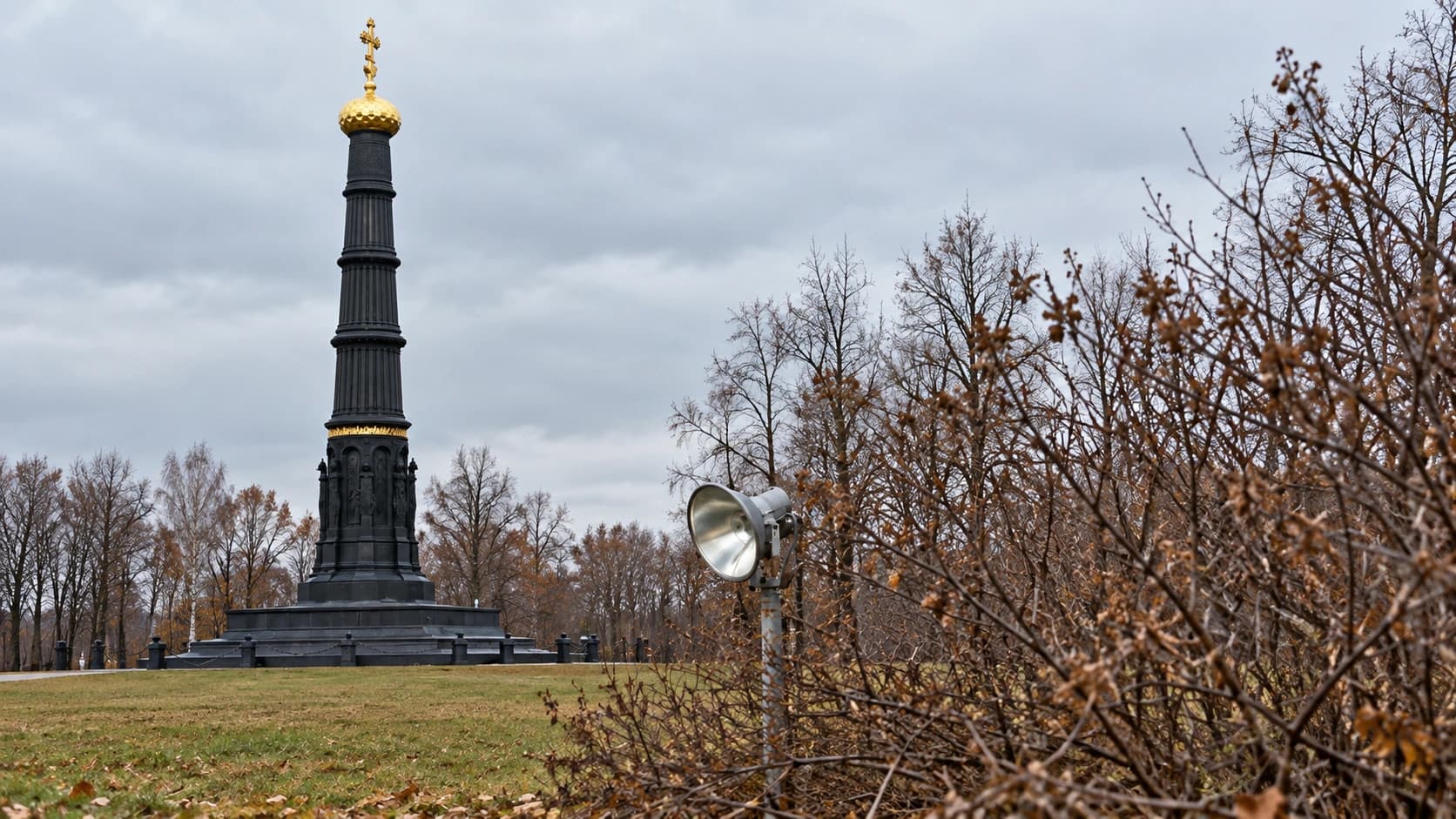
The white-stone blocks from the Dmitry Donskoy monument on Kulikovo Field turned out to be part of an ancient canal built according to Peter the Great's design. The director of the Kulikovo Field Museum-Reserve, Vladimir Gritsenko, told RIA Novosti about the discovery. The stones were first used for locks, then for the monument's base, and now they adorn the museum's facade.
A Discovery During Restoration
The unusual blocks were discovered in 2005–2007 during the restoration of the 29-meter column to Dmitry Donskoy, erected in 1850 to a design by architect Alexander Brullov. The monument was in an emergency condition, so the structure was completely dismantled and the base examined. Beneath a cast-iron slab, hand-worked white stones were found, concealing an ordinary rubble foundation. The origin of the material remained a mystery at the time.
The Link to Peter the Great's Canal
The answer was suggested by excavations of the Ivanovsky Canal, whose construction began in Tula Oblast in 1701 — it was one of Peter the Great's large-scale hydraulic engineering projects. The builders erected 33 locks, but most of the structures were later dismantled for materials for churches and residential houses. While examining one of the locks, archaeologists discovered that the upper 10–12 rows of masonry had disappeared, while the lower ones remained underwater. Comparing the excavations with archival documents, specialists established that the dismantling of the structures coincided in time with the construction of the monument. The origin of the blocks was confirmed by historians Andrei Naumov and Igor Yurkin, who found written evidence.
A New Purpose
After the restoration of the monument, the stones were stored for several years at the museum's facility: according to Gritsenko, staff could not bring themselves to discard material worked by craftsmen of past centuries, even though reinforced concrete had already been used to strengthen the monument. In 2014, architect Sergei Gnedovsky proposed incorporating them into the facade of the museum complex under construction in Mokhovoye — and so, three centuries later, elements of Peter's canal became part of the modern architecture of Kulikovo Field.