The key facts
- Since 2016, $35 billion in investments has been attracted to Uzbekistan's energy sector, with the number of partner countries growing from 2–3 to more than 10.
- 'Green' energy capacity stands at 11.1 GW, with renewables accounting for 31% of generation; per capita electricity production rose 28% to 2,300 kWh per year.
- Agreements were signed on six projects worth $4.7 billion: 3 GW of generation and 400 MW of storage; by 2030, plans call for creating 22,000 MW of new capacity.
Open dialogue with fuel and energy sector investors
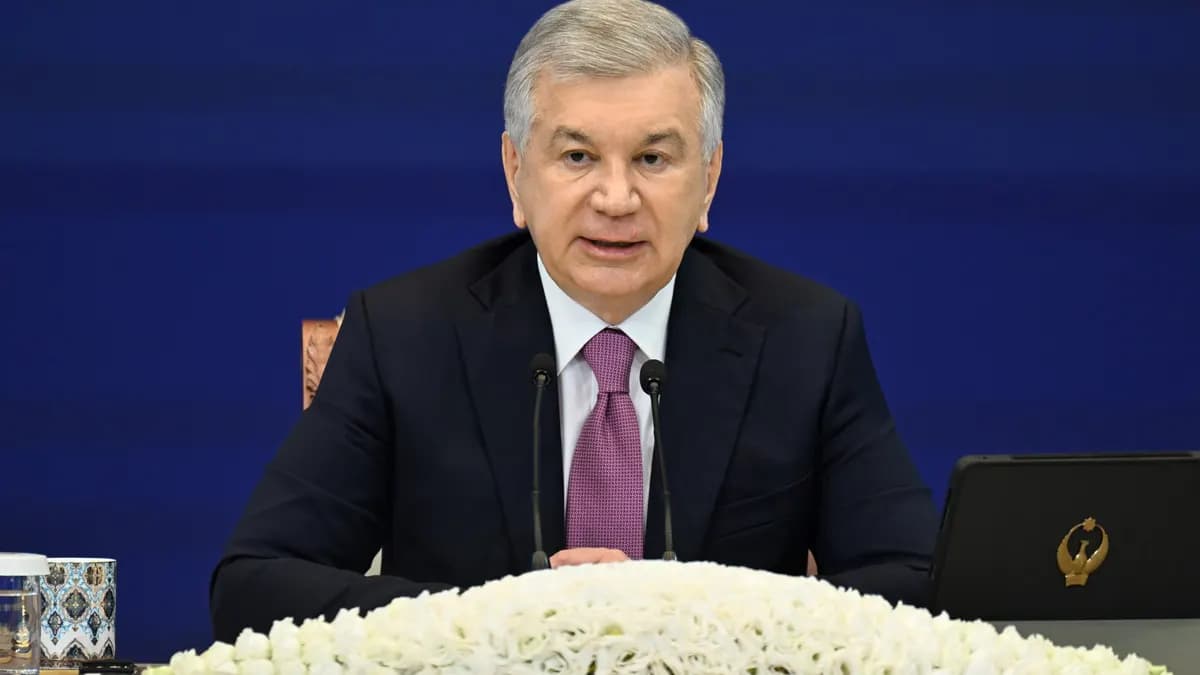
President of Uzbekistan Shavkat Mirziyoyev is holding an open dialogue with investors in the fuel and energy sector, presidential press secretary Sherzod Asadov reported. The head of state called energy 'the heart of development' and emphasized that a stable energy supply is important for entrepreneurs' investments and for the population's confidence in the future.
Results of a decade of reforms
According to the president, ten years ago tasks were set to resolve problems in the sector, modernize outdated capacity, and meet growing demand. To this end, the energy market was opened to private investment and public-private partnership mechanisms were introduced. Since 2016, the sector has received $35 billion in investments, and the number of partner countries has increased from 2–3 to more than 10.
'Green' energy indicators
The share of renewable sources — solar, wind and hydroelectric power plants — in total generation has reached 31%, and their combined capacity is 11.1 GW. Per capita electricity production has grown by 28% and reached 2,300 kWh per year.
New agreements worth $4.7 billion
During the dialogue, agreements were signed on six major projects with a total value of $4.7 billion. They provide for the creation of 3 GW of generating and 400 MW of storage capacity.
Priorities and goals to 2030
Mirziyoyev noted that Uzbekistan has accumulated significant experience in implementing energy projects and cooperating with investors. Alongside launching new capacity, improving supply and reducing losses in the power grid will now become a priority task. By 2030, the goal has been set to create 22,000 MW of new capacity, which will increase annual generation to 129 billion kWh, of which 54% will come from 'green' sources.
Guarantees for business
The president added that a recently signed decree clearly defines the tasks of the state and business in the fuel and energy sphere. According to him, at the current stage of project implementation, 'open competition, transparent rules and precise fulfillment of agreed conditions' will be ensured.


