The key facts
- Kiran Kaur, 53, was sentenced to three years for concealing the knife with which her son killed Henry Nowak
- Under the Sentencing Act 2026, prisoners serving terms of up to 2.5 years are released after serving one third of their sentence
- Appeals by Kaur and her son Vikrum Digva will be heard on 5 November
Early release under new law
Kiran Kaur, 53, the mother of the killer of 18-year-old student Henry Nowak, may be released from prison early under the government's programme to tackle prison overcrowding. In July she received three years for aiding an offender: she took away the knife with which her son Vikrum Digva killed Nowak in Southampton in December. Under the Sentencing Act 2026, which came into force on 1 October, most prisoners serving fixed terms of up to two and a half years are automatically released under licence supervision after serving one third of their sentence instead of half. Kaur's offence is not on the list of exclusions from the new scheme. She spent 221 days in custody before sentencing, which, according to the Ministry of Justice, was taken into account when sentencing. Kaur is appealing the sentence.
Reaction and supervision measures
Police and Crime Commissioner for Hampshire and the Isle of Wight Donna Jones called Kaur's possible early release 'a serious blow to Henry's family' and said she would send Justice Minister Alex Norris a request for clarification. The Ministry of Justice said that those released under supervision face stricter measures: from October, mandatory electronic tagging is planned, exclusion zones are being introduced for dangerous offenders, victims are given a voice in determining supervision conditions, and near-real-time location data for probation staff will be rolled out nationwide by the end of 2026.
Deportation question
It is unknown whether Kaur, who was described in court as an Indian national, could face deportation. The government, which does not comment on individual cases, said it 'always seeks to deport foreign offenders at the earliest opportunity'. Foreign nationals sentenced to 12 months or more are generally considered for deportation, although there are exceptions, and decisions can be appealed.
Circumstances of the case
Digva was sentenced on 1 June to life imprisonment with a minimum term of 21 years for murdering Nowak after falsely claiming that the student had racially abused him. He was granted permission to challenge his sentence at the Court of Appeal on 5 November — the same day his mother's appeal will be heard. Digva handed the knife to his mother, and police later found it in the family home along with more than 20 other weapons. Prosecutor Nicholas Lobbenberg called Kaur's actions 'an offence of the highest order' and her role in removing the knife 'pivotal'. Judge William Mawhood, passing sentence, noted that a 'responsible parent' would have stopped their son, and that Kaur hid the knife among a collection of ceremonial and other weapons to help her son evade justice. At the same time, he acknowledged that she was unlikely to reoffend and that her motive was a 'misguided' protection of her son, not personal gain. The government expressed condolences to the family and friends of Henry Nowak.
 Image source, Hampshire Police
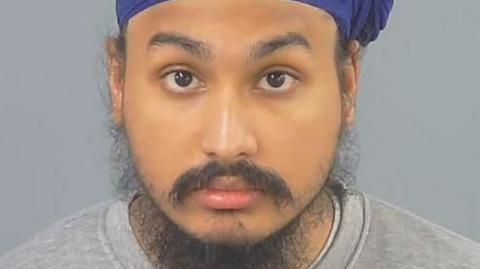
Vickrum Digwa's mother Kiran Kaur was jailed for three years in July for assisting an offender
 Image source, Police handout
The arrest and handcuffing of Henry Nowak as he lay dying prompted intense scrutiny of police actions