The key facts
- Thwaites Glacier loses ice regardless of ocean cooling — for at least 150 years, BAS modelling in three independent models showed
- A full collapse of the ice sheet would add ~65 cm to global sea level; each centimetre puts another ~6 million people at risk of flooding
- Pine Island Glacier in the same scenarios stopped melting and thickened; Thwaites' retreat began in the 1940s
Irreversible ice loss
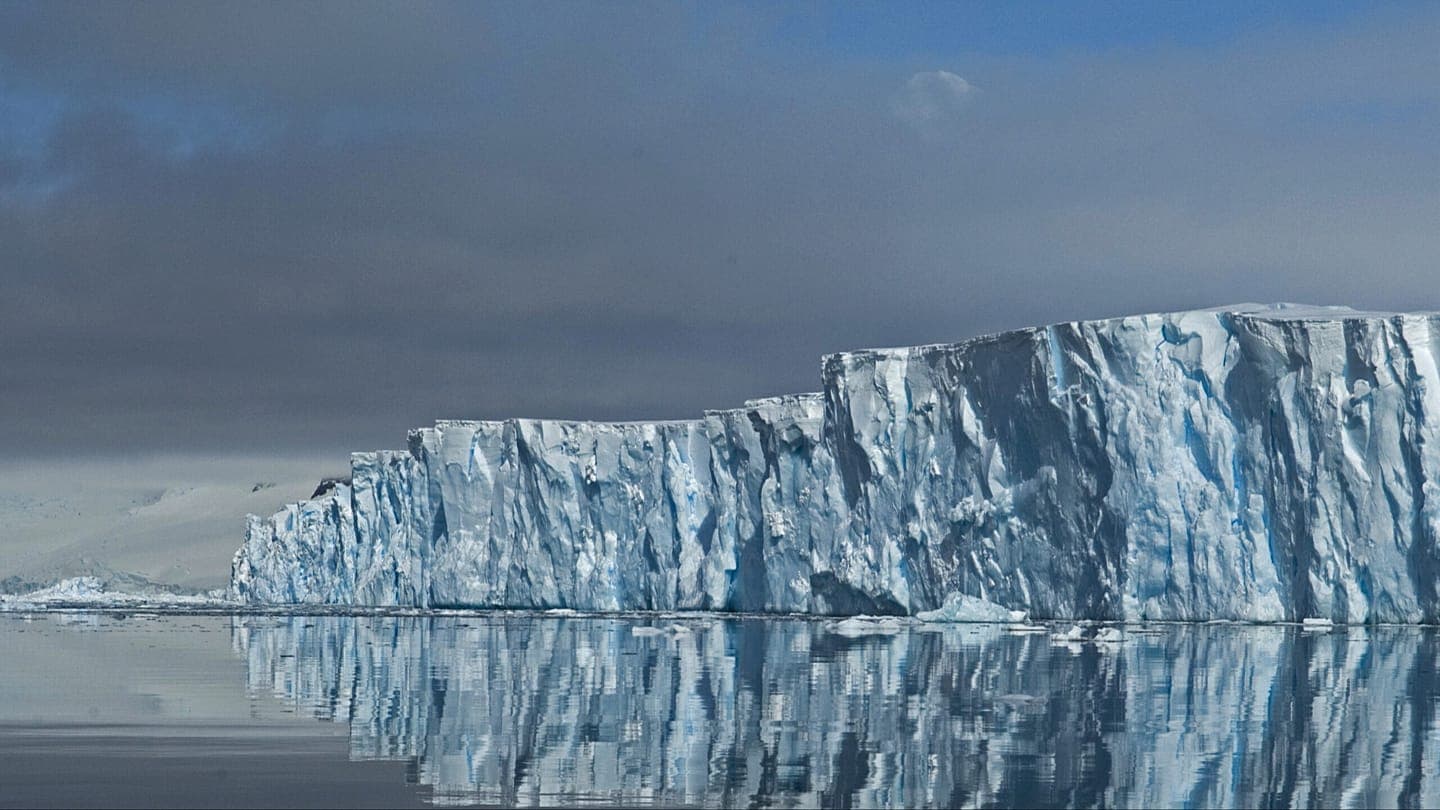
Thwaites Glacier in West Antarctica, known as the 'Doomsday Glacier', will continue to lose ice even under 'the most extreme ocean cooling that could ever be imagined' — this is the conclusion of a study led by the British Antarctic Survey (BAS), published in the journal Geophysical Research Letters. Scientists modelled the behaviour of Thwaites and the neighbouring Pine Island Glacier — the largest sources of ice loss in the region — in three independent computer models, completely switching off the influence of oceanic melting beneath both glaciers. Over the 150-year period a 'striking difference' emerged: Pine Island stopped melting, began to thicken and advance back towards its position in the first half of the 20th century, whereas Thwaites continued to lose ice, although the rate of loss declined over time as the glacier thinned.
Scale of the threat
A full collapse of the ice sheet is estimated to add about 65 cm to global sea level rise. According to the publication, each additional centimetre of sea level rise puts a further six million people on the planet at risk of coastal flooding. The context is record ocean temperature: on 22 August the average sea surface temperature outside polar regions was 21.1 °C, and the strengthening El Niño in the Pacific makes a sharp drop in temperatures unlikely in the near future.
Scientists' conclusions
'These results show that previous changes in oceanic melting have already doomed us to the inevitable future loss of ice from Thwaites Glacier. This ice loss cannot be reversed or prevented simply by cooling the ocean,' said BAS glaciologist and lead author of the study Dr Rosie Williams. Co-author of the work, BAS oceanographer Professor Paul Holland noted that the glacier's retreat began in the 1940s, and warming of the world ocean has been a 'major driver' of accelerating ice loss. He stressed that a scenario of no melting at all is impossible in the real world, since the very presence of seawater beneath the glacial ice causes some level of melting.
Why cutting emissions still matters
Although the modelling shows that historical melting already 'dooms future generations to problems associated with sea level rise', ice losses will be even greater if the world does not cut — and ideally reverse — greenhouse gas emissions. 'We do not yet know whether other large glaciers in Antarctica are tipping into irreversible change,' Holland said, adding that 'it is vitally important that we change human activity that is driving increased ocean melting of these glaciers.'


